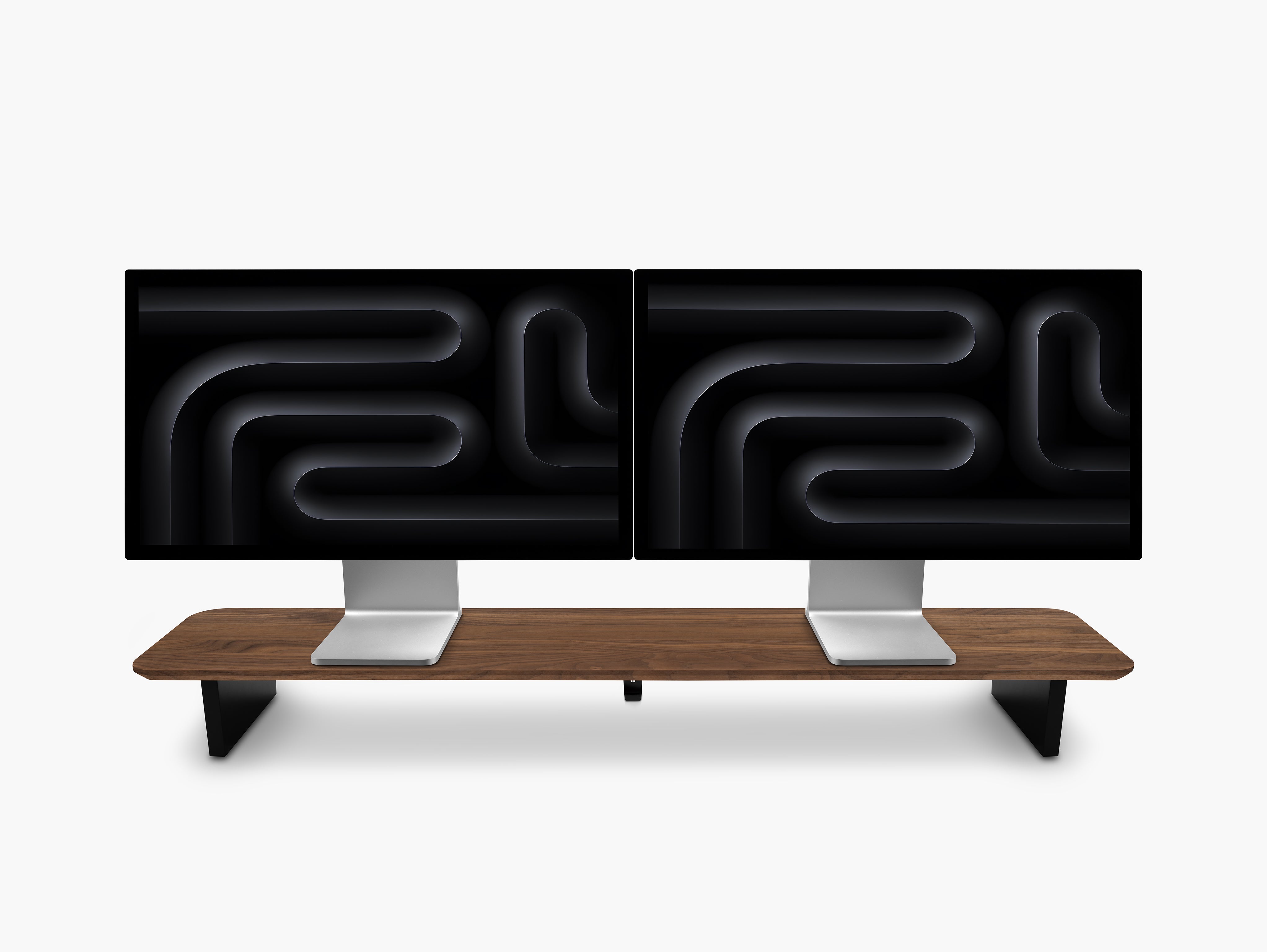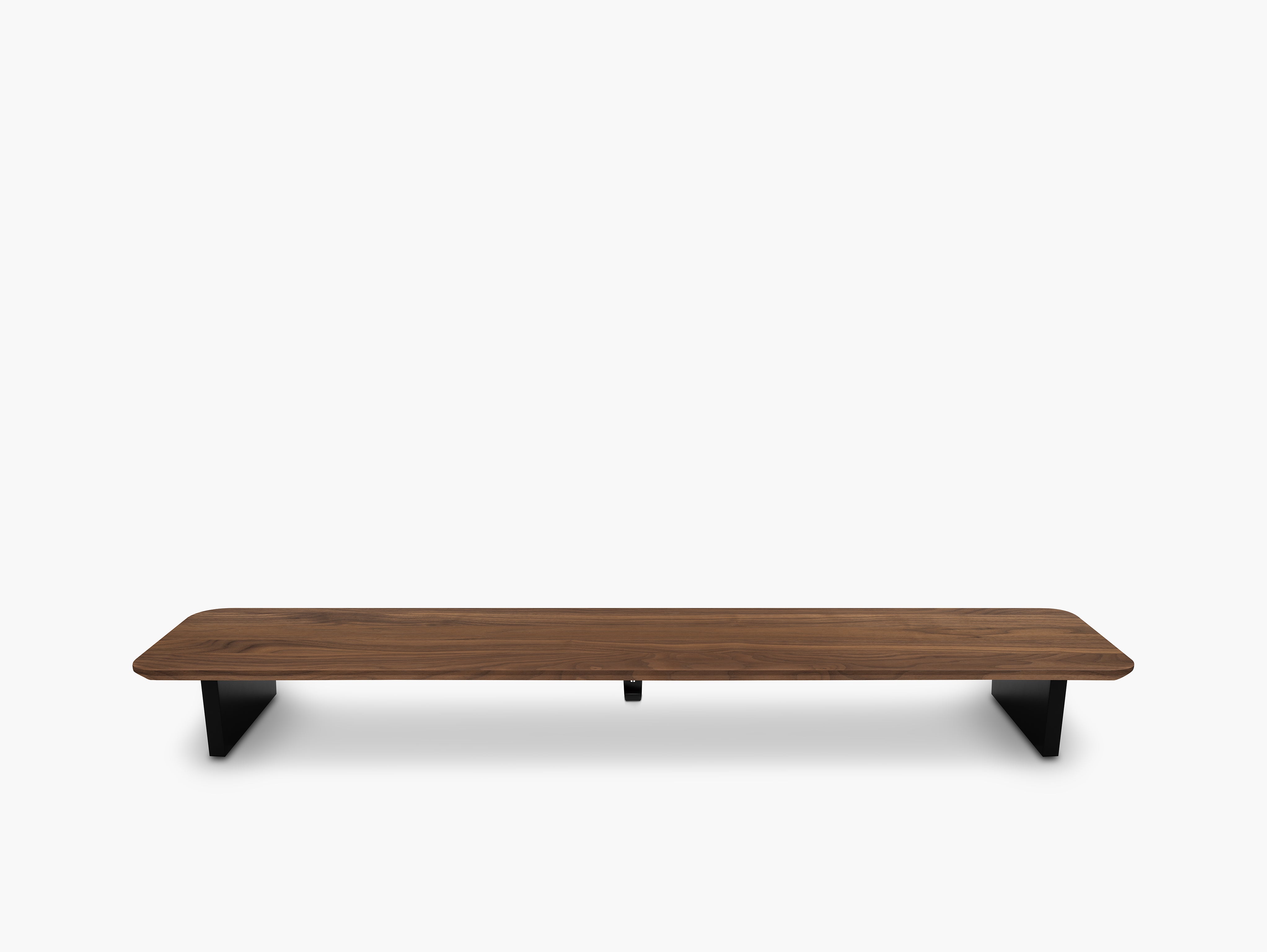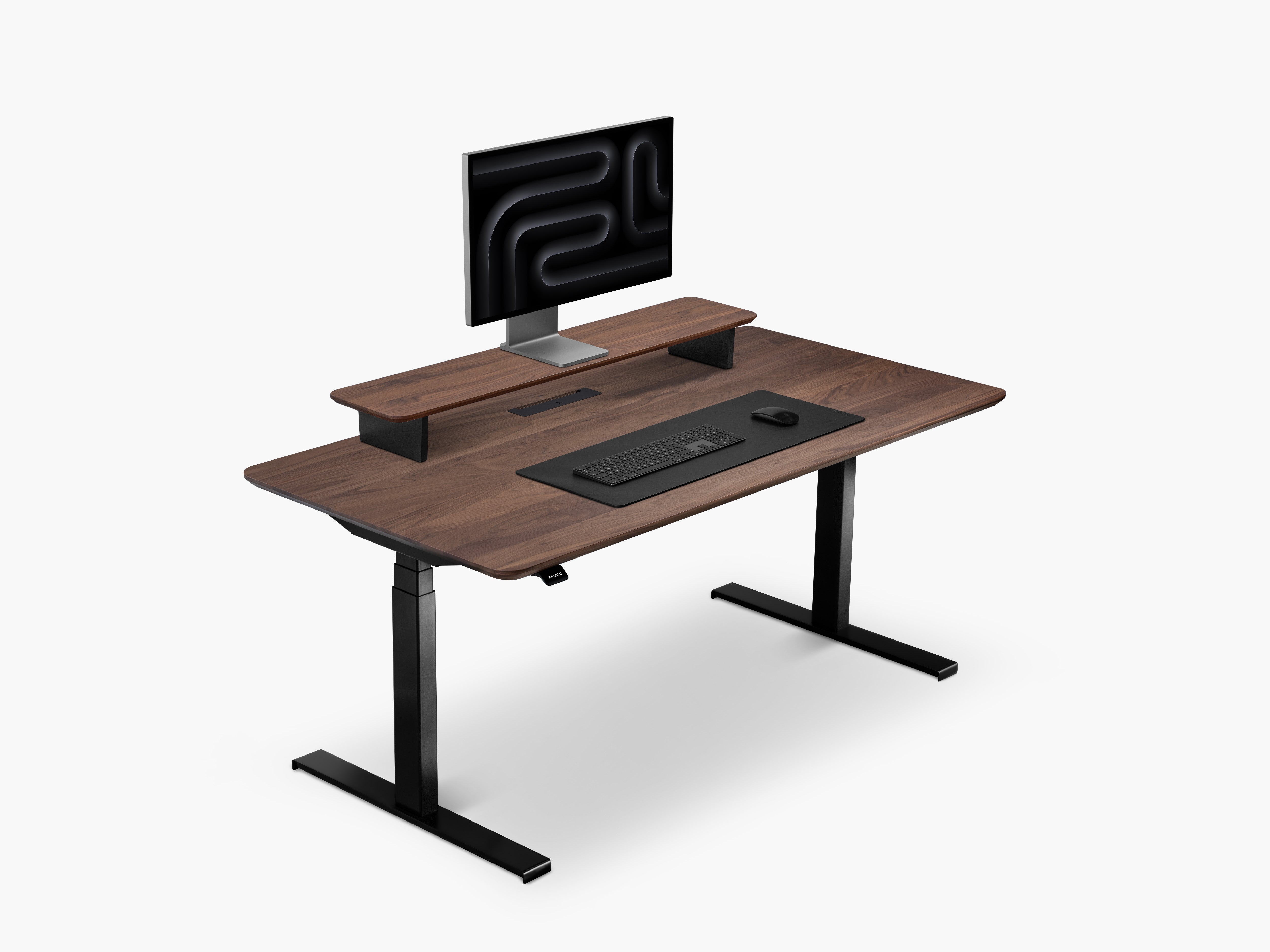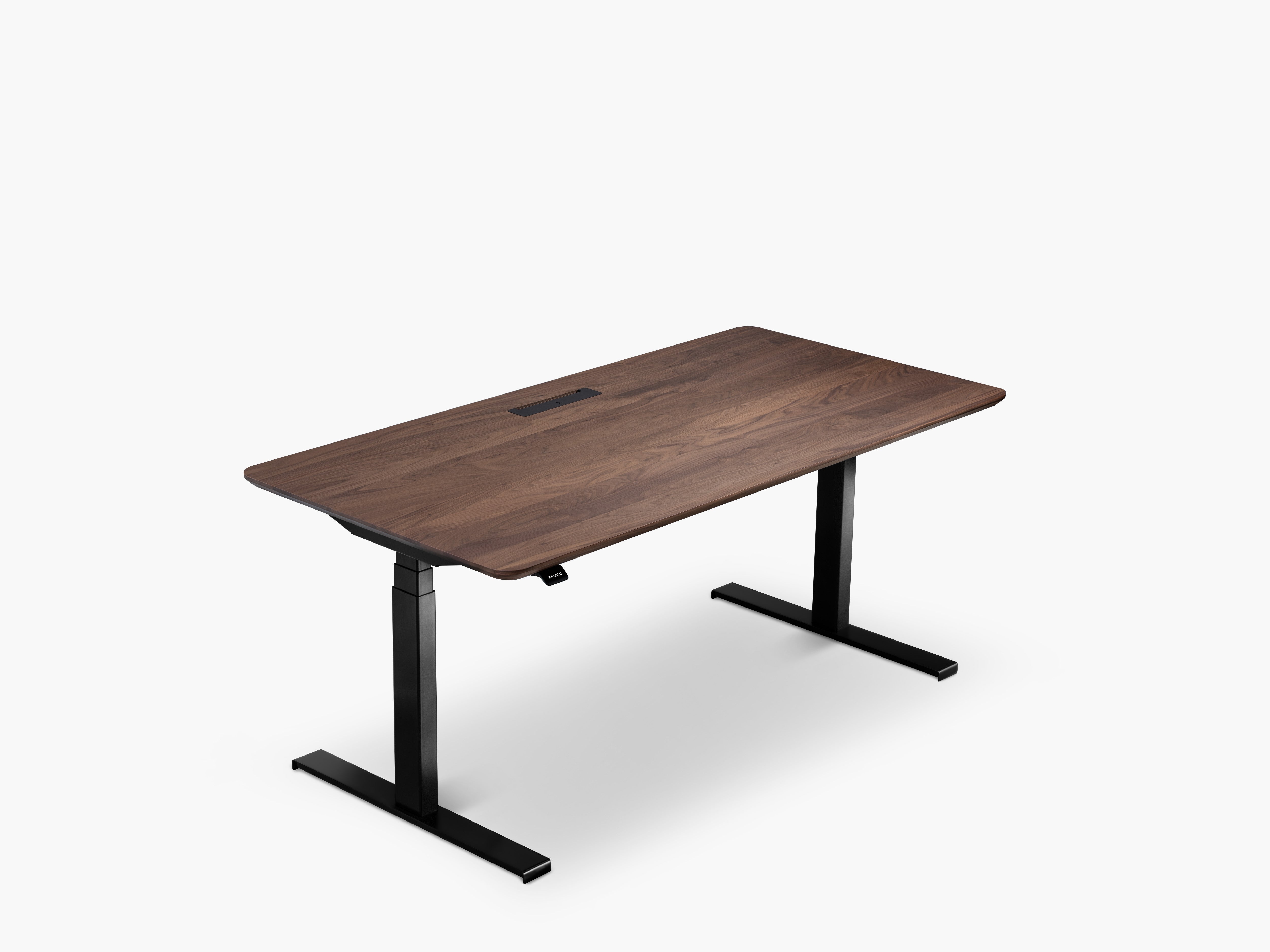



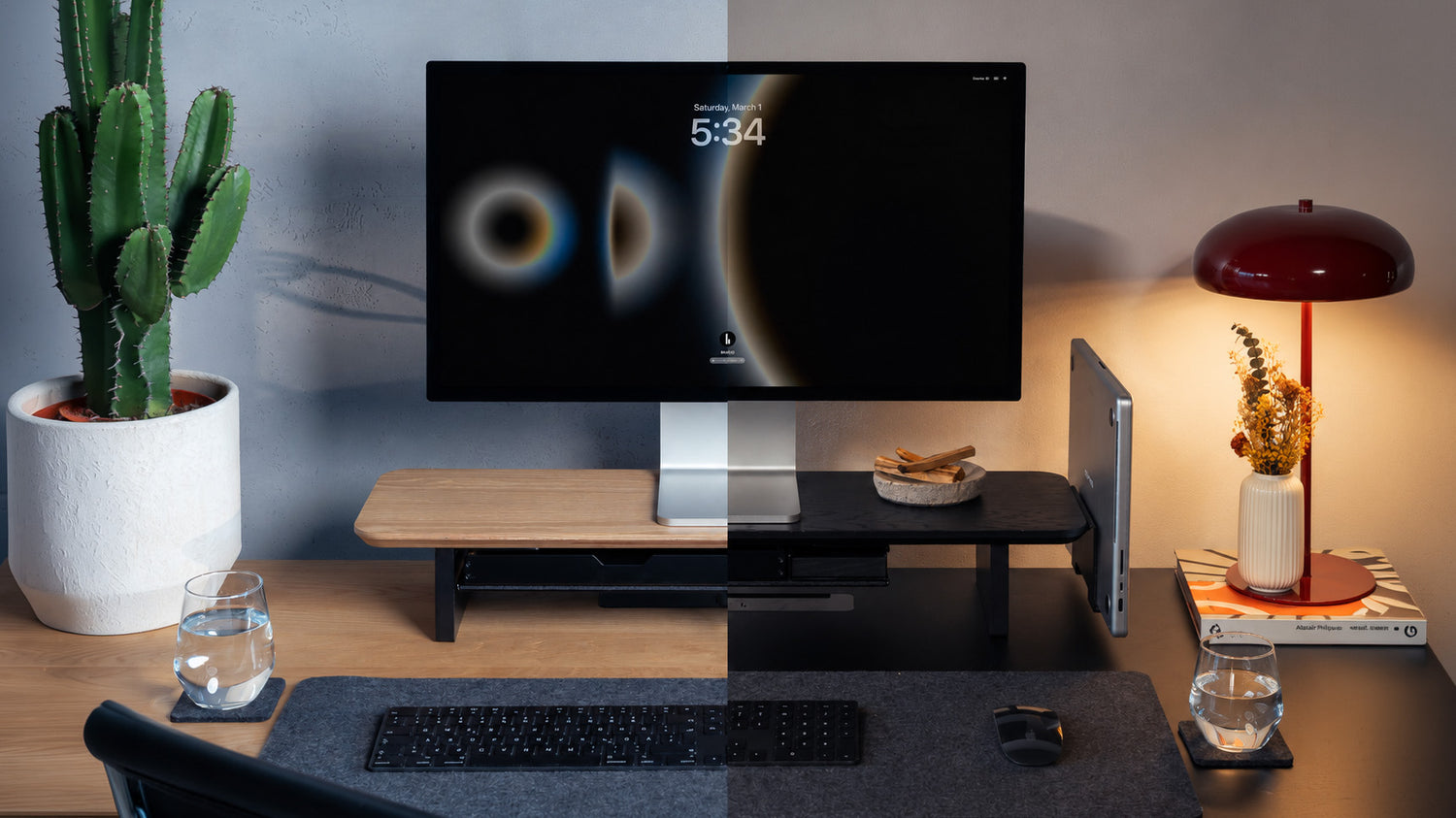
A dark desk setup is a great fit for anyone who wants a focused, high-contrast and atmospheric workspace. A light desk setup, on the other hand, feels open, calm and friendly, and is often the better choice for small rooms or workspaces that get a lot of daylight.
Which style truly suits you, however, doesn't just come down to taste. The size of the room, the lighting conditions, your way of working and the mood you want your workspace to convey all play a role too.
That's because color changes how we perceive a desk. It affects whether a room feels spacious or compact, how much tech and accessories stand out, and how calm or intense the workspace feels overall.
Whether you're planning a minimal desk setup, refreshing your home office, or simply looking for fresh desk setup inspiration: the choice between a dark and a light workspace shapes the entire design. In this guide, we compare both styles, walk through their respective pros and cons, and help you find the right desk setup for your room and your workflow.

Dark vs. Light Desk Setup at a Glance
| Criteria | Dark Desk Setup | Light Desk Setup |
| Overall mood | Focused, bold, premium | Calm, bright, open |
| Best suited for | Deep work, creative work, tech-forward setups | Small rooms, bright home offices, minimalist workspaces |
| Effect on the room | Elegant, high-contrast, atmospheric | More open, fresh, light |
| Visible wear | Dust and fingerprints show up more quickly | Stains and scratches can be more visible |
| Lighting | Needs well-planned light sources | Pairs especially well with daylight |
| Typical style direction | Modern, sleek, tech-forward | Minimalist, Scandinavian, natural |
If you already know which mood your workspace should convey, you're already a big step closer to the right decision.
What Is a Dark Desk Setup?
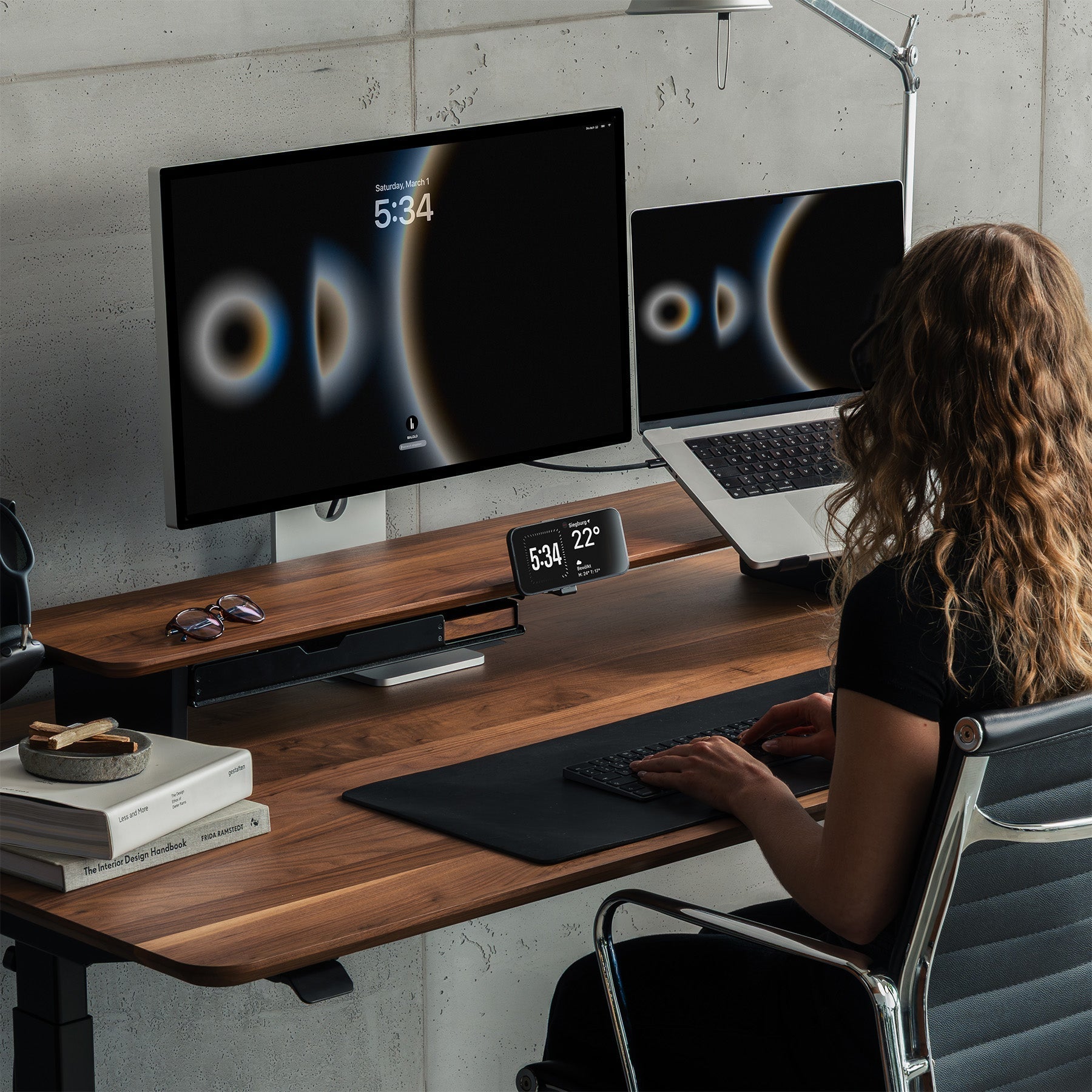
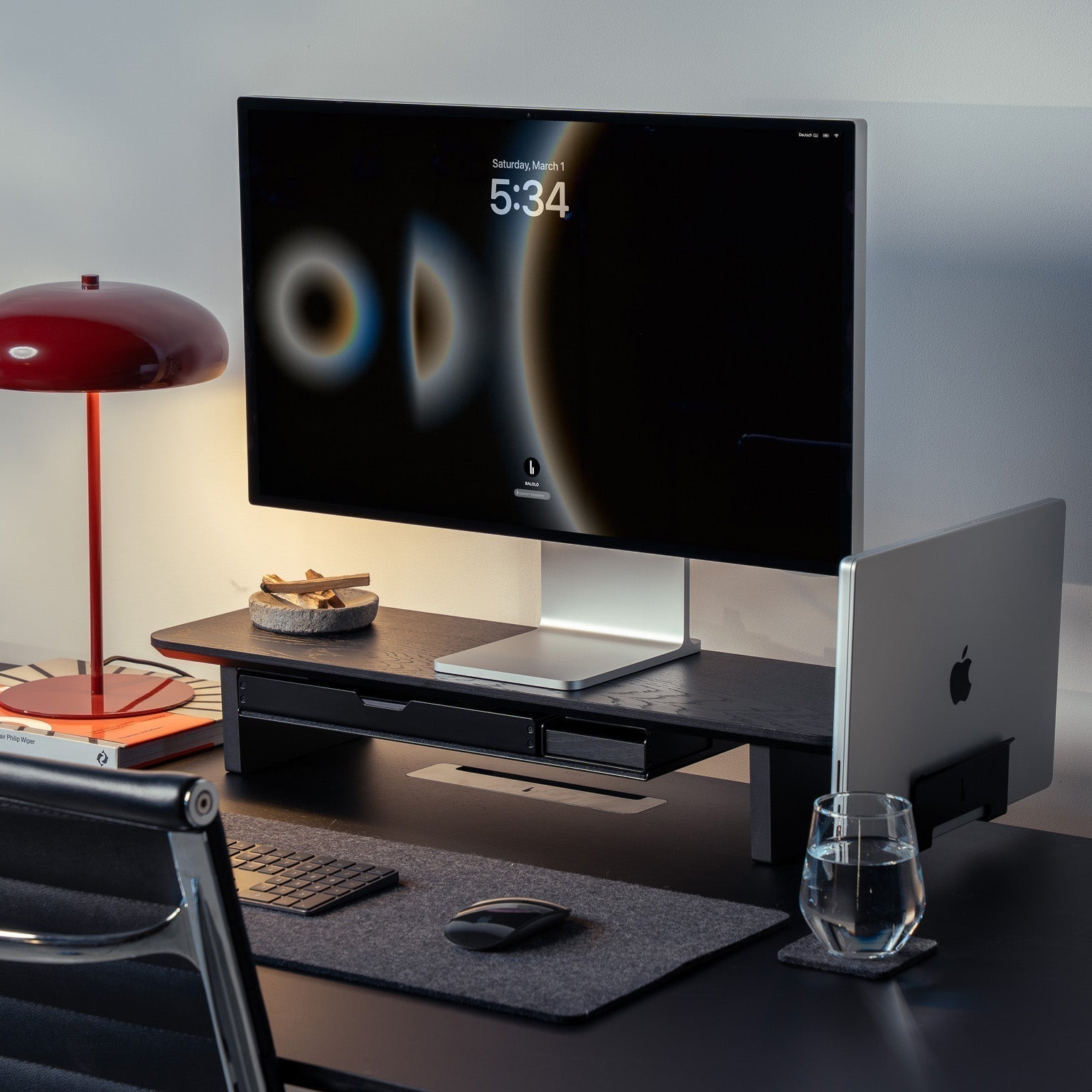
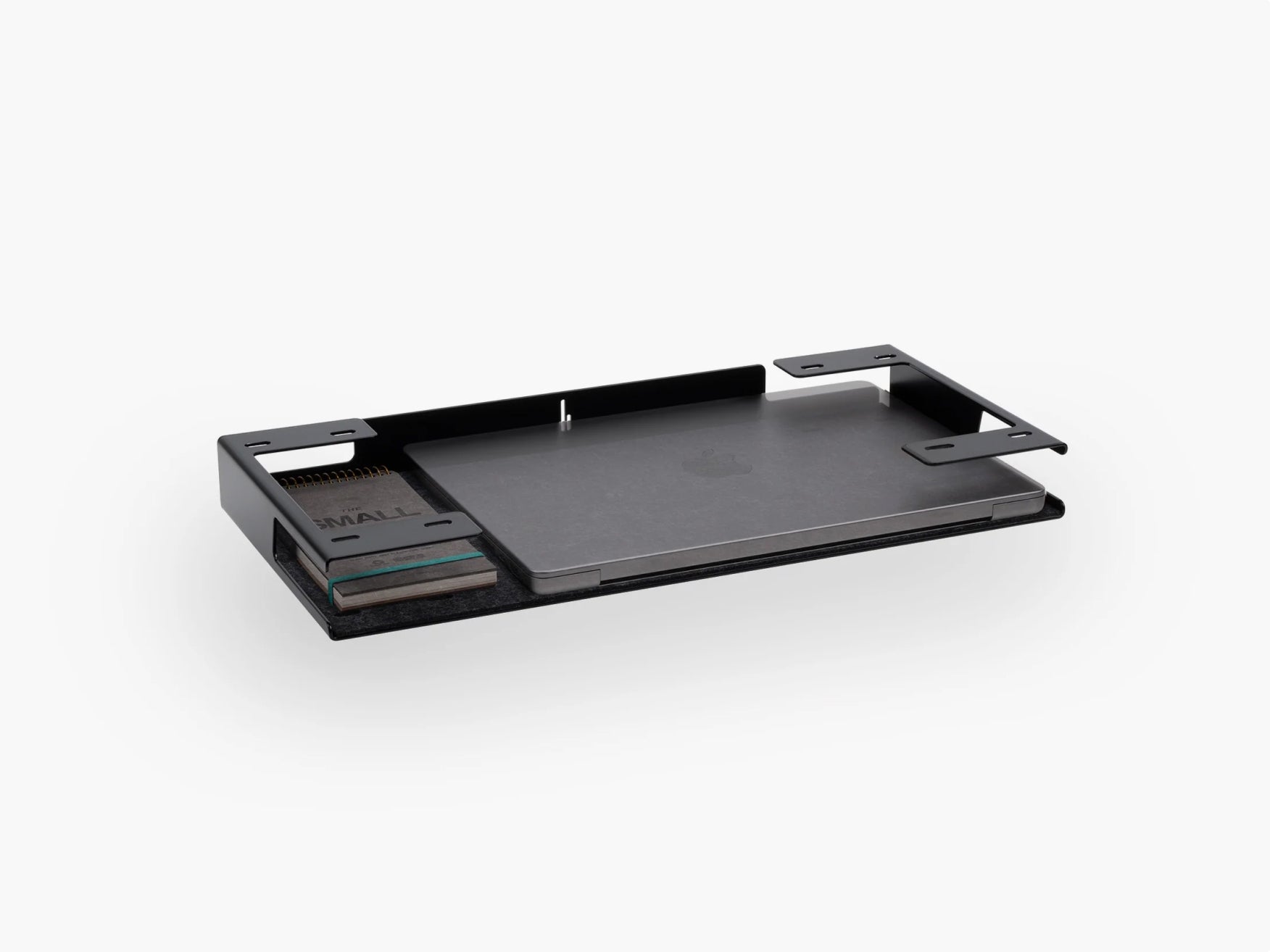
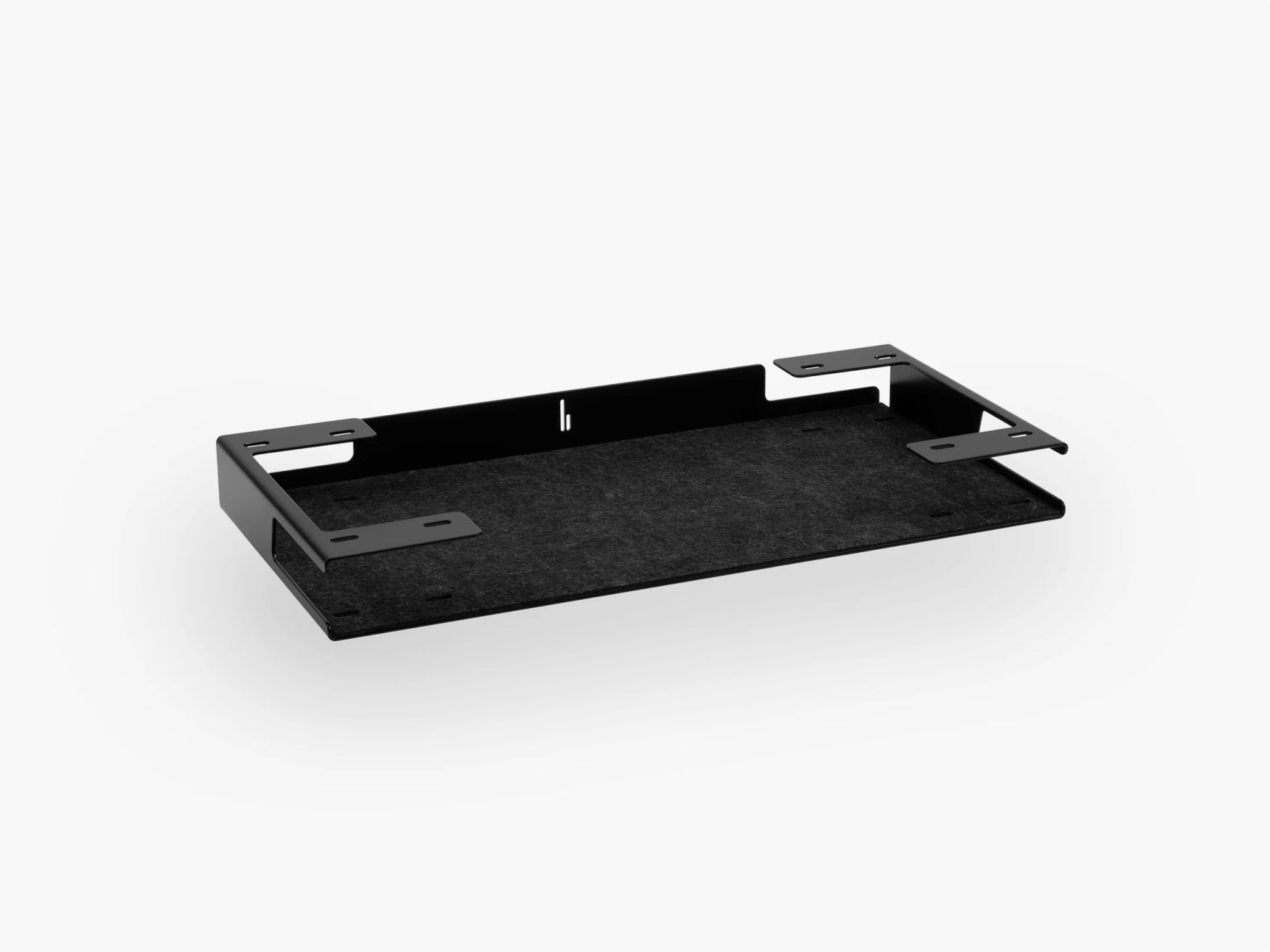
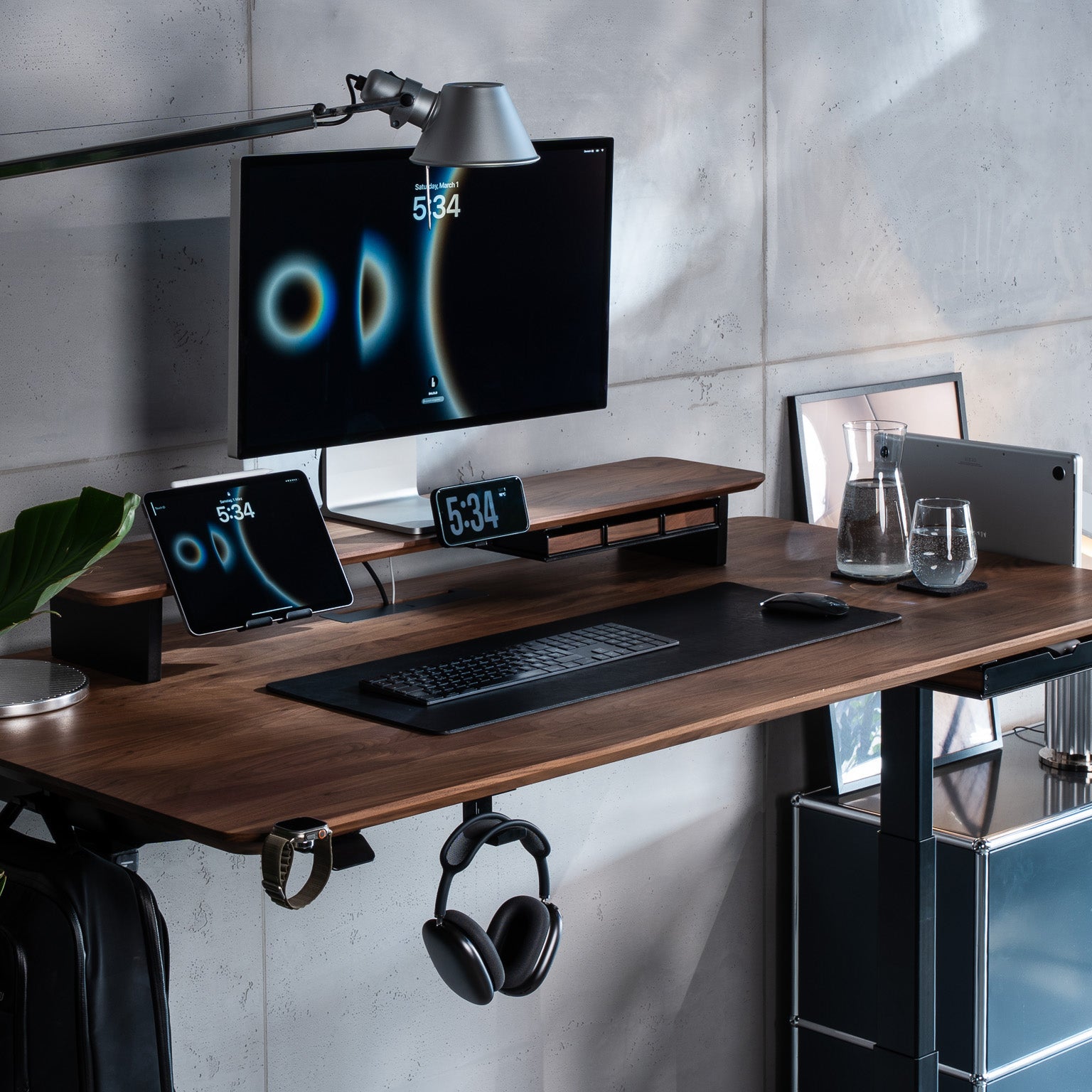
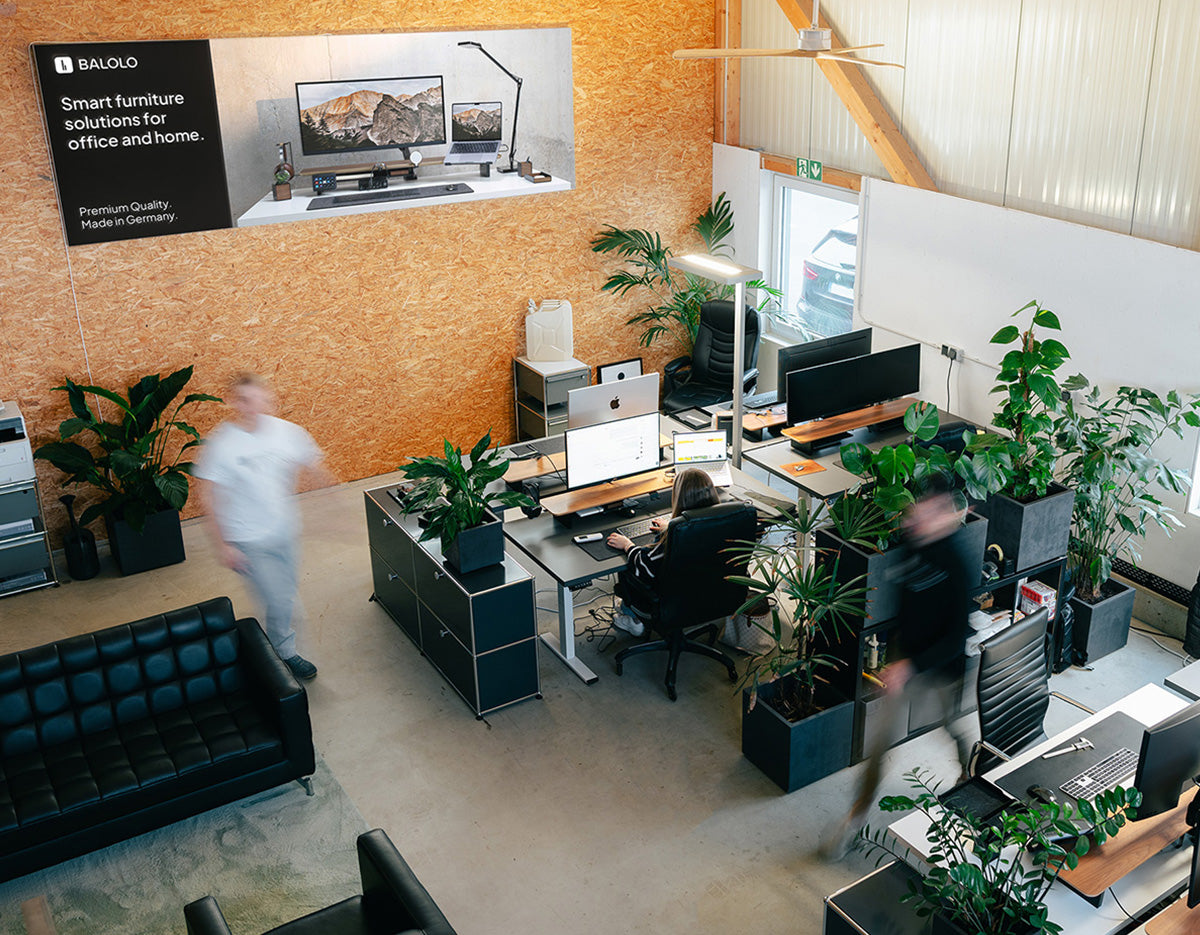
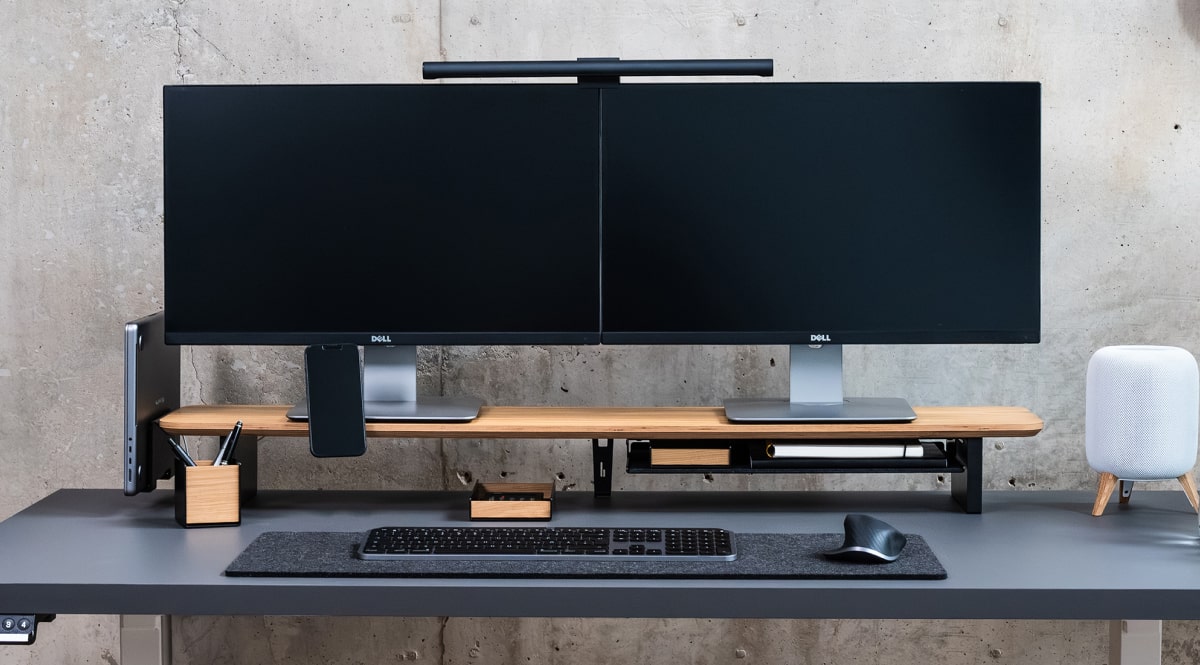
A dark desk setup is built on deep tones like black, charcoal, graphite, espresso or dark walnut wood. These colors are often paired with black accessories, dark wall surfaces, warm lighting and high-contrast screens.
A dark workspace usually feels very deliberately designed. It conveys depth, structure and a certain calm. At the same time, it can look premium and tech-forward without feeling cluttered.
A dark desk setup is especially well suited to you if you prefer:
- a modern and bold workspace design
- a high-contrast, atmospheric look
- a focused work environment
- dark wood combined with black metal
- a tech-forward or creative setup
Done right, a dark workspace doesn't feel heavy or oppressive. It feels clear, controlled and focused.
What Is a Light Desk Setup?
A light desk setup uses bright colors such as white, beige, sand, oak, light gray or other soft neutrals. It's typically defined by plenty of daylight, uncluttered surfaces and a calm design with few visual distractions.
This style is especially popular with people who want a clean desk, a minimalist home office, or a bright, welcoming workspace.
A light desk setup is a great fit if you like:
- open and uncluttered workspaces
- Scandinavian or minimalist design
- small rooms that should feel bigger
- natural materials and soft colors
- a calm and inviting atmosphere
Light workspaces often already look organized before you've added a single accessory. The color palette creates visual clarity and makes surfaces feel more generous.

The Advantages of a Dark Desk Setup
A dark workspace offers a number of clear design and functional advantages.
1. Dark colors support a focused atmosphere
Dark tones reduce visual noise. They make the workspace feel more contained and focused.
Especially for activities like design, programming, video editing, photo editing or conceptual work, this cocooned atmosphere can feel pleasant. The eye is drawn more strongly to the screen and the work surface.
A dark desk setup can therefore be especially well suited for deep work and longer, focused work sessions.
2. Dark materials look premium
Dark wood, matte surfaces and powder-coated black steel show up in so many high-end workspace designs for a reason.
They give the workspace depth and presence. At the same time, a dark setup usually needs very little decoration to feel characterful.
At BALOLO, we especially value the combination of functional design and natural materials. Dark wood paired with black steel creates a workspace that feels precise and premium without losing everyday practicality.
3. Lighting and accessories stand out more
In a dark setup, light sources, monitors and selected accessories become deliberate design elements.
Especially effective are:
- warm desk lamps
- indirect lighting behind the monitor
- subtle LED accents
- metal or wood details
- a few bright contrasts
The result is a setup with spatial depth and a clear visual hierarchy.
4. Dark setups pair well with modern tech
Many monitors, keyboards, microphones, speakers and laptop stands already come in black or dark gray.
In a dark workspace, they tend to blend in especially well. Tech feels less like a foreign object and more like an integrated part of the desk design.
The Advantages of a Light Desk Setup
A light desk setup creates a different, but equally compelling work atmosphere.
1. Light colors make small rooms feel bigger
White and light surfaces reflect more light. That makes the entire room feel more open and generous.
This is especially helpful for:
- small home offices
- workspaces in the bedroom
- compact city apartments
- narrow desks
- work nooks with limited space
A light color scheme can visually declutter a small desk without having to replace any furniture. For more ways to create clever organization and extra space, take a look at our article How to Create More Space on Your Desk Without Getting a Bigger Desk.
2. A light setup supports a clean look
Light workspaces pair ideally with a minimalist and aesthetic desk setup.
Clean surfaces, soft colors and a few carefully chosen items convey calm. The workspace feels lighter and less visually demanding.
3. Light surfaces harmonize with daylight
If your workspace gets plenty of natural light, light surfaces can amplify that effect.
They reflect the daylight and help the room feel open and inviting for longer. That can make a noticeable difference during long working days.
Light coming in from the side is usually the most pleasant. That way, the workspace stays bright without distracting reflections on the screen.
4. A light workspace feels calm and approachable
Not everyone wants a dramatic or heavily styled desk.
A light desk setup usually feels softer and less intense. That can be especially pleasant if you spend a lot of time writing, planning, communicating or handling administrative tasks.
Dark or Light Desk Setup: How to Make the Right Choice
The best desk setup doesn't simply follow a trend. It should fit your room, your day-to-day life and the way you work.
Choose a dark desk setup if you...
- want a bold and modern workspace
- prefer strong contrast
- are looking for an immersive work atmosphere
- work with a lot of tech
- like dark wood and black metal
- mainly use your workspace in the evenings
Choose a light desk setup if you...
- want to create a bright home office
- want a small room to feel bigger
- prefer a clean and airy look
- like working with natural materials
- get a lot of daylight at your workspace
- are looking for a calm, minimalist style
Still not sure? These four questions can help make it clearer.
1. How much daylight does your workspace get?
Lighting conditions are one of the most important factors in this decision.
If your room is already fairly dark, a fully dark setup can quickly feel heavy. That doesn't mean dark colors are off the table — you'll just want to lean more on indirect lighting, warm light sources and bright contrasts.
In a very bright room, both directions generally work. A light desk setup might feel like the obvious choice there, while a dark workspace can create an exciting contrast to the bright room.
2. How big is your work area?
Light colors make surfaces feel wider and more open. Dark colors, on the other hand, give an area more definition and visual boundaries.
For a small desk or a compact work corner, a light setup therefore often has real advantages. In a larger room, a dark workspace can add character without making the room feel cramped.
3. How do you want to feel while working?
The emotional effect of a workspace is often underestimated.
A dark desk setup often feels: focused, calm, creative, intense, atmospheric.
A light desk setup, on the other hand, tends to feel: open, fresh, minimalist, calm, spacious.
There's no universally right answer. What matters is the atmosphere you want to experience every single day.
4. How much upkeep are you willing to put in?
Every surface shows signs of wear over time. Depending on the color, though, different things stand out more.
On dark surfaces, you'll often notice: dust, fingerprints, fine lint, light-colored crumbs.
On light surfaces, it's more often: stains, discoloration, dark scratches.
So choose not only based on looks, but also on which surface you'll actually enjoy maintaining day to day.

How to Build a Premium Dark Desk Setup
A good dark setup isn't just made up of as many black elements as possible. Without contrast, it can quickly feel flat and monotonous. What matters is a mix of materials, deliberate lighting and a clear structure.
Create a strong foundation
Start with one central element that sets the tone. Good options include:
- a desk made from dark wood
- a black or charcoal desktop
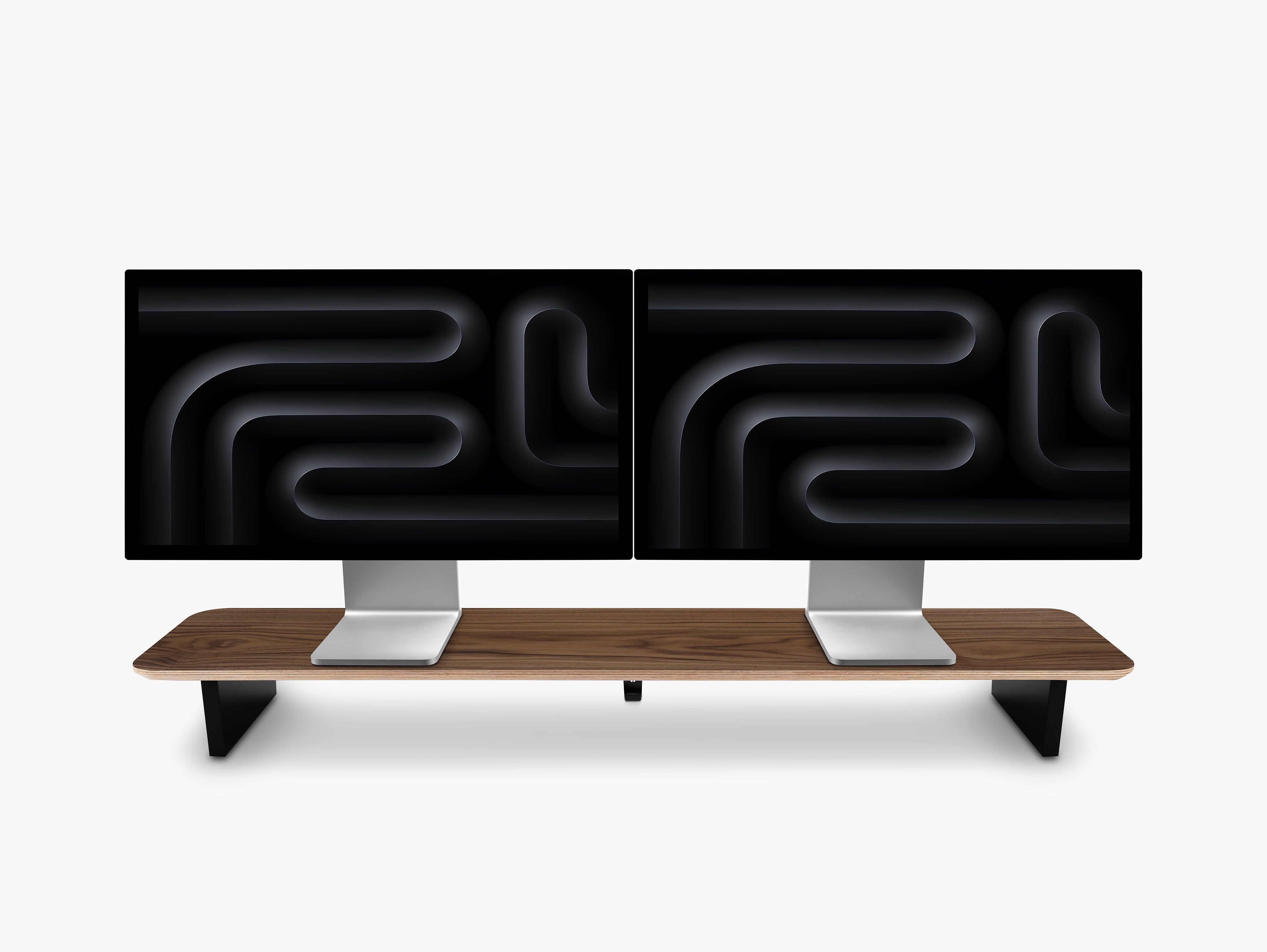
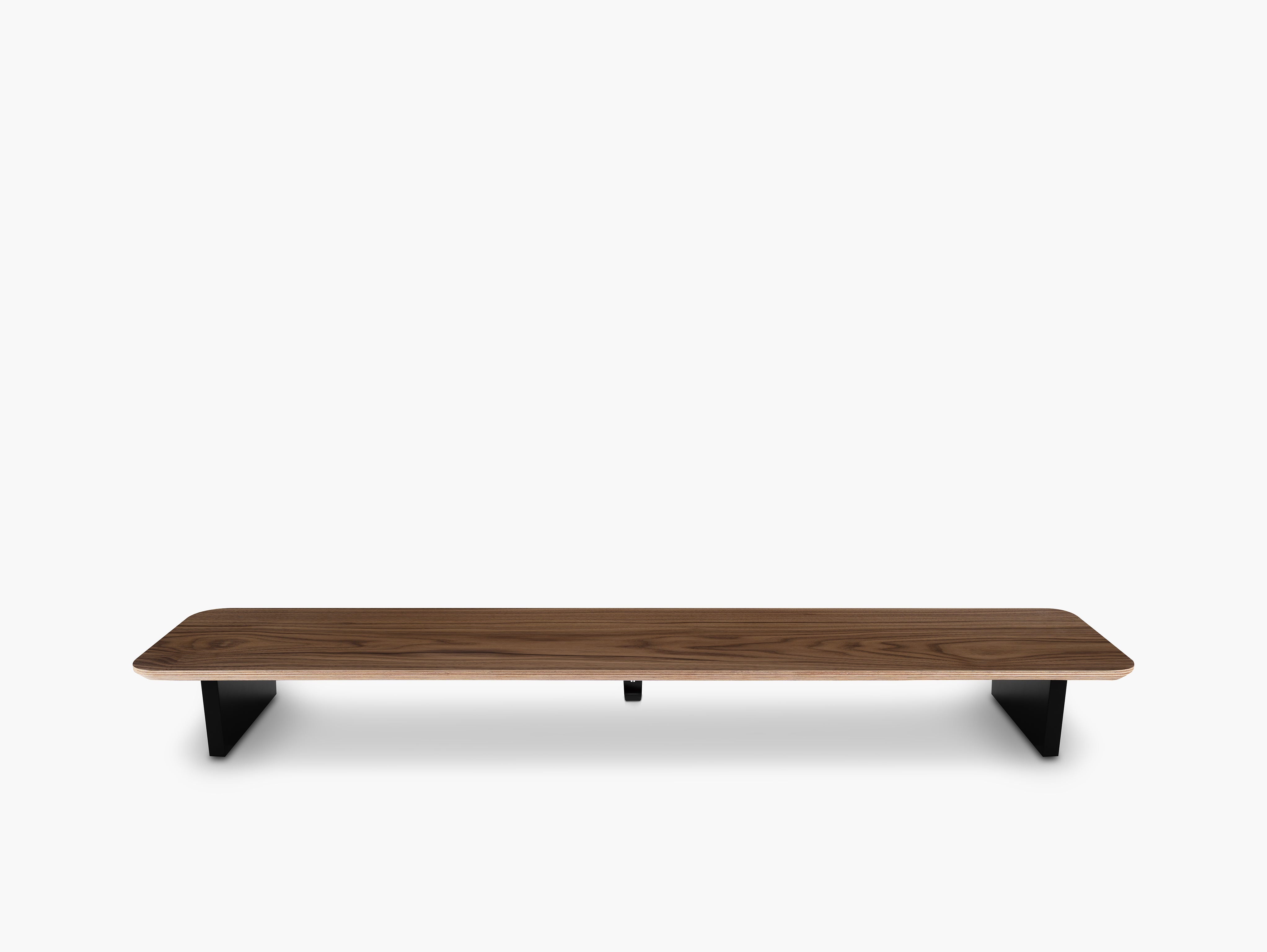
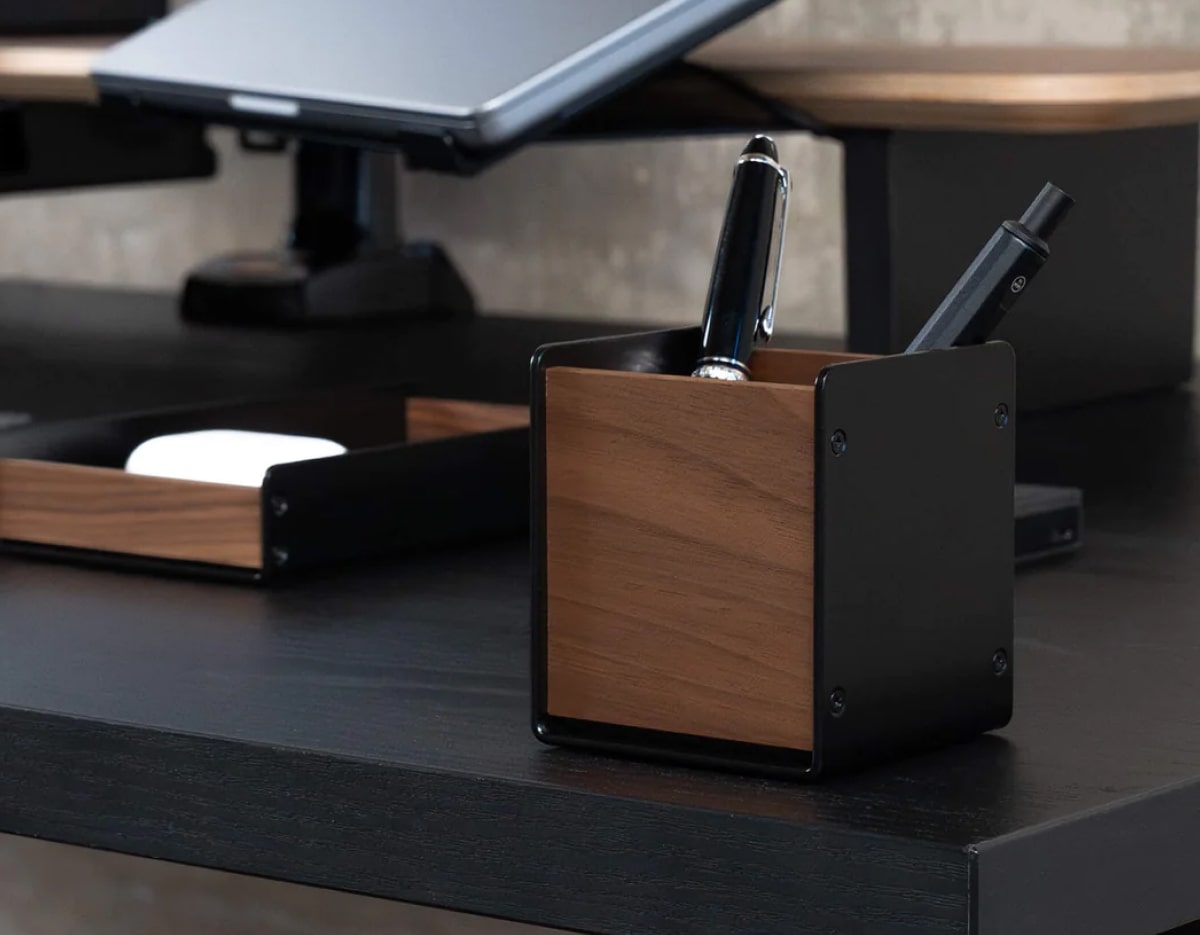
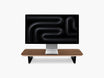
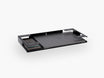
- a monitor stand made from walnut or oak wood with black steel accessories
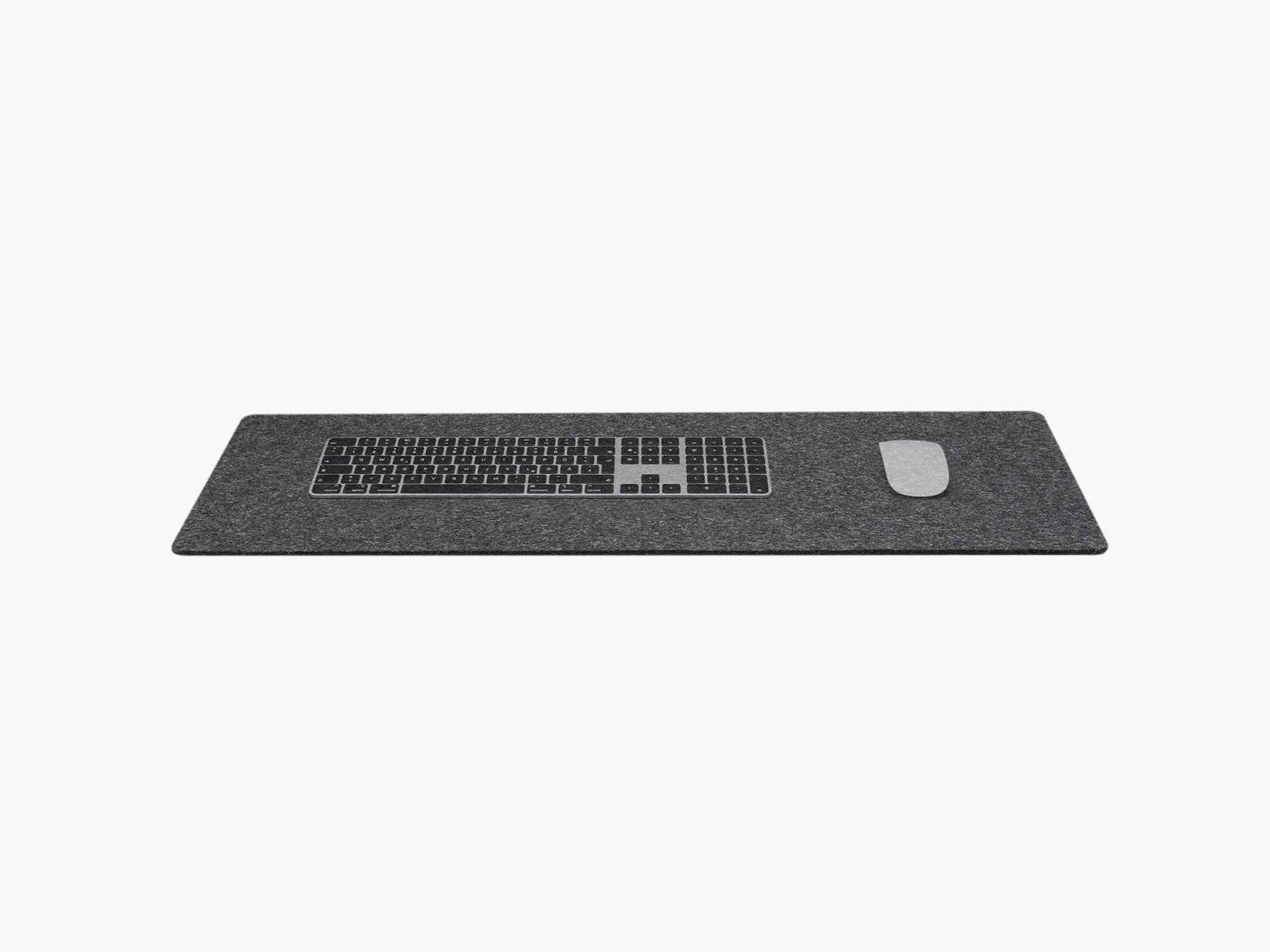
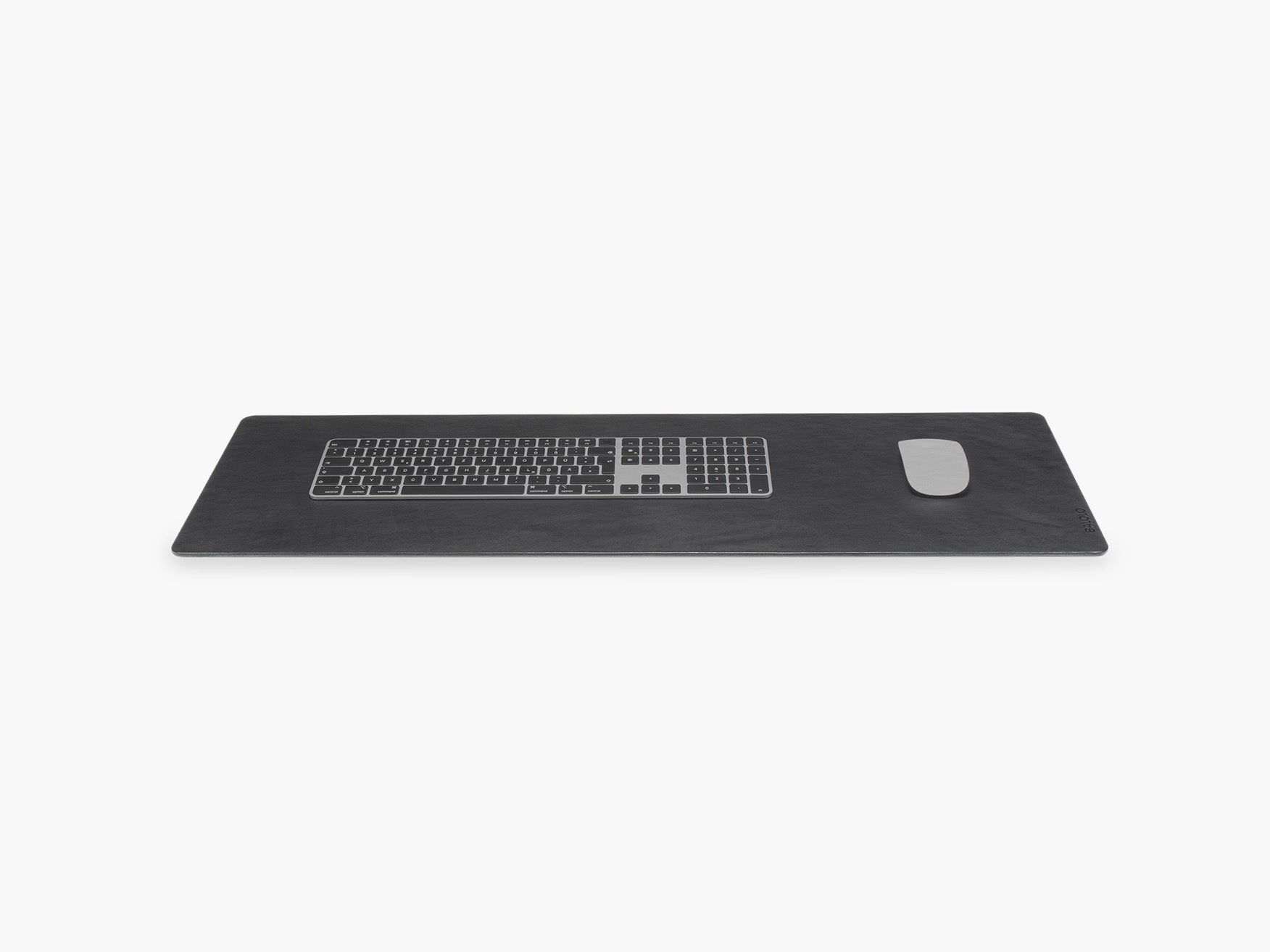
- a black desk pad made from leather or felt
This foundation gives the whole workspace visual grounding.
Use warm lighting
Lighting is what decides whether a dark workspace feels premium or dim and gloomy.
Especially well suited are:
- warm-white desk lamps
- indirect lighting behind the monitor
- subtle ambient light
- light sources placed to the side
Warm light brings out the texture of dark materials and creates pleasant spatial depth.
Get cable management right from the start
A dark setup lives on clarity and control. Visible cables undermine that impression especially quickly.
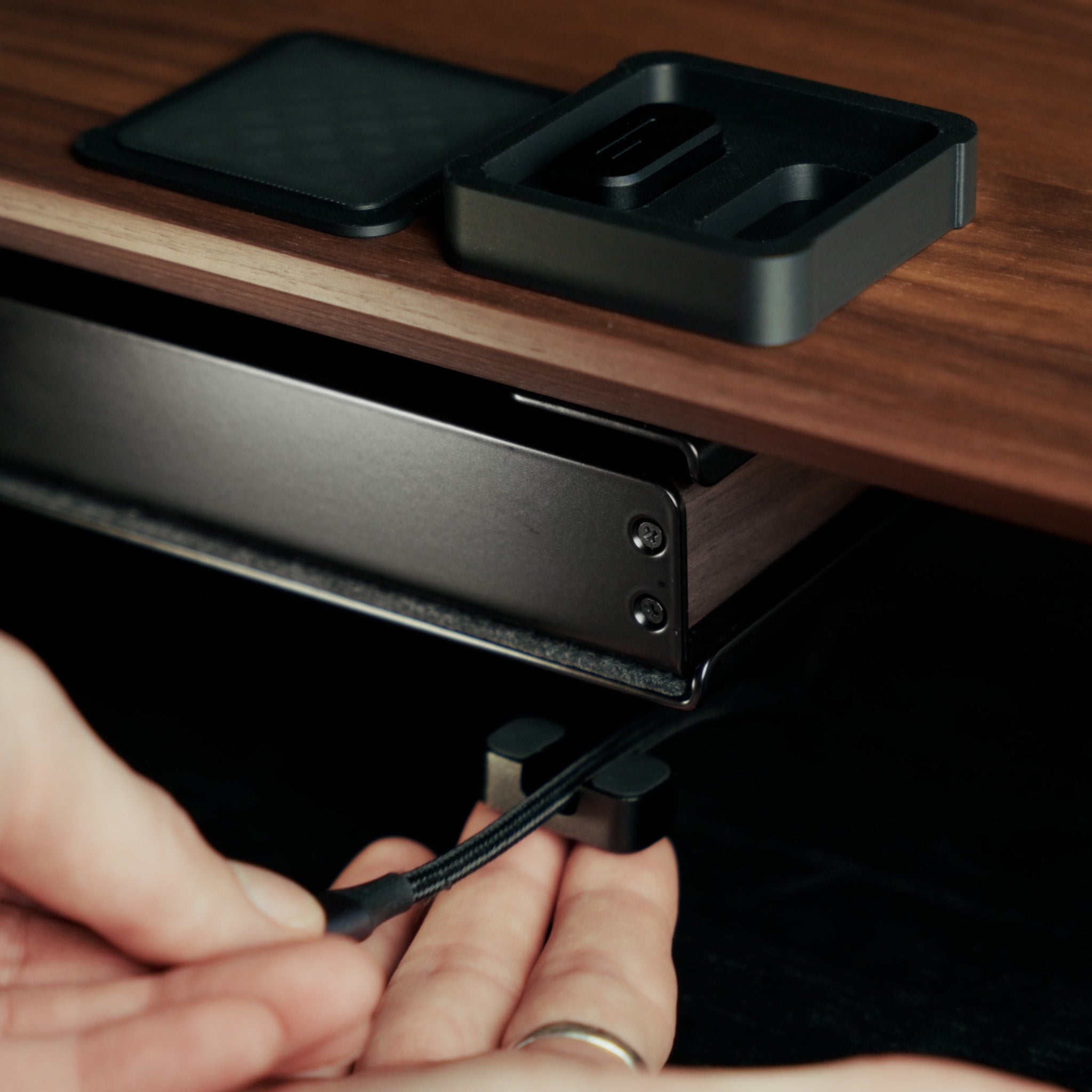
That's why good cable management for your desk should be part of the plan from day one. We explain exactly how to do that in our article Cable Management Made Easy.
At BALOLO, we don't see cable management as a minor detail, but as the foundation of a tidy, functional desk setup.
Choose accent colors deliberately
A dark setup usually looks best when you add only one or two additional colors.
Good choices include:
- warm white
- dark green
- brown and wood tones
- brushed metal
- subtle beige tones
A handful of deliberate accents look more premium than a lot of competing colors.
How to Build a Harmonious Light Desk Setup
A light workspace needs structure too. Without a mix of materials and clearly defined areas, it can quickly feel unfinished or sterile.
Combine several light shades
A good light setup isn't made purely of white on white. Instead, combine different light tones such as:
- off-white
- sand
- beige
- oak
- light gray
- cream
This creates depth without losing that airy feel.
Bring in natural materials
Wood adds warmth to a light setup and keeps the workspace from feeling cool or clinical.
A monitor stand, a desk shelf or selected wooden accessories can give the whole workspace more calm and a sense of quality.
At BALOLO, we combine minimalist shapes with natural materials, because a light workspace stays clear this way without feeling impersonal.
Reduce visible items
Clutter stands out quickly on light surfaces. That's why it's worth only leaving out the things you use regularly or deliberately want to use as a design element.
Good examples include:
- one carefully chosen desk lamp
- a tray for small items
- holders for headphones or a smartphone
- a plant
- a pen holder
- a neatly routed charging cable
Everything else should disappear under the desktop, into drawers, or into a modular organization system.
Make the most of daylight
Position your desk so that daylight supports your workspace without washing out your screen. Light coming in from the side is often ideal.

The Best Option for Most People: A Balanced Desk Setup
You don't have to fully commit to either style.
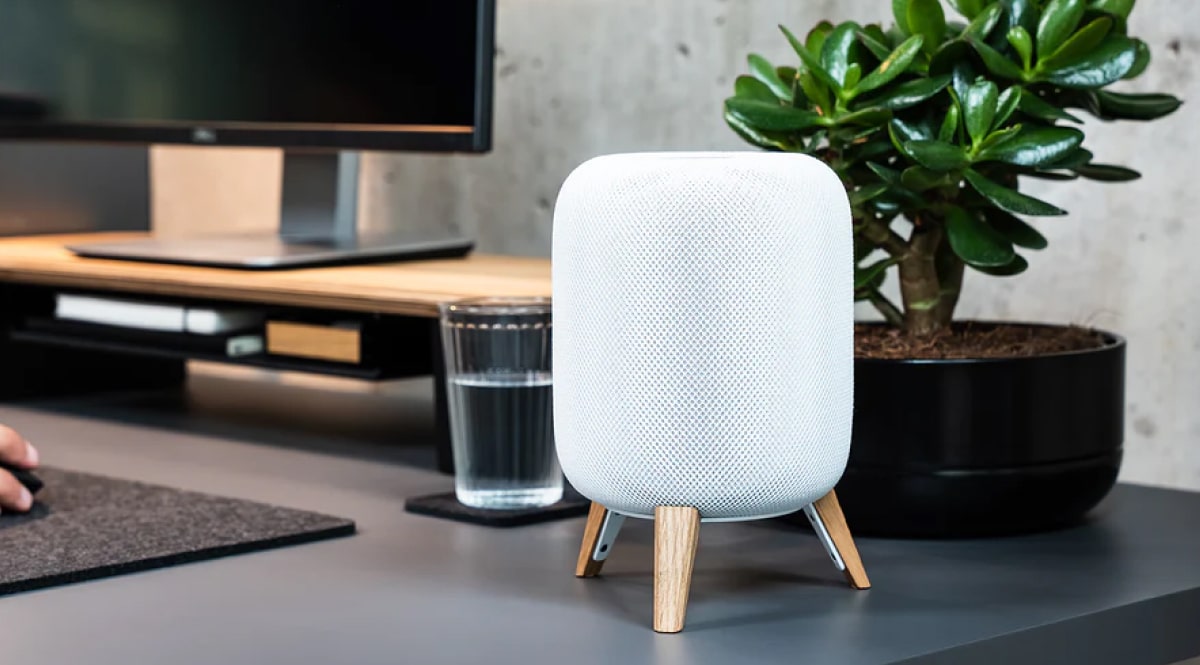
Many of the most timeless desk setups combine light and dark elements. The contrast adds depth without making the workspace feel heavy or cold.
Possible combinations include:
- a monitor stand made from walnut wood on a light desk
- black accessories in a light-filled room
- a light oak desktop with dark tech gear
- white walls with warm wood and black details
- a dark desk in front of a light wall
A balanced desk setup like this combines the openness of a light workspace with the precision and depth of dark elements.
Especially if you're looking for a style that will keep working long-term, this mix is often the best choice.
Common Mistakes with Dark and Light Desk Setups
Regardless of which color direction you choose, there are a few mistakes that can quickly hurt the overall impression.
1. Prioritizing looks over function
An aesthetic workspace doesn't help much if it doesn't support your workflow. The best desk accessories aren't automatically the flashiest ones, but the ones you actually use every day and that keep your desk organized long-term.
2. Neglecting cable management
Even premium gear looks messy if cables run visibly across the desk surface or hang down underneath it. A clean desk setup therefore doesn't start with decoration, but with well-thought-out cable routing.
3. Sticking to only one color tone
A fully black or fully white setup can work. In most cases, though, the result looks more interesting when different surfaces are combined: wood, metal, fabric, matte finishes and natural materials.
4. Overdecorating the desk
A workspace should support focus. Too many plants, figures, lamps, trays or gadgets create visual noise. Minimalism doesn't mean the desk has to be empty. It means that every visible item serves a purpose or has a clear design value.
Dark or Light Desk Setup: Which Is Better?
Neither style is fundamentally better.
A dark desk setup suits you better if you're looking for depth, contrast and a focused, immersive atmosphere. A light desk setup is the better choice if you prefer openness, brightness and a calm, minimalist environment.
So the key question isn't:
Which style is more popular right now?
But rather:
Which workspace helps you work with focus and feel good in the long run?
That's exactly the style you should choose.
Once the color direction is settled, the rest of the decisions get easier too. Monitor stands, cable management, desk accessories, lighting and organization can then be matched to one another with intent.
Dark workspaces feel focused, premium and tech-forward. Light setups create openness, calm and visual ease. Combinations of light surfaces, natural wood tones and dark accents tend to feel especially balanced.
A great desk setup, though, isn't just about looking good. It creates structure, supports your workflow, and turns your workspace into a place where you actually enjoy spending time.
FAQ: Common Questions About Dark and Light Desk Setups
Is a dark desk setup better for productivity?
A dark desk setup can create a focused and immersive atmosphere. Many people find that pleasant for concentrated work. If the room is already quite dark, though, the setup should be complemented with warm, indirect lighting.
Are light desk setups better for small rooms?
In many cases, yes. Light colors reflect more light and make small rooms feel bigger and more open. That's why they're especially well suited to compact home offices and small work areas.
Which desk setup is easier to keep clean?
Both options need regular upkeep. On dark surfaces, dust and fingerprints are usually visible sooner. Light surfaces, on the other hand, show stains, scratches and discoloration more clearly.
Can you combine dark and light elements?
Yes. Combining both styles often looks especially balanced. A bright room with black accessories, or a light desktop with dark wood and metal, creates contrast without feeling chaotic.
Which materials work for both styles?
Wood, powder-coated steel, matte surfaces, felt and leather all work in both dark and light desk setups. What matters most is the tone, the contrast, and how it's paired with the right lighting.
Which colors work well for a dark desk setup?
Black, charcoal, graphite, dark brown and walnut wood all work especially well. Good accents include warm white, beige, metal tones or muted green.
Which colors work well for a light desk setup?
White, cream, sand, beige, light gray and light oak are all great choices. Black or dark gray accessories can be used deliberately to give the workspace more structure.