



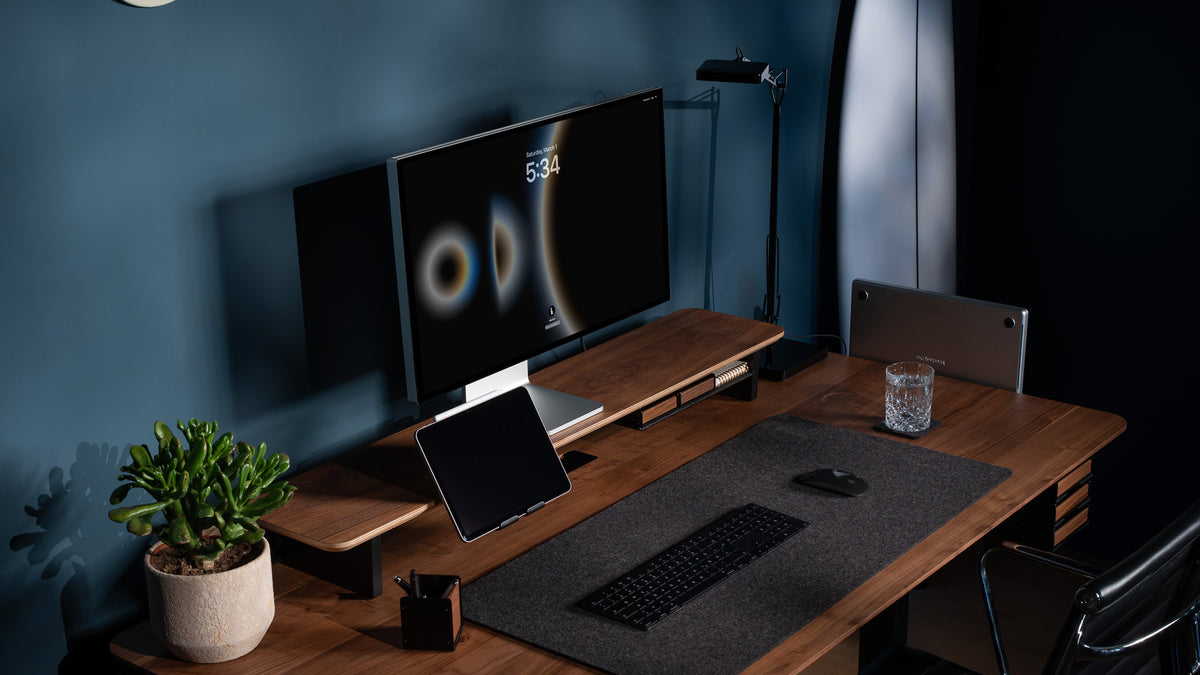
Building a workspace in a bedroom is all about creating a clear separation between work and rest without wasting valuable space. The best bedroom workspaces use a compact desk, thoughtful organization, good lighting, hidden cables and only the accessories you actually need.
You don't need a dedicated office to create a productive workspace. Even a small corner of a bedroom can become a focused, functional place to work when every element has a purpose.
And in a room that already serves another important function, that matters even more.
Here is how to create a bedroom workspace that feels organized, intentional and comfortable to use every day.
1. Start by Choosing the Right Area of the Bedroom
Before choosing a desk or accessories, decide where your workspace should live.
The ideal location should feel like its own small zone while still fitting naturally into the bedroom.
Good options include:
- An unused wall
- A corner near a window
- The space beside a wardrobe
- An alcove
- The area at the foot of the bed
- A narrow section between two pieces of furniture
If possible, avoid placing the desk directly next to your pillow or facing the bed.
Creating even a small amount of visual separation can make it easier to switch between work mode and rest mode.
Make use of natural light
A workspace close to a window can feel brighter and more inviting during the day.
Position your desk so natural light reaches the workspace without creating distracting reflections on your monitor.
If you regularly work on video calls, indirect natural light can also create more balanced lighting around your face.
But don't choose a desk position based on daylight alone. You still need enough room to sit comfortably, move your chair, access storage and manage cables.
2. Choose a Desk That Fits the Space
In a bedroom, a larger desk is not automatically a better desk.
The goal is to find a surface that gives you enough working space without making the entire room feel like an office.
For a small desk setup, consider:
- A narrow rectangular desk
- A compact wall desk
- A desk with a shallow depth
- A corner desk for an otherwise unused area
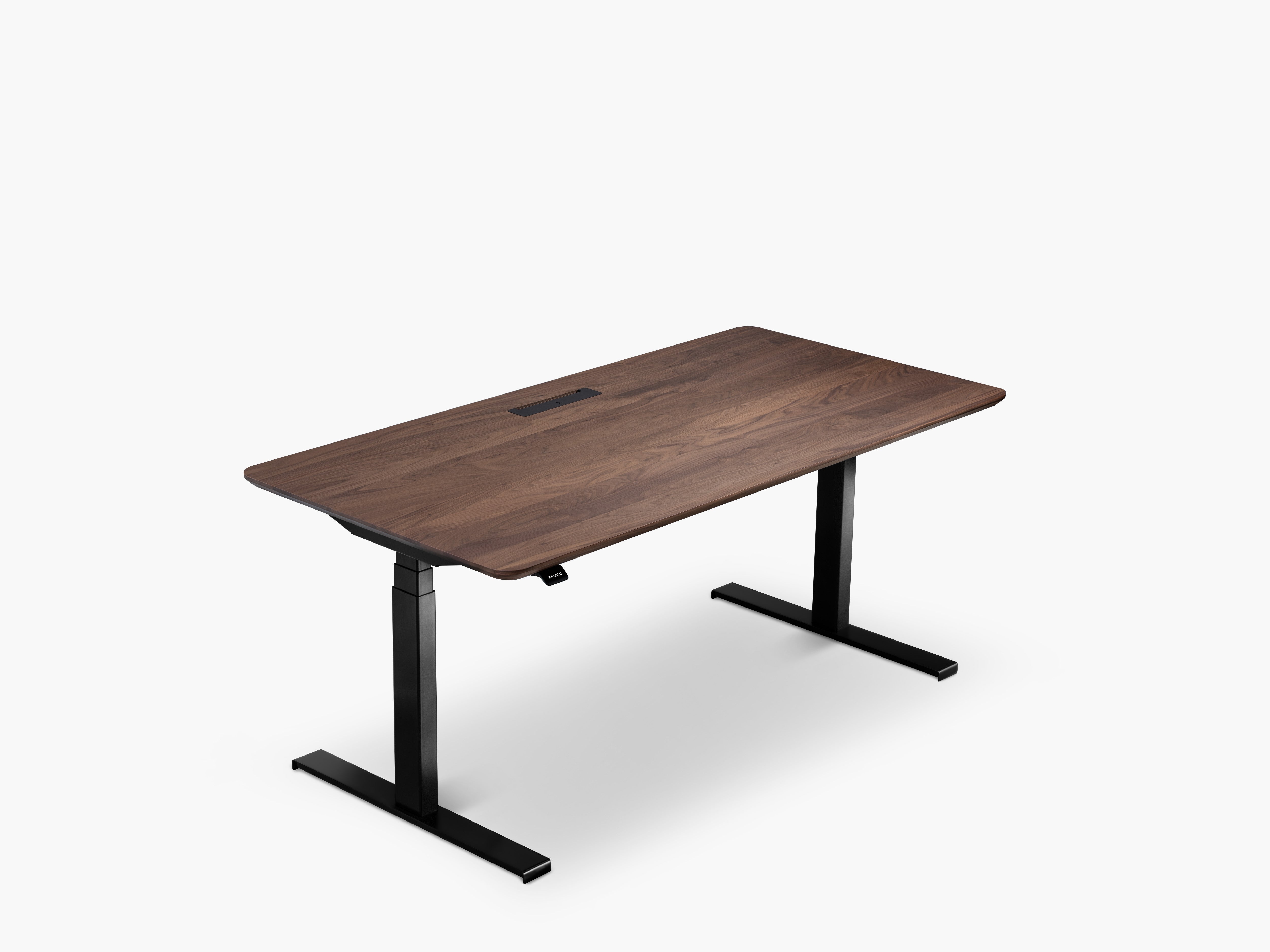
- A height adjustable desk with a compact footprint
Measure the area before buying anything.
Remember to include enough space for your chair and for opening nearby wardrobes, drawers, windows or doors.
How much desk space do you actually need?
Think about what you use every day.
If your setup consists primarily of a laptop, keyboard, mouse and notebook, you may need much less desk space than you think.
A monitor, laptop, speakers, phone charger, notebook, headphones and multiple accessories can quickly consume the entire surface.
That's why a smart workspace doesn't just increase desk size. It uses the available space more efficiently.

3. Think Vertically, Not Just Horizontally
One of the most effective principles for a workspace in a small bedroom is simple:
Use vertical space.
Most desk setups focus entirely on the surface of the desk. But when floor space is limited, the area above and below your working surface becomes especially valuable.
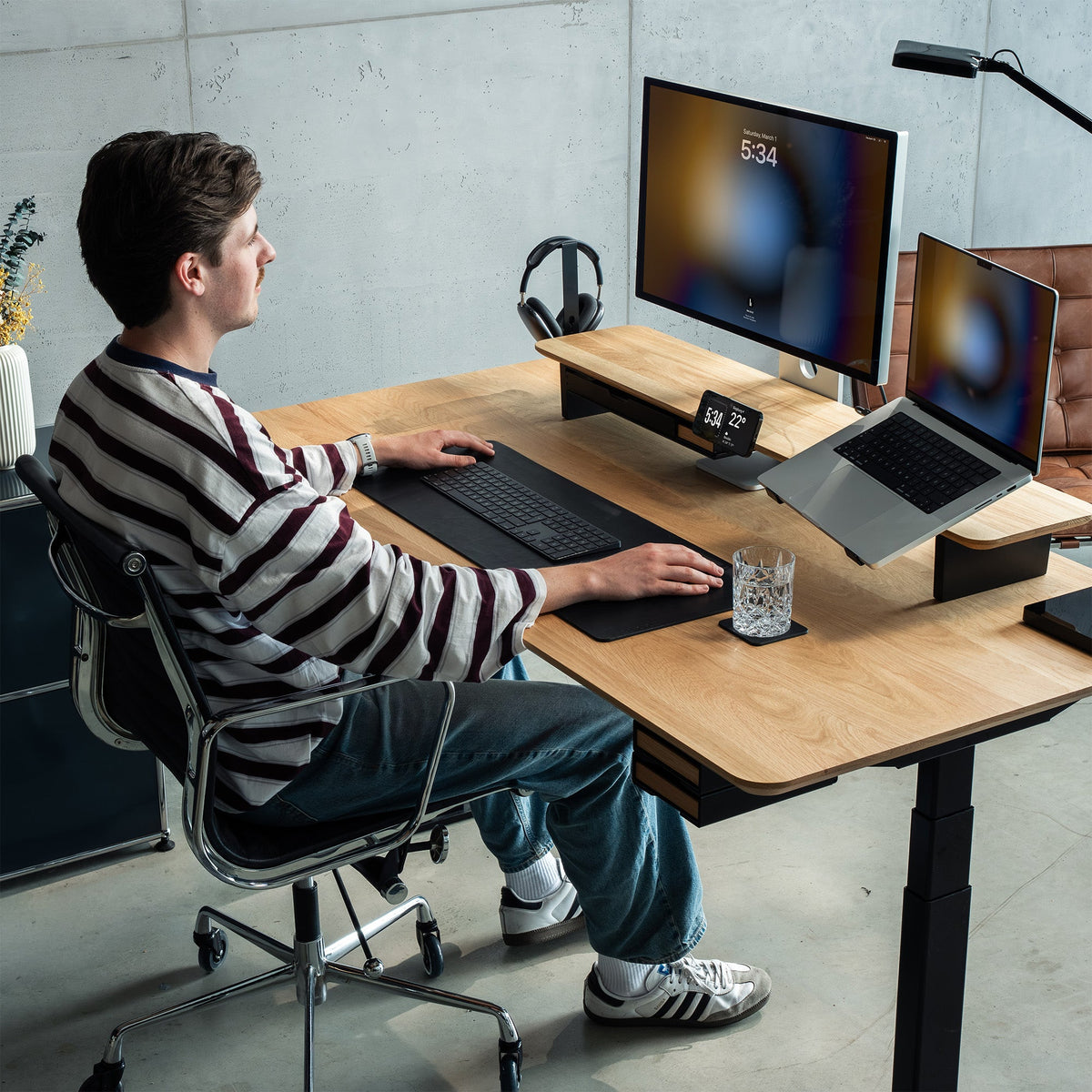
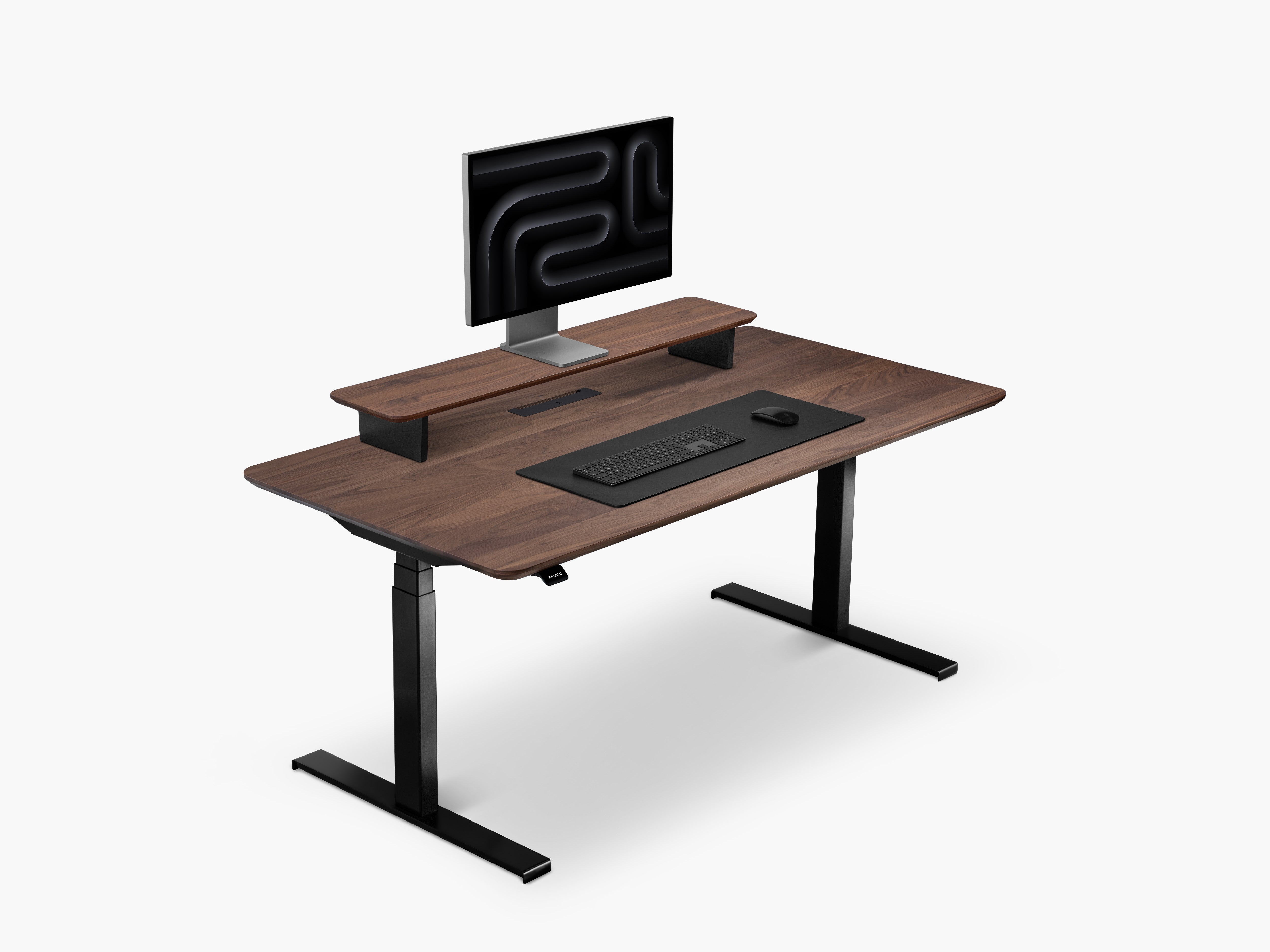
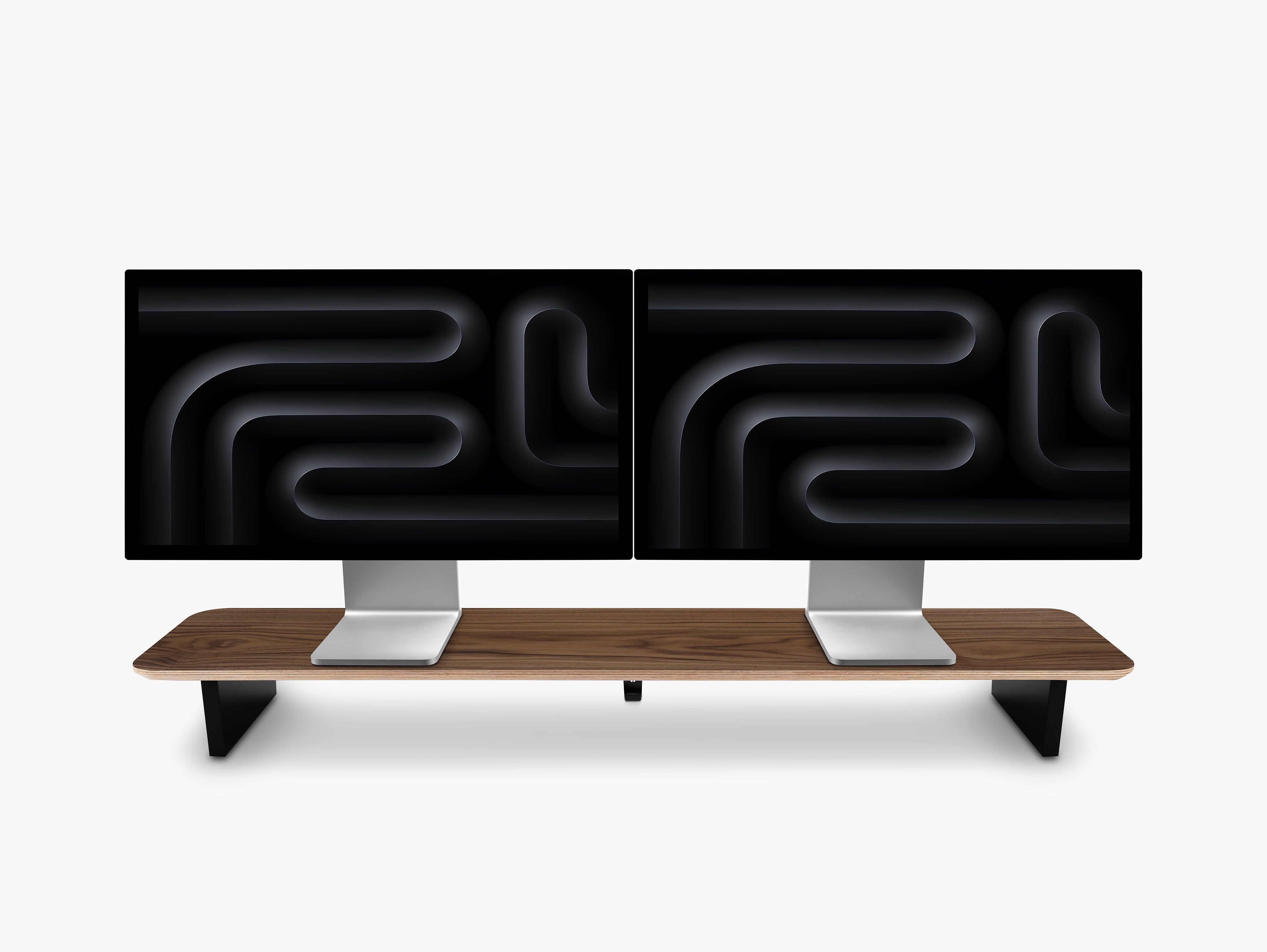
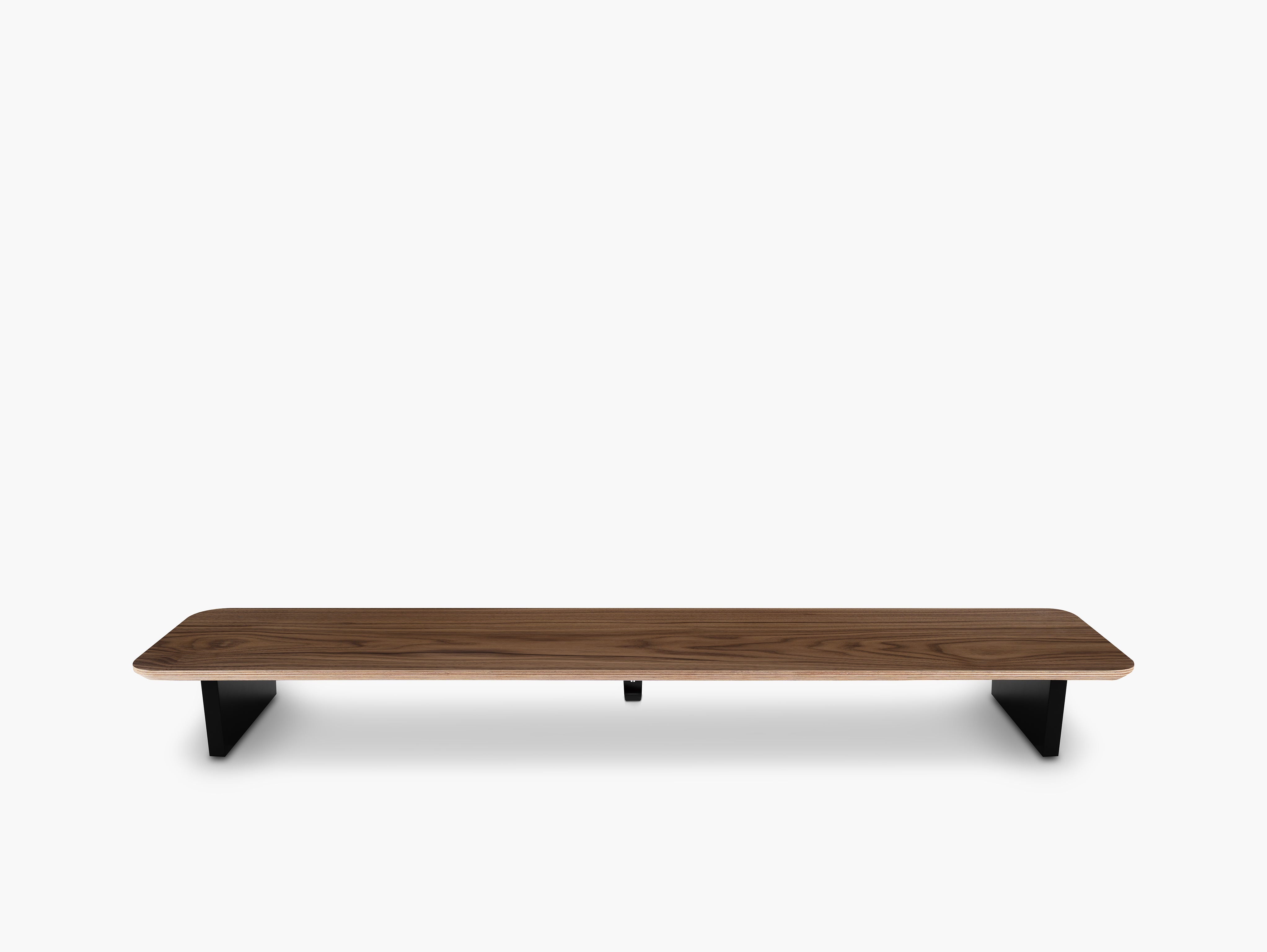
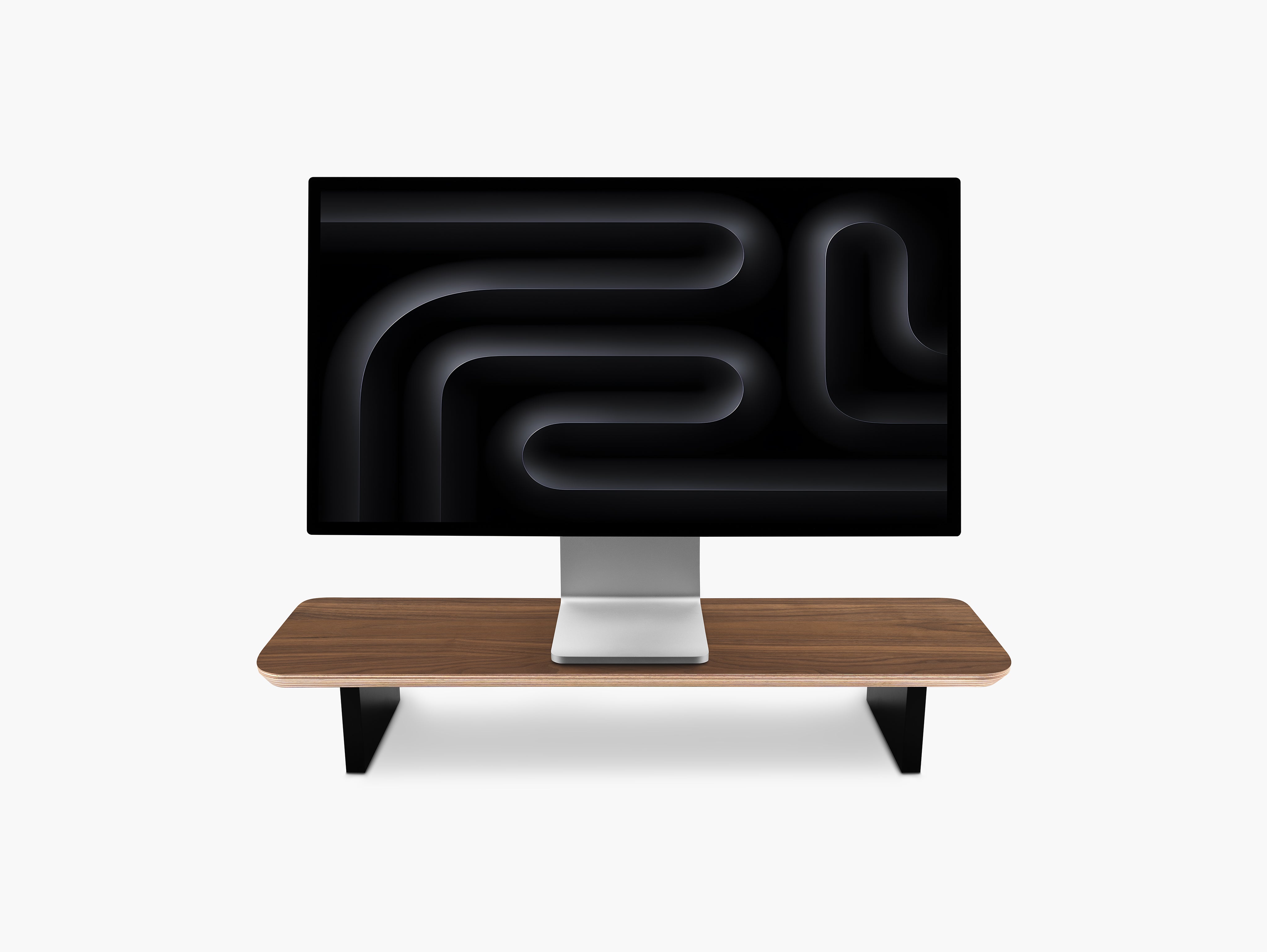
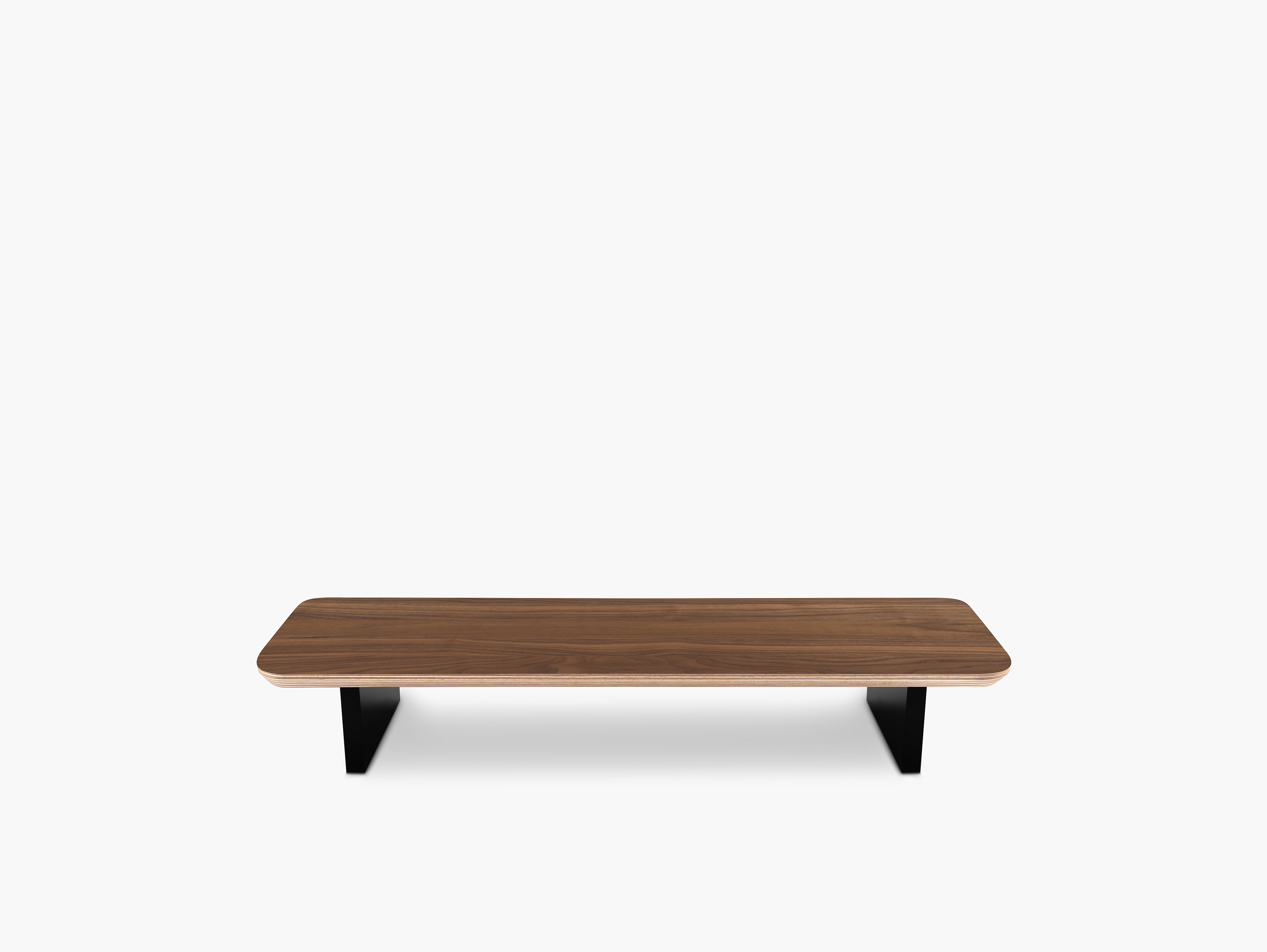
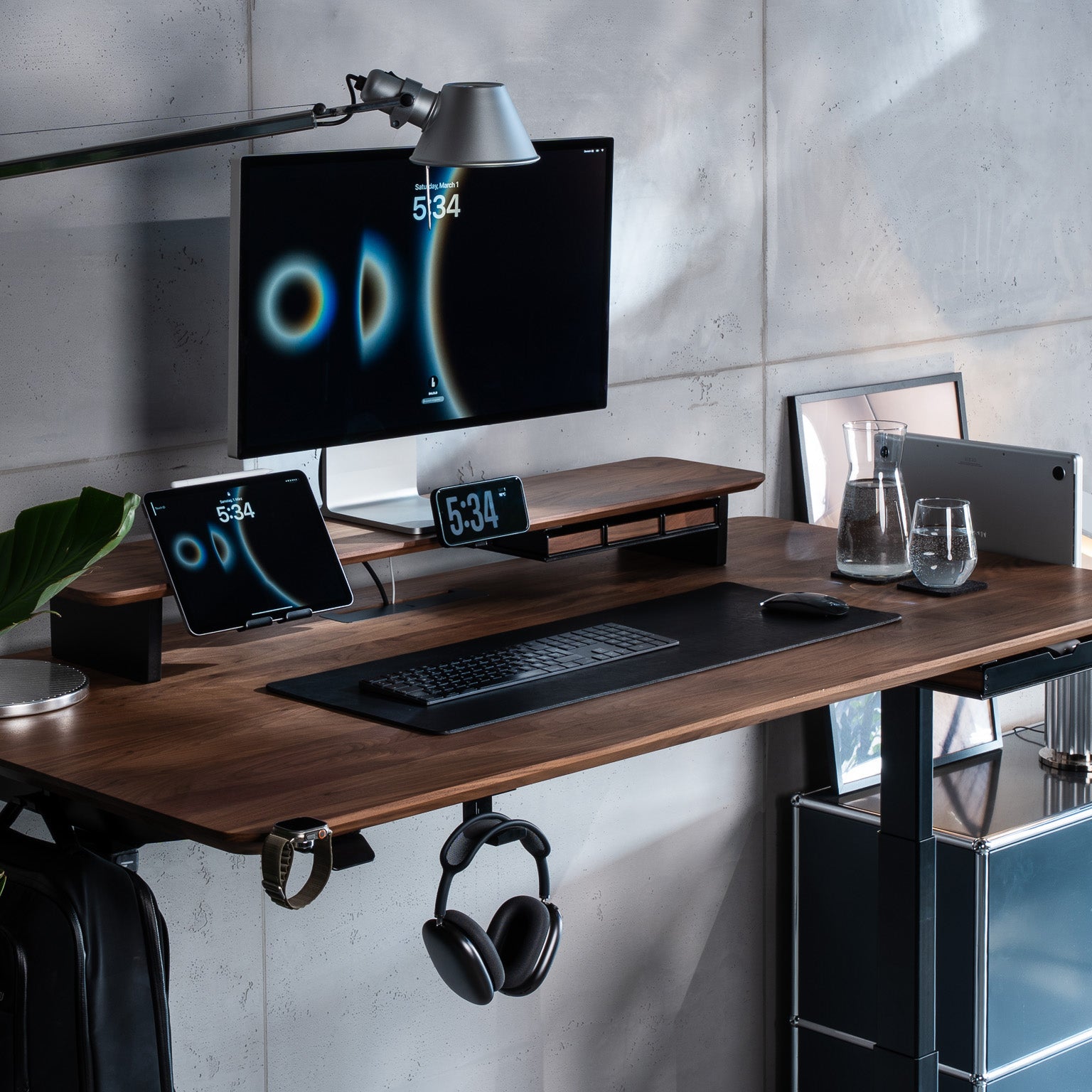
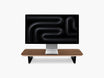
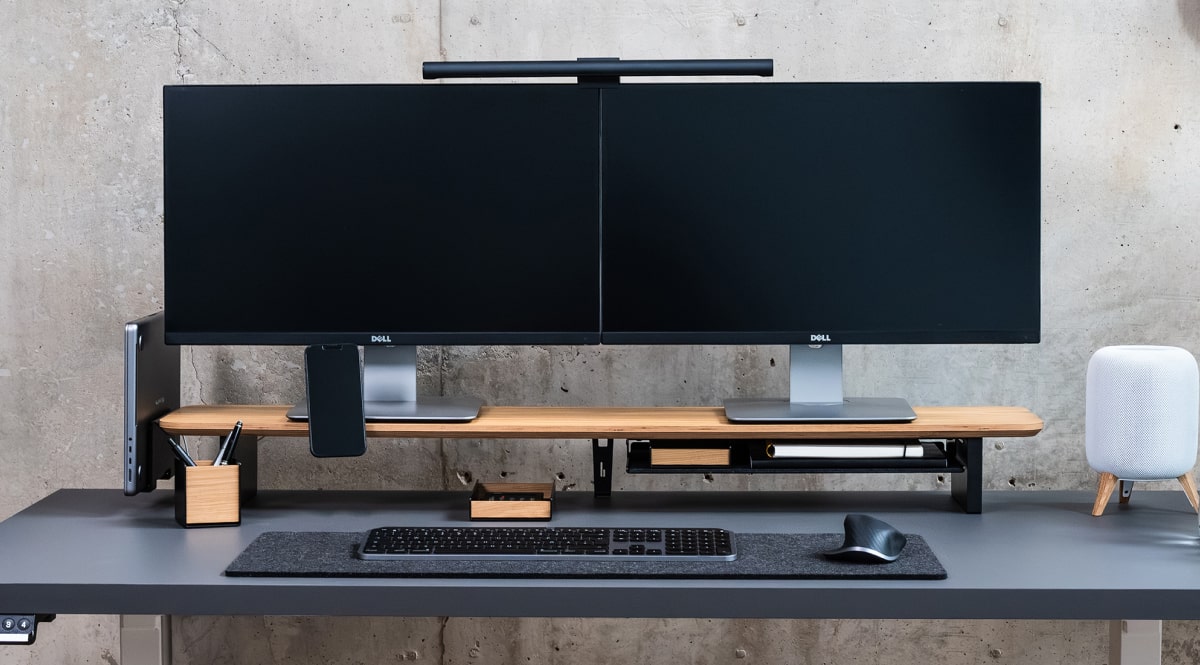
A monitor stand or monitor shelf can create a second level on the desk.
That extra level can help you:
- Position your monitor more intentionally
- Store smaller items underneath
- Create a clear visual hierarchy
- Keep frequently used accessories accessible
- Reduce clutter across the main desk surface
At BALOLO, this principle is central to the way we think about workspace design. Our modular workspace system is designed to make functionality part of the architecture of the setup instead of simply adding more objects to the desk.
The result is especially useful in compact spaces where every centimeter matters.

4. Keep the Desk Surface as Clear as Possible
A bedroom already contains plenty of visual information.
Clothes, bedding, books, lamps, furniture and personal items all compete for attention.
Adding a cluttered workspace can quickly make the entire room feel busy.
A minimal workspace setup creates the opposite effect.
Start with only the things you use regularly:
- Monitor or laptop
- Keyboard
- Mouse
- Desk lamp
- Notebook
- One or two essential accessories
Everything else should have a defined storage location.
This doesn't mean your workspace has to feel empty. It means every object should earn its place.
Give every item a home
One of the easiest desk organization rules is:
If an item regularly ends up on your desk, decide where it belongs when you're not using it.
Headphones can hang underneath the desk or monitor stand.
A laptop can sit in a vertical dock.
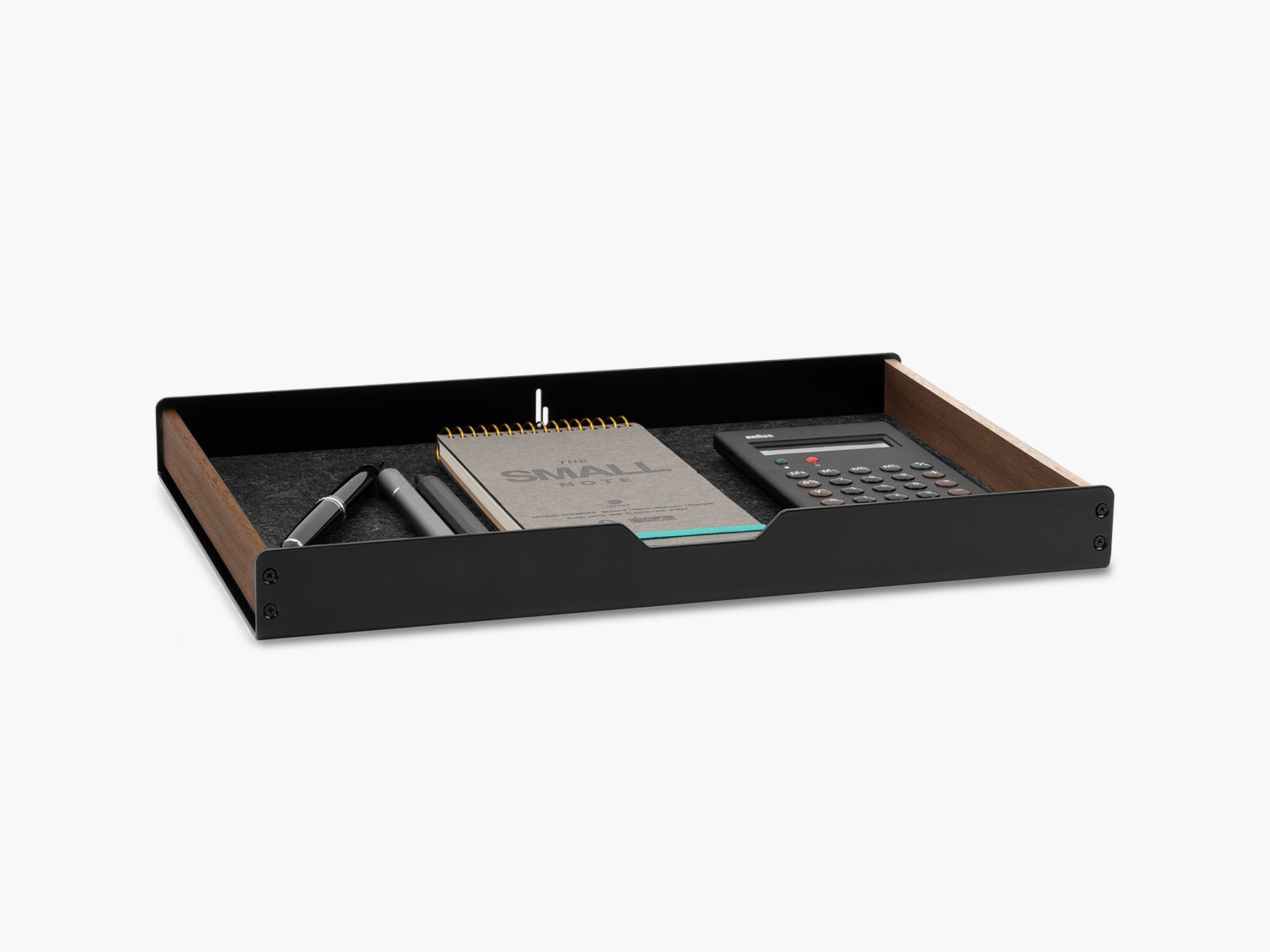
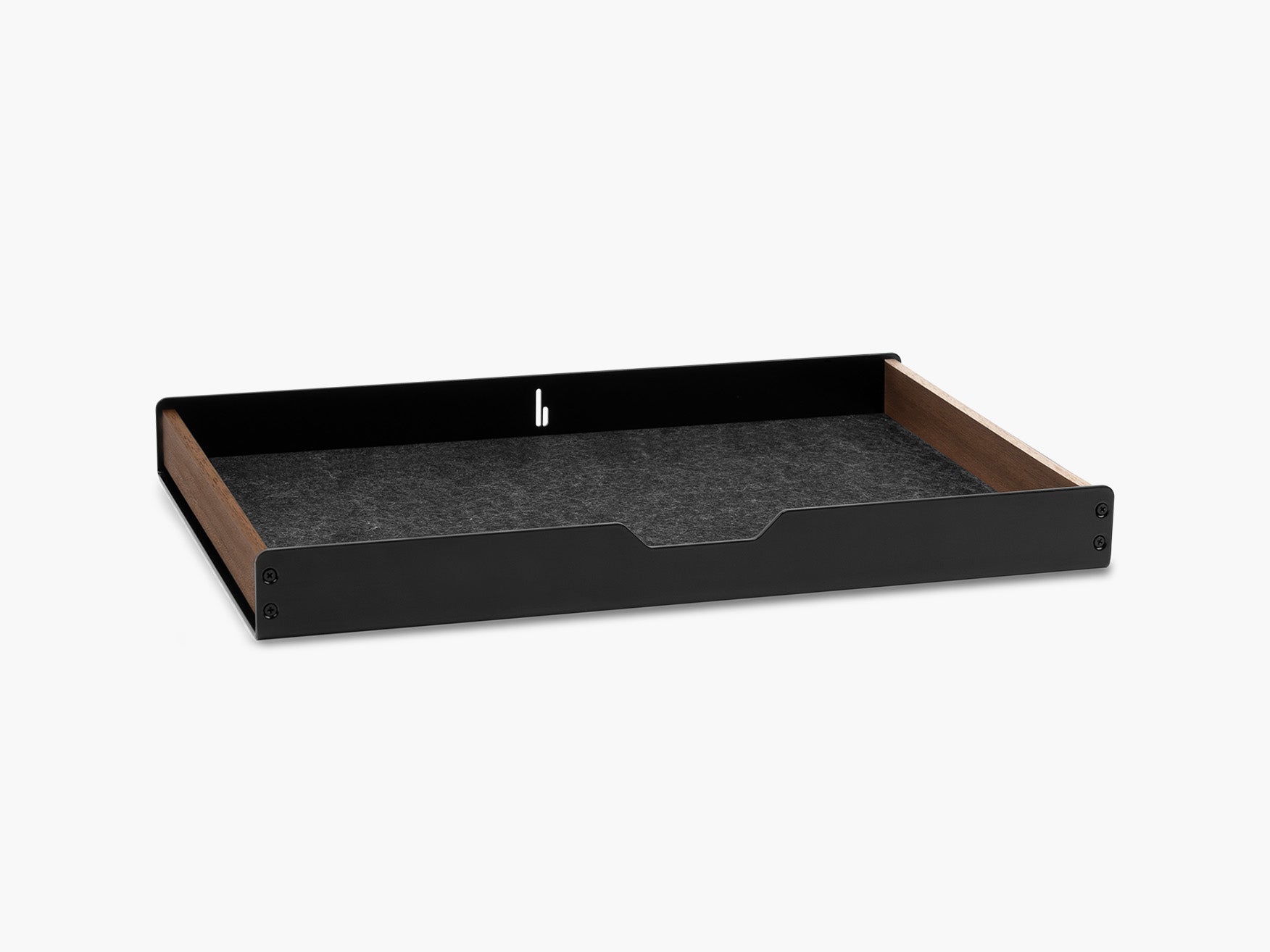
Pens and smaller tools can live inside a drawer.
Charging cables can remain accessible without lying loose across the desk.
Once every object has a dedicated place, resetting the workspace becomes much easier.
5. Create a Proper Cable Management System
Nothing makes a small desk feel cluttered faster than cables.
A monitor cable, laptop charger, phone charger, desk lamp cable, power strip and peripherals can quickly create a web of wires around your workspace.
Good desk cable management should make those cables almost disappear.
Start by separating cable management into three areas.
On the desk
Keep visible cables as short and controlled as possible.
Guide charging cables toward a fixed point instead of letting them move freely across the surface.
Under the desk
Mount or secure:
- Power strips
- Power adapters
- Excess cable length
- Hubs
- Extension cables
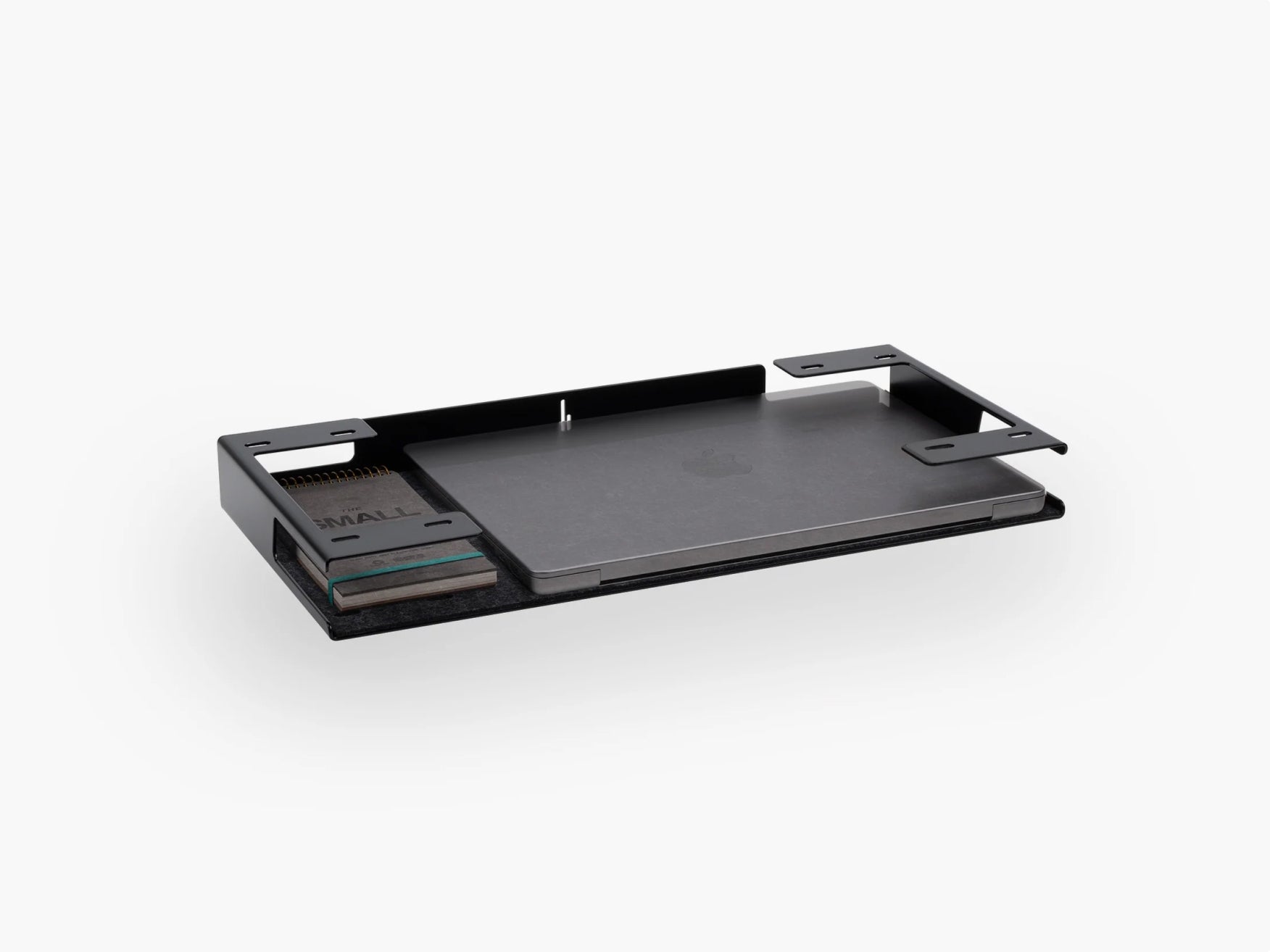
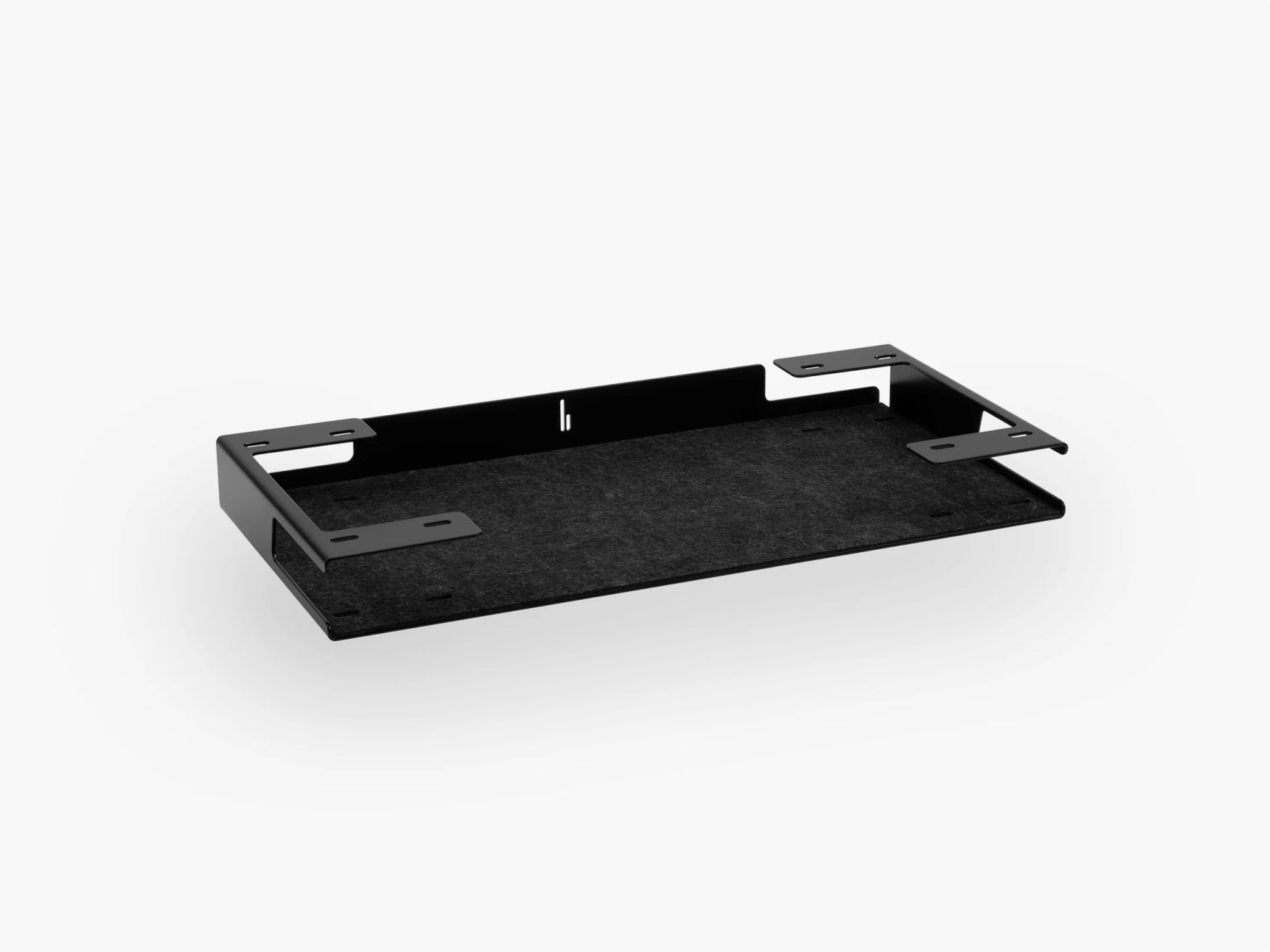
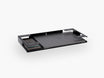
This keeps the floor clearer and prevents cables from hanging visibly behind the desk. The Cable Management System is designed exactly for this: it mounts underneath the desk and holds cables and power strips out of sight.
Between the desk and wall
Group cables that travel in the same direction.
The goal isn't necessarily to hide every centimeter of cable. It is to make the entire system look intentional.
In a bedroom workspace, this also has another benefit: when the workday ends, you don't have a collection of office cables visually dominating the room.

6. Make Your Workspace Easy to Reset
A bedroom workspace should have an end-of-day state.
This is one of the biggest differences between designing a dedicated home office and creating a workspace inside another room.
In a separate office, you can leave a notebook open or headphones beside the keyboard.
In a bedroom, that unfinished workspace remains in your field of view.
Create a simple reset routine:
- Close your laptop.
- Put notebooks away.
- Return accessories to their dedicated locations.
- Remove glasses or cups.
- Place loose cables back in position.
- Clear the main working surface.
This can take less than a minute once your organization system is established.
And the room immediately feels like a bedroom again.
7. Use Lighting to Define the Workspace
Good lighting is essential for a functional desk setup, especially if you work early in the morning or later in the evening.
Ideally, combine several light sources instead of relying entirely on one ceiling light.
Natural light
Use daylight whenever possible.
Task lighting
A desk lamp provides focused illumination for reading, writing or detailed work.
Ambient lighting
A softer secondary light can make the workspace feel integrated into the bedroom rather than looking like a brightly illuminated office station.
The color and intensity of the lighting also influence how the setup feels.
During working hours, brighter task lighting can create a more focused atmosphere.
Later in the evening, warmer and softer lighting can help the room transition back into a space for relaxation.
8. Keep the Visual Design Consistent With the Bedroom
A workspace doesn't have to look separate from the rest of the bedroom to feel separate functionally.
In fact, matching the materials and colors of the workspace to the rest of the room often creates a much calmer result.
Look at the existing bedroom first.
What colors dominate the room?
What type of wood is already present?
Are the furniture pieces warm or cool?
Is the overall style minimal, industrial, Scandinavian, colorful or dark?
Then build your desk setup around the same visual language.
For example, combining natural wood with black metal can create structure without making the workspace feel clinical. Our guide Material Combinations for Better Workspace Design shows which materials work well together.
At BALOLO, we use wood and precisely designed metal elements because the combination allows a workspace to feel functional while still belonging in an interior. Especially in a bedroom, desk accessories should feel more like considered design objects than conventional office equipment.
9. Separate Work and Rest Visually
You may not have a separate office door to close.
But you can still create boundaries.
A small rug underneath the desk can define the workspace.
A wall color, piece of art or acoustic panel can visually frame the desk.
A plant can create a soft boundary between the desk and another part of the room.
Even the orientation of your furniture can make a difference.
The goal is to make the workspace feel like one intentional zone inside the room, rather than a desk that was placed wherever there happened to be space.

Avoid turning the whole bedroom into a workspace
It's tempting to spread work materials throughout the room when space is limited.
Try not to.
Keep notebooks, chargers, headphones, work devices and documents within the workspace zone.
The stronger the physical boundary, the easier it becomes to mentally leave work behind.
10. Build Around Your Actual Workflow
There is no single perfect desk setup.
A developer may need two monitors.
A designer may need a large display and space for a tablet.
A writer may only need a laptop and notebook.
A student may need additional space for books.
Before adding accessories, look at what happens during a normal working day.
Ask yourself:
- Which devices do I use constantly?
- Which items do I reach for several times per day?
- Which accessories sit on my desk without being used?
- Which cables regularly get in the way?
- What do I need within arm's reach?
- What could be stored underneath or away from the desk surface?
Your workspace should be organized around those answers.
This is also why modular systems work particularly well in small spaces. Instead of creating one fixed setup, you can adapt the workspace as your needs change.
11. Use Accessories Strategically
Desk accessories can improve a setup.
Too many desk accessories can ruin one.
The difference is whether each accessory solves a specific problem.
| Workspace problem | Useful solution |
| Monitor takes up too much visual space | Monitor stand or shelf |
| Laptop occupies valuable desk space | Laptop dock or holder |
| Headphones lie on the desk | Dedicated headphone holder |
| Small objects create clutter | Drawer or hidden storage |
| Cables hang behind the desk | Cable management system |
| Phone constantly moves around | Fixed phone holder |
| Desk feels visually chaotic | Fewer, coordinated accessories |
Think in terms of functions, not products.
If your desk already works well without something, you probably don't need to add it.
A clean desk setup is created just as much by what you leave out as by what you add.
12. Add Personality Without Adding Clutter
Minimal doesn't have to mean impersonal.
Your bedroom is still your personal space and your workspace should feel like it belongs there.
The key is choosing a few intentional objects instead of filling every empty area.
Try:
- One small plant
- A framed print or picture that you like
- A favorite book
- A small sculptural object
- A desk mat in a complementary color
- One personal photograph
Leave some empty space around those objects. Negative space is part of the design.
When every centimeter of the desk is filled, even beautiful objects begin to look like clutter.
A Simple Bedroom Workspace Formula
If you're starting from scratch, use this formula:
Compact desk + comfortable chair + monitor or laptop + vertical organization + cable management + task lighting + minimal accessories
Then customize the setup around your own workflow.
For a particularly small bedroom, prioritize in this order:
- Desk size
- Seating
- Computer setup
- Lighting
- Cable management
- Storage
- Accessories
- Decoration
Function comes first.
Once the fundamentals work, you can refine the visual details.
Bedroom Workspace Checklist
Before considering your setup finished, check the following:
Layout
- Does the desk fit without restricting movement?
- Can doors and drawers still open?
- Is there enough room for the chair?
- Does the workspace feel visually defined?
Desk setup
- Are your daily essentials easily accessible?
- Is the main surface relatively clear?
- Can some items move above or below the desk?
Organization
- Does every accessory have a dedicated place?
- Can you reset the desk quickly?
- Are rarely used items stored away?
Cable management
- Are power strips and adapters organized?
- Are excess cable lengths hidden?
- Are frequently used charging cables still easy to reach?
Lighting
- Is there enough light for focused work?
- Can the lighting become softer in the evening?
Design
- Does the workspace match the rest of the bedroom?
- Are the materials and colors visually consistent?
- Have you left enough empty space?
If you can answer yes to most of these questions, you're already close to a well designed bedroom workspace.
Small Space, Intentional Setup
Building a workspace in a bedroom isn't about squeezing a miniature office into the room.
It's about creating a focused working zone that uses space intelligently and disappears visually when the working day is over.
Start with the layout. Choose a desk that fits the room instead of dominating it. Use vertical space. Keep your desk organized. Hide unnecessary cables. And only add accessories that improve how you actually work.
At BALOLO, we believe a good workspace should combine functionality, organization and design. This becomes even more important when your desk shares a room with the rest of your life.
You may only have one corner to work with.
Make every part of it count.
Frequently Asked Questions
Can you put a workspace in a bedroom?
Yes. A bedroom can accommodate a productive workspace if the desk area is clearly organized and visually separated from the sleeping area. A compact desk, good lighting, controlled cable management and dedicated storage can help the two functions coexist.
Where should a desk go in a bedroom?
An unused wall, corner, alcove or area near a window usually works well. Choose a location that provides enough space for your chair and equipment without interfering with doors, wardrobes or normal movement around the room.
How do you create a home office in a small bedroom?
Start with a compact desk and only the equipment you use regularly. Then maximize vertical space with shelves or a monitor stand, organize cables underneath the desk and give smaller accessories dedicated storage locations.
How can I make a bedroom workspace look less cluttered?
Reduce the number of visible objects, hide excess cables, use coordinated materials and move accessories off the primary working surface. Creating defined storage for laptops, headphones, chargers and stationery can make a major difference.
How can I separate my bedroom from my workspace?
You don't necessarily need a physical divider. Furniture orientation, lighting, a rug, wall decoration, plants or a distinct workspace color palette can visually define the desk area. Keeping work related objects inside that zone strengthens the separation.
What are the essentials for a small desk setup?
The essentials are a desk with enough working space, a comfortable chair, your primary computer equipment, appropriate lighting, basic cable management and a simple organization system. Additional accessories should only be added when they solve a specific problem.