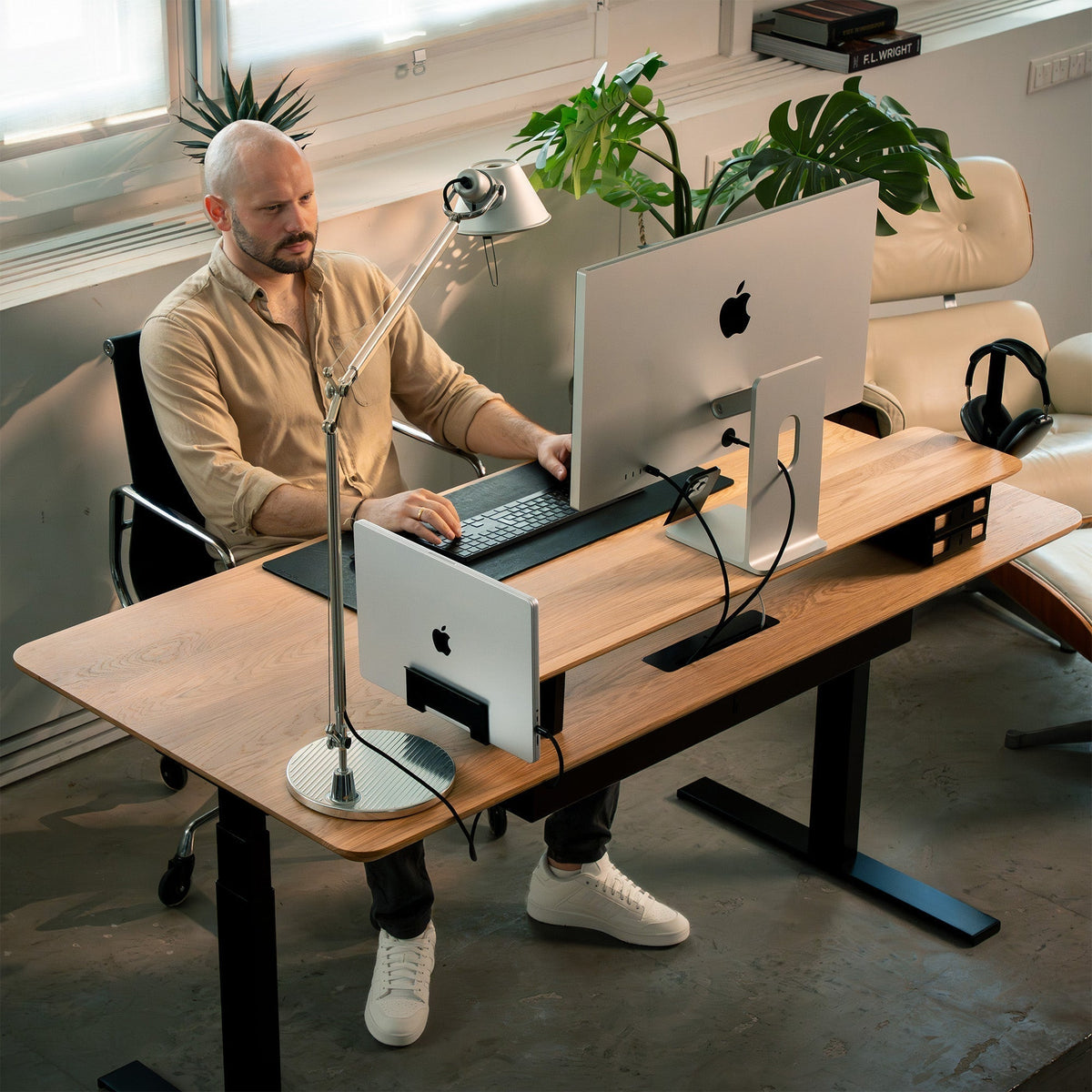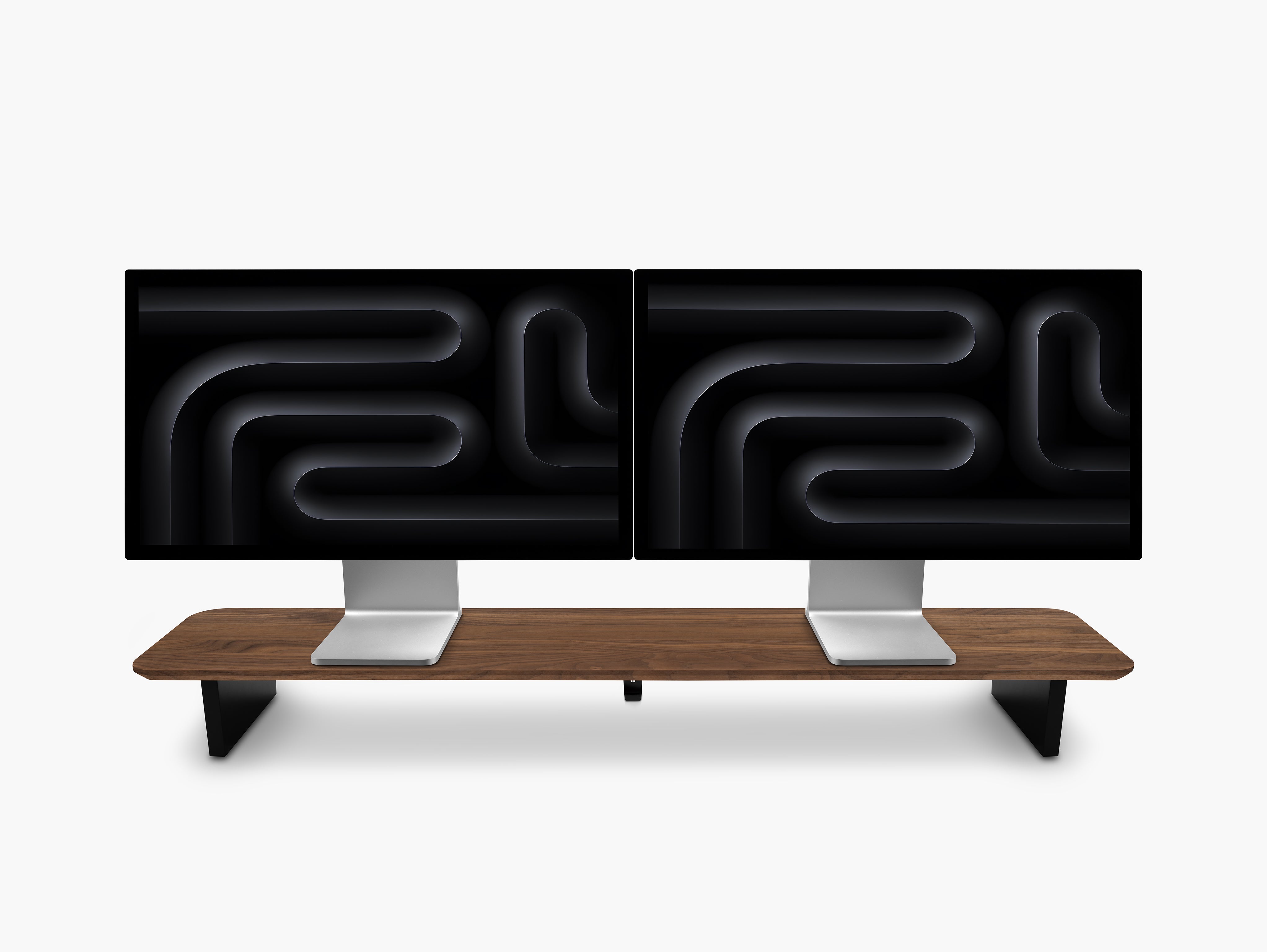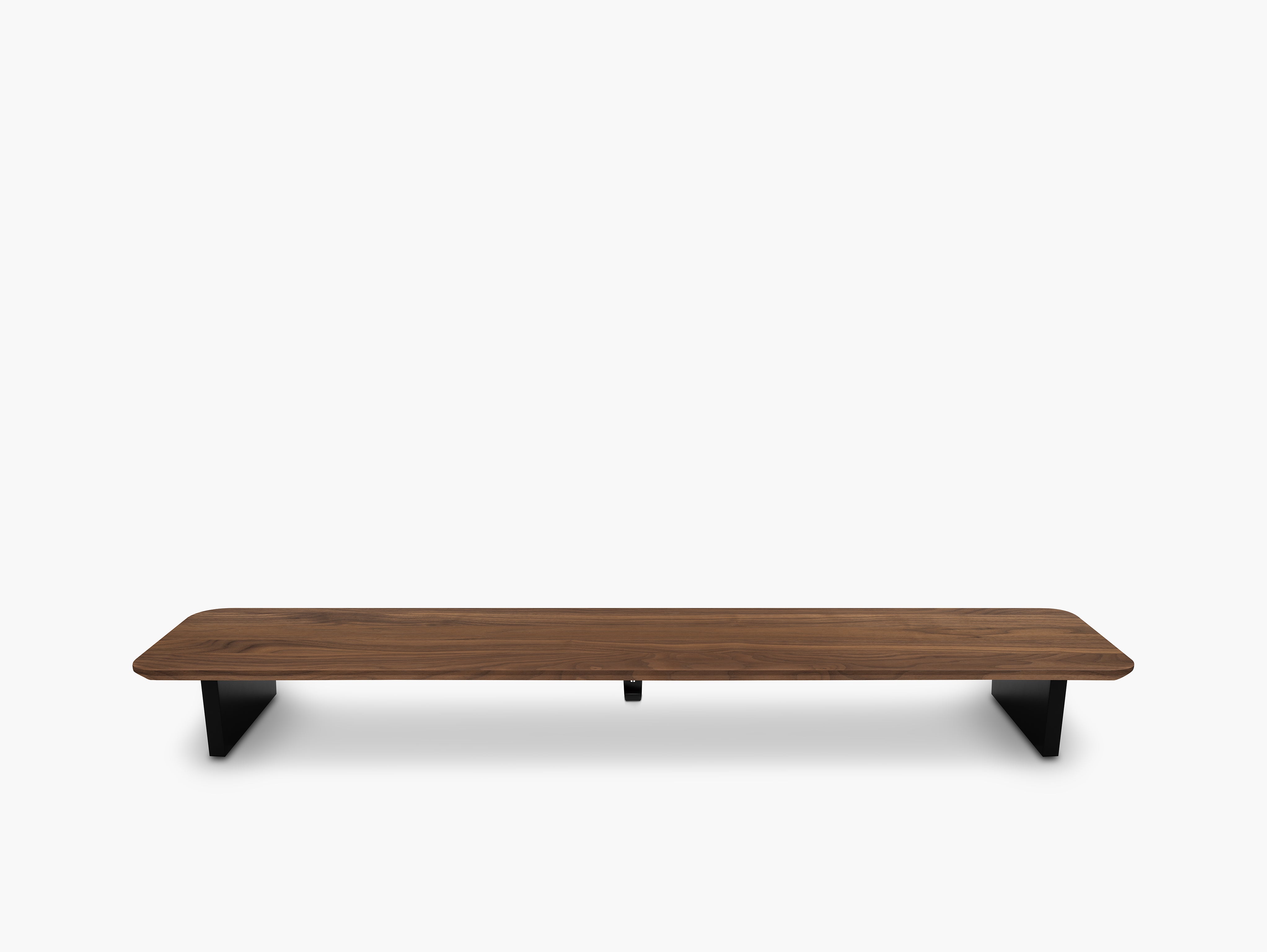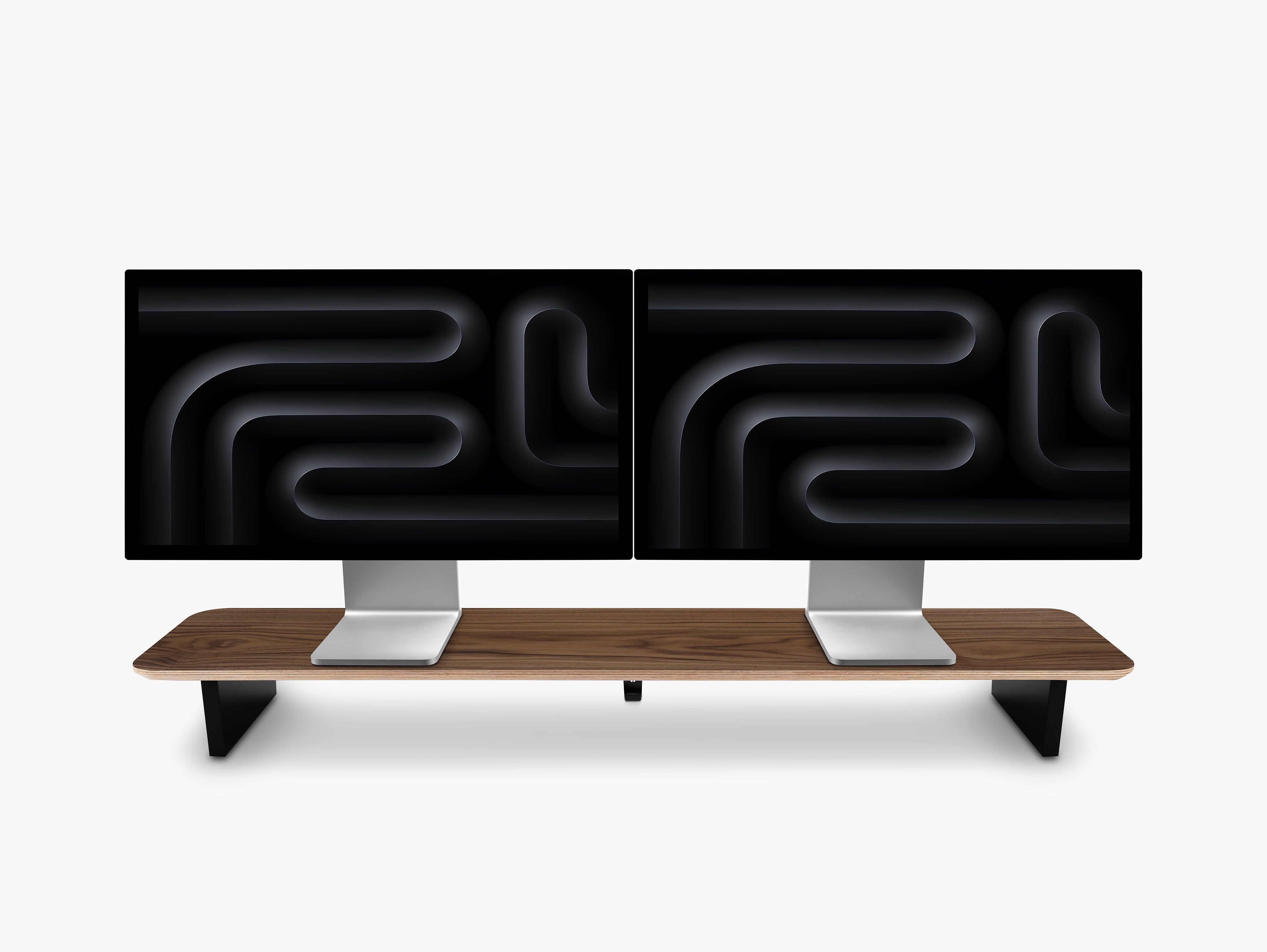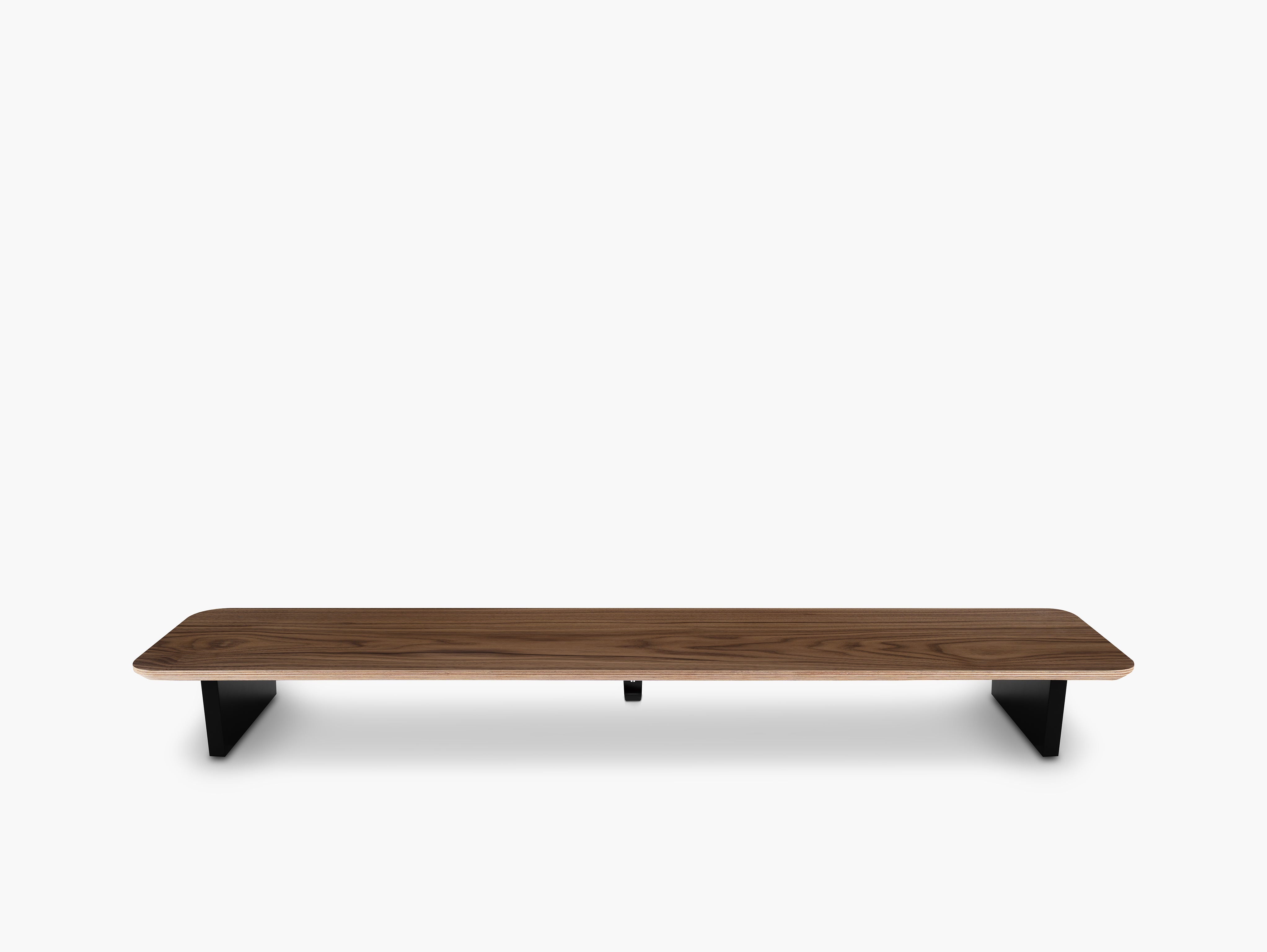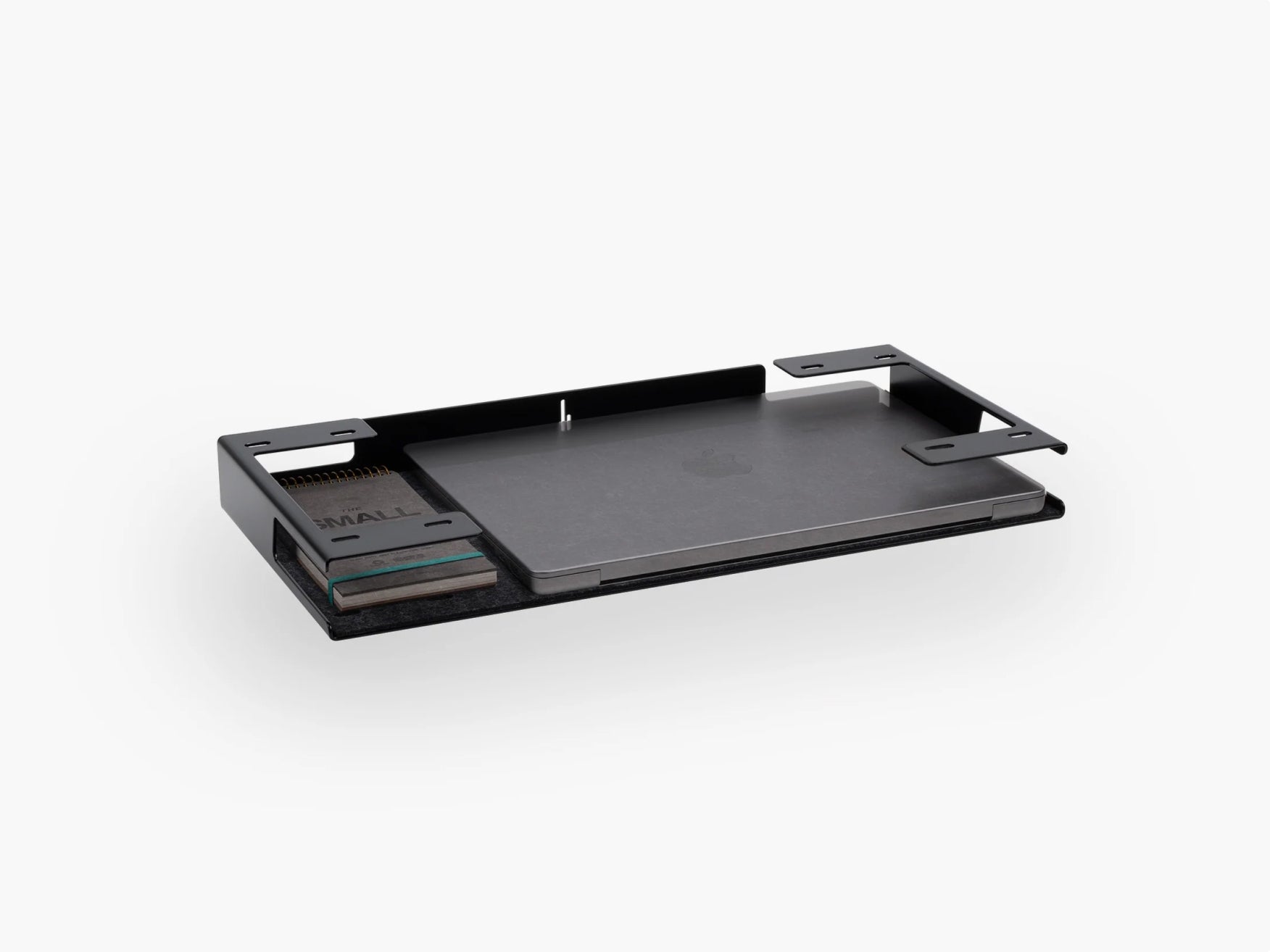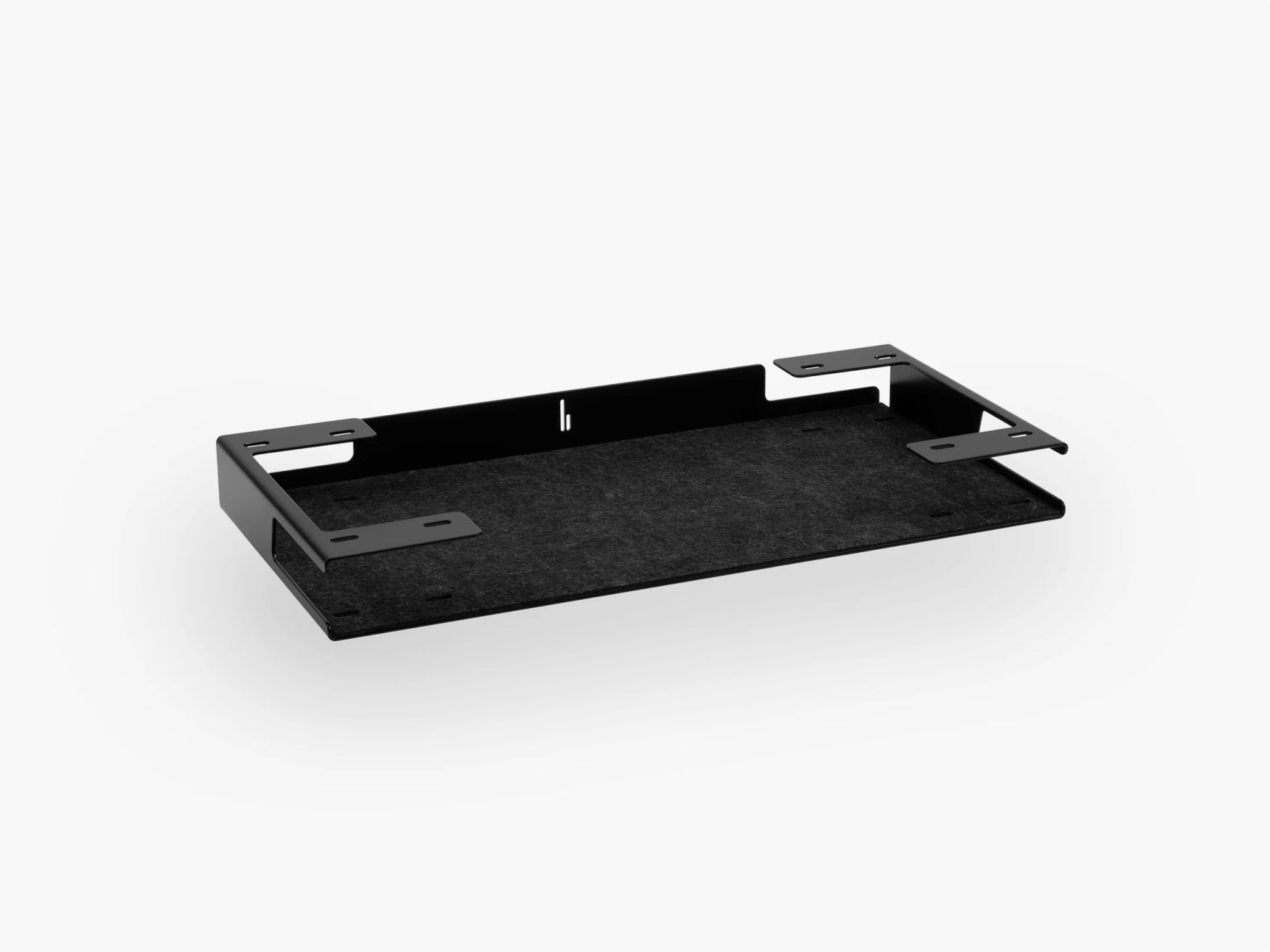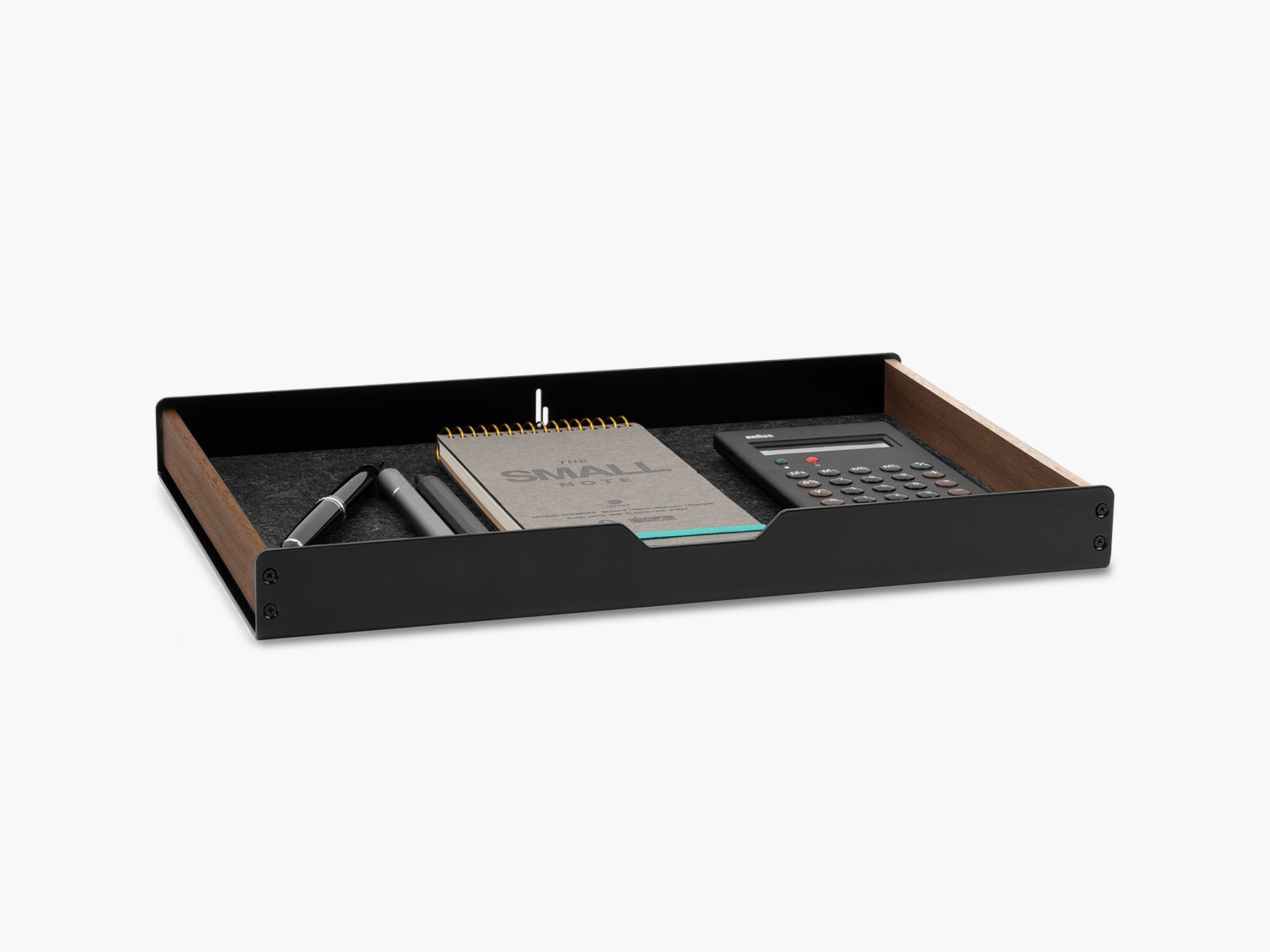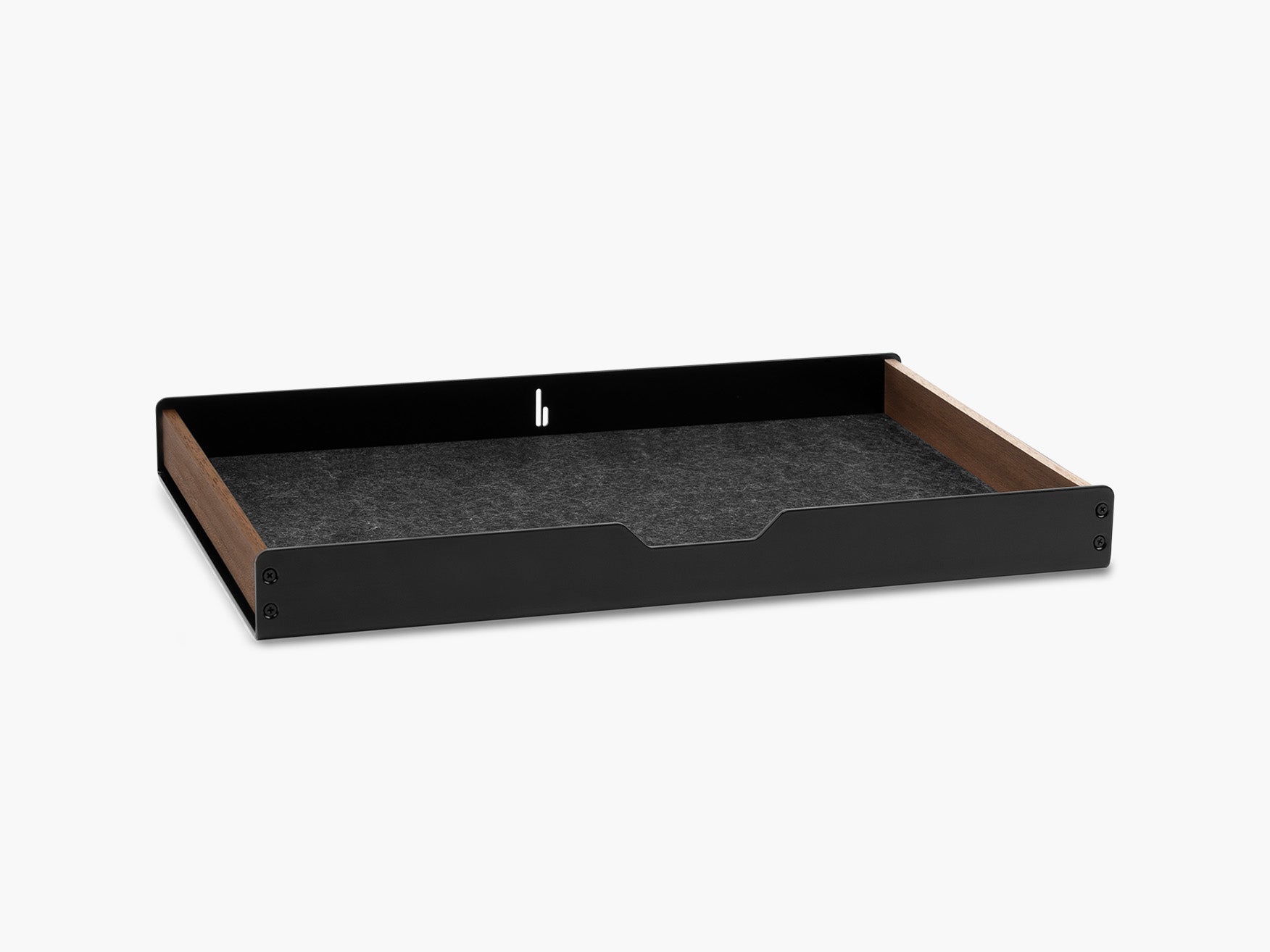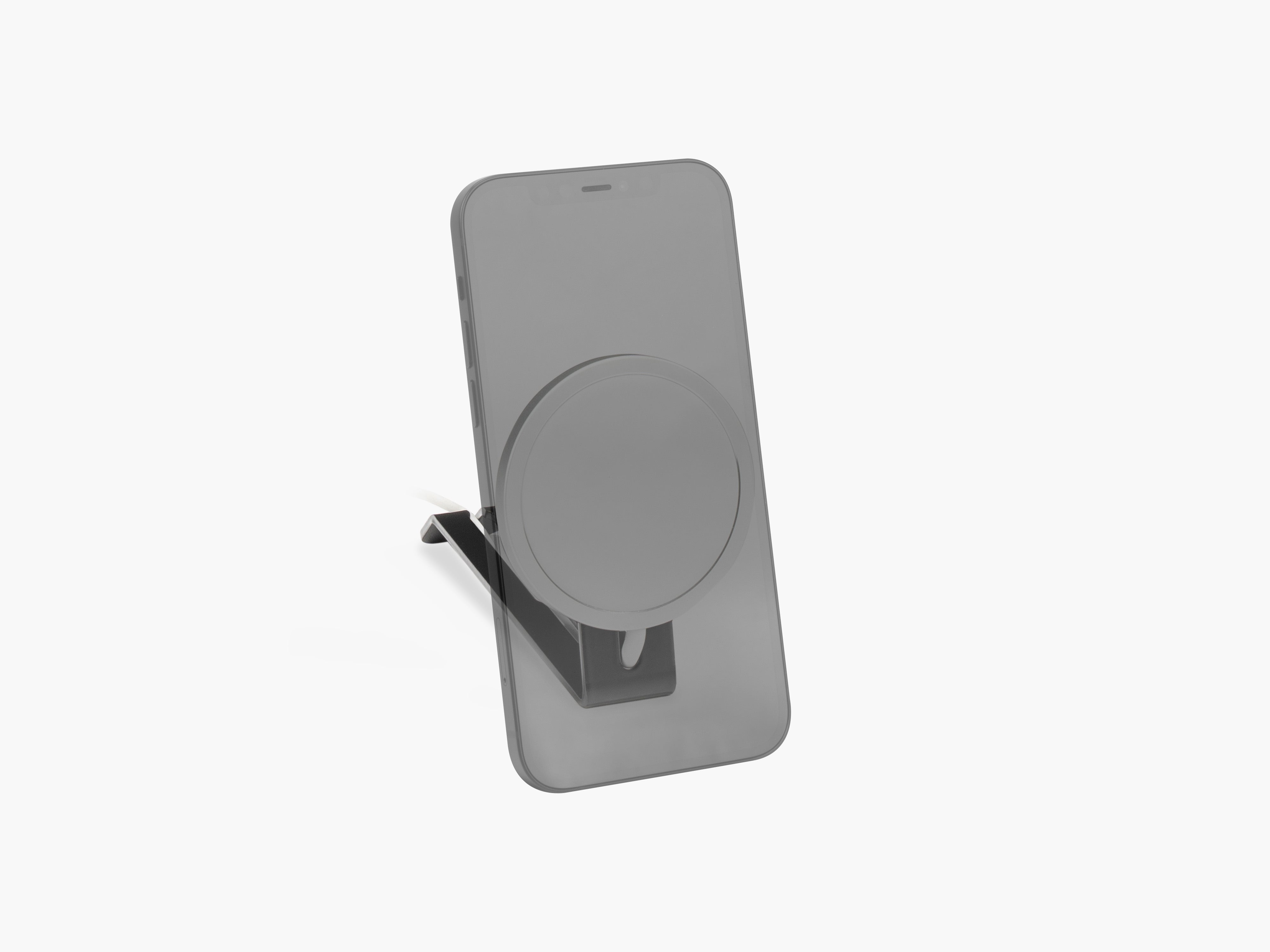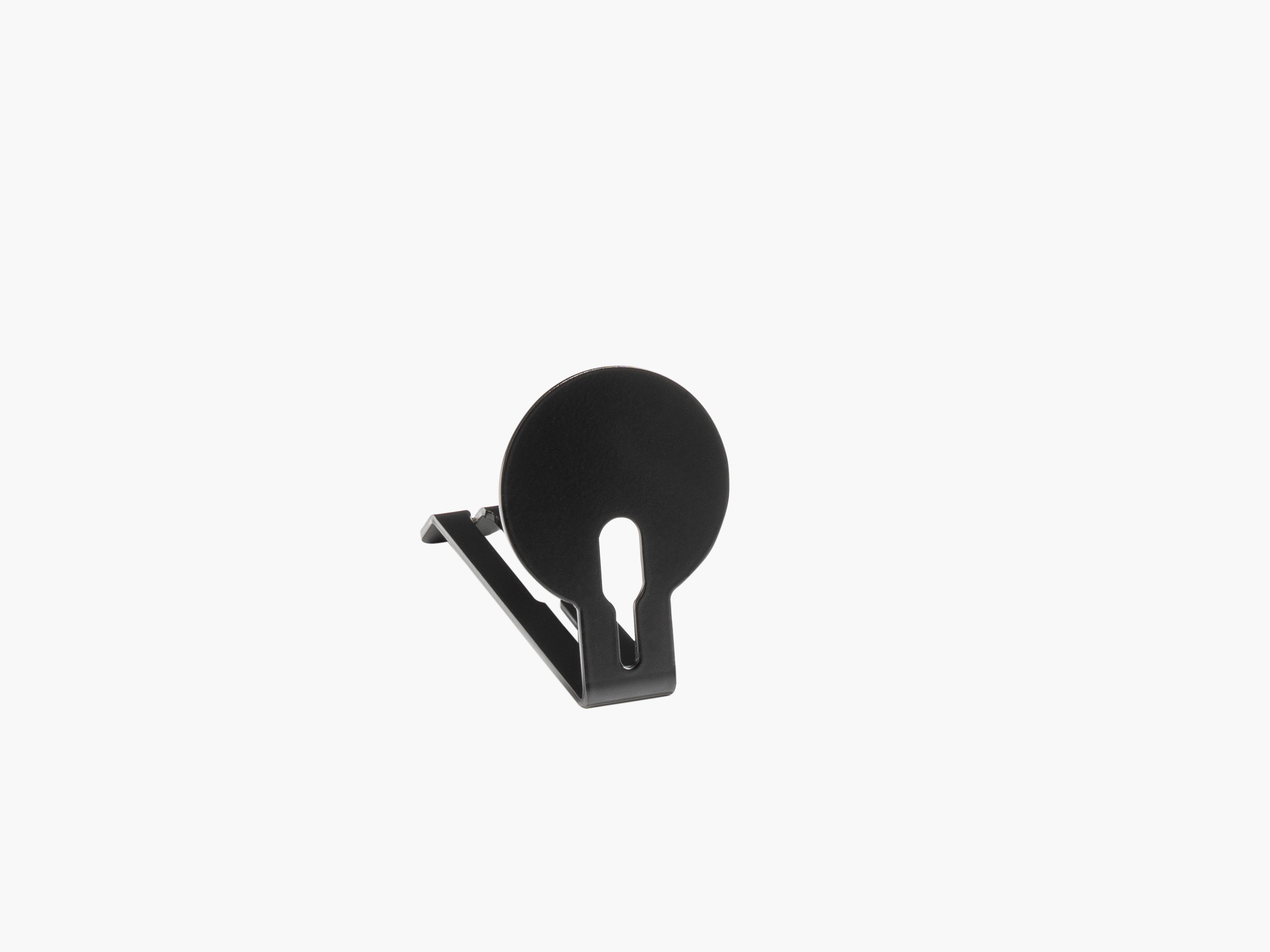
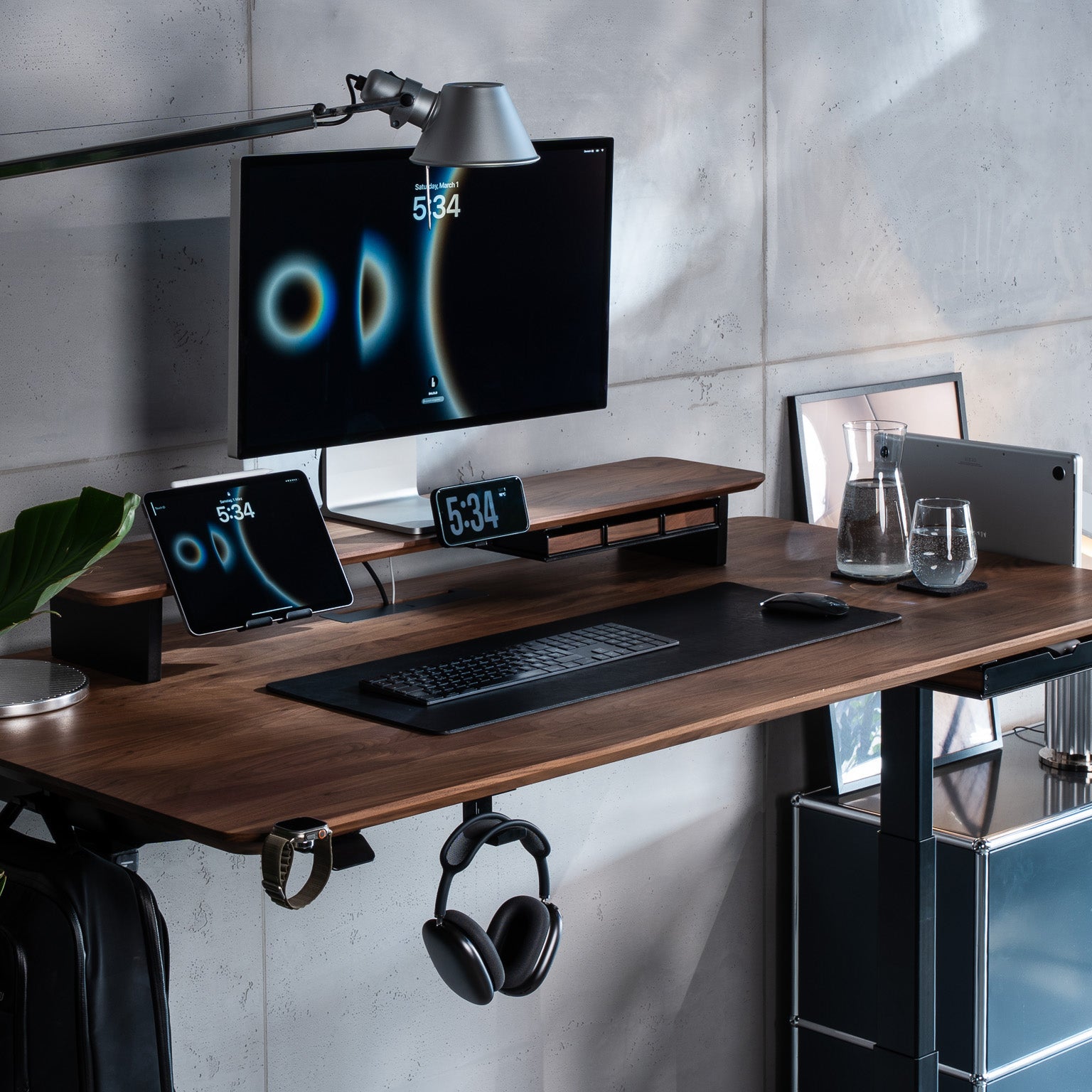
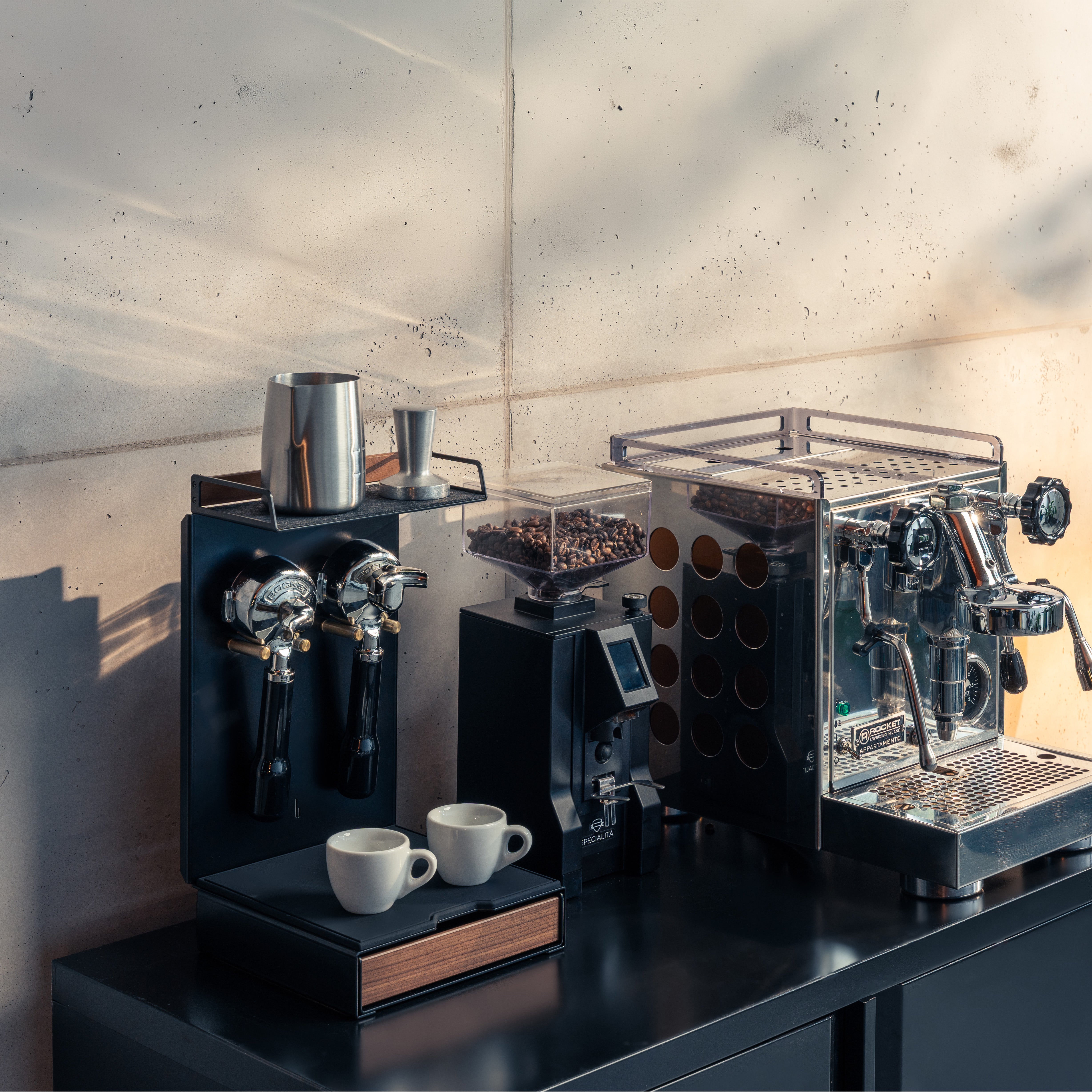
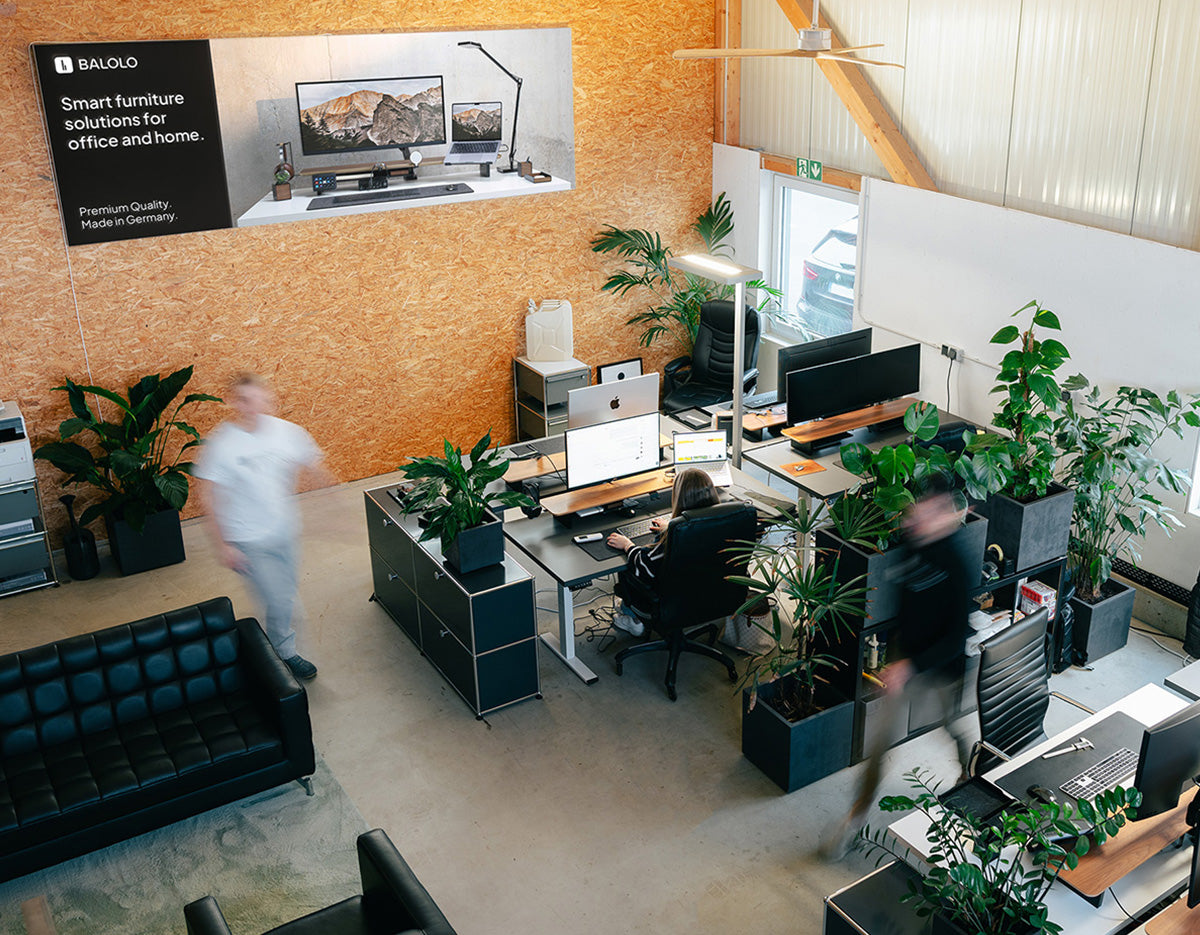

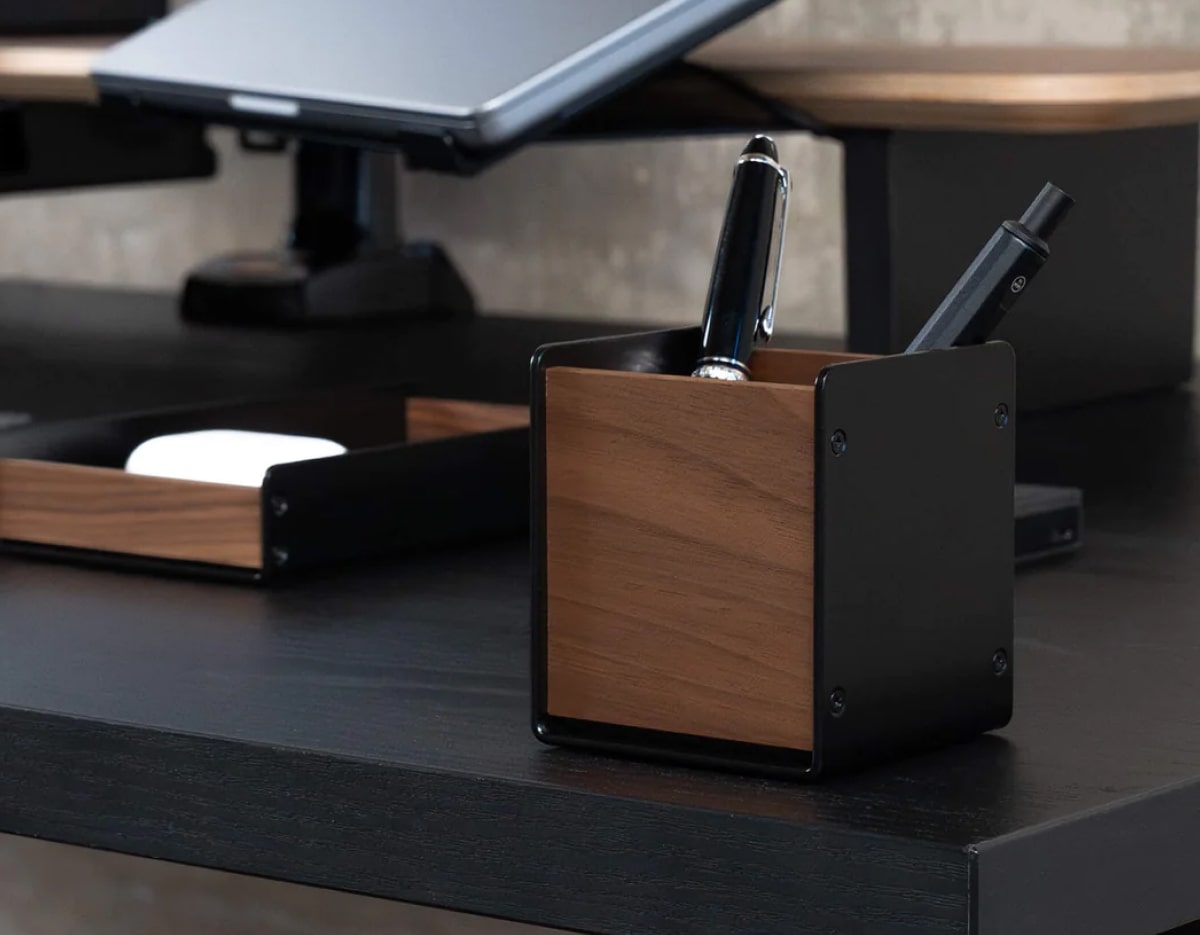
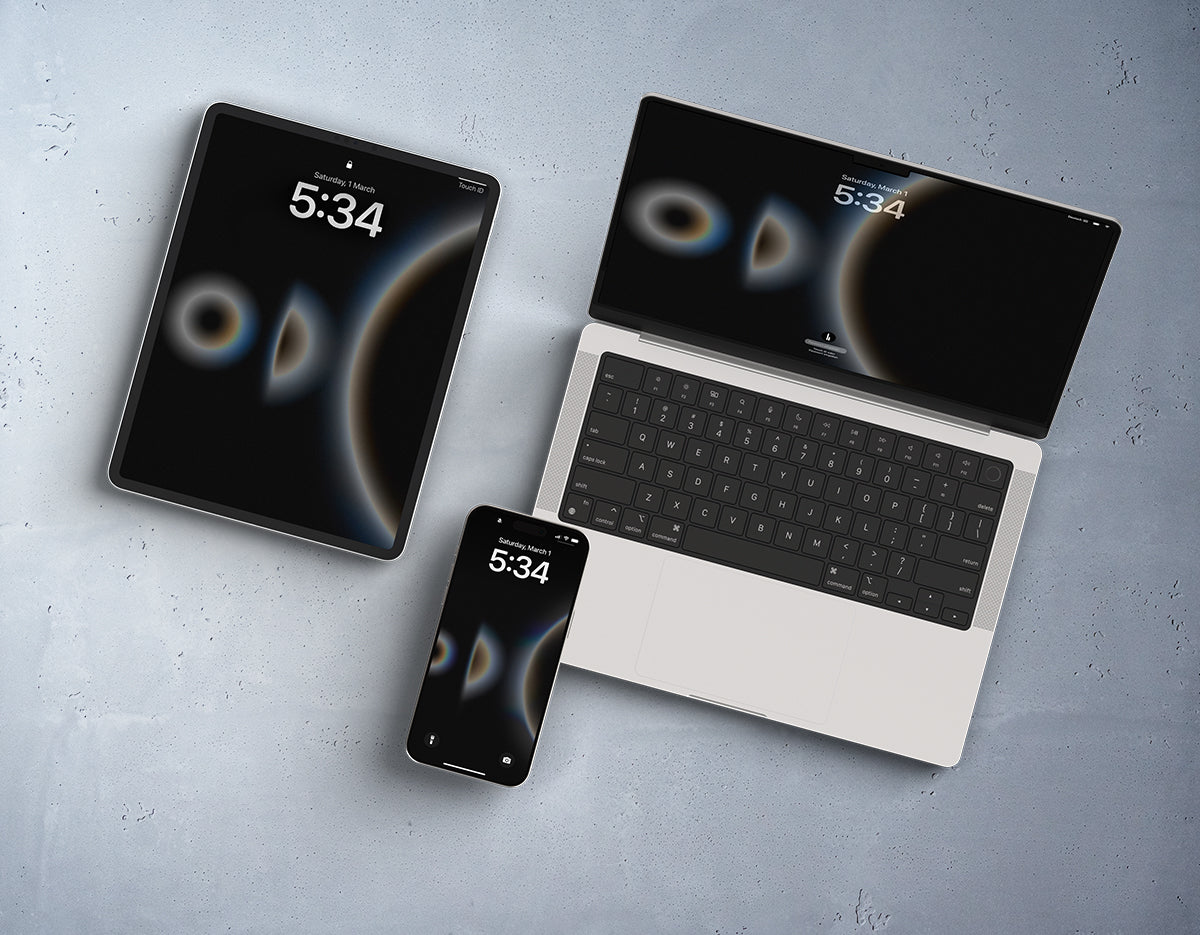
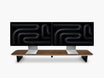
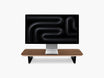
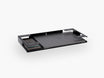
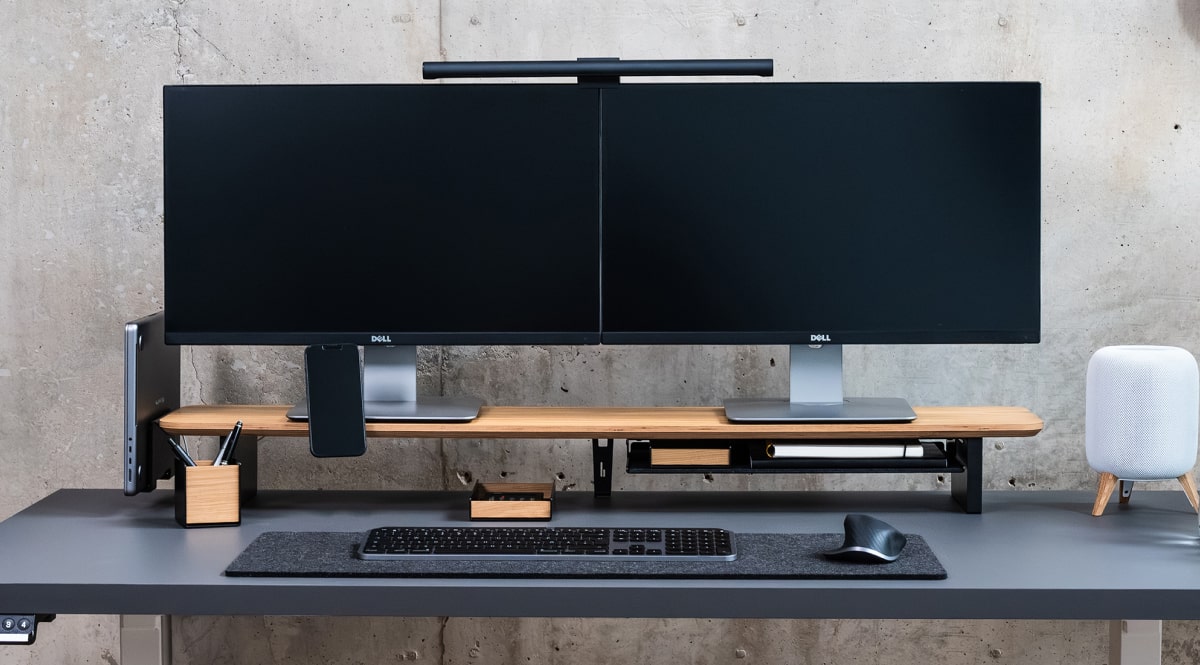
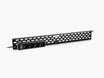
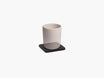
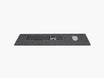
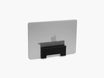

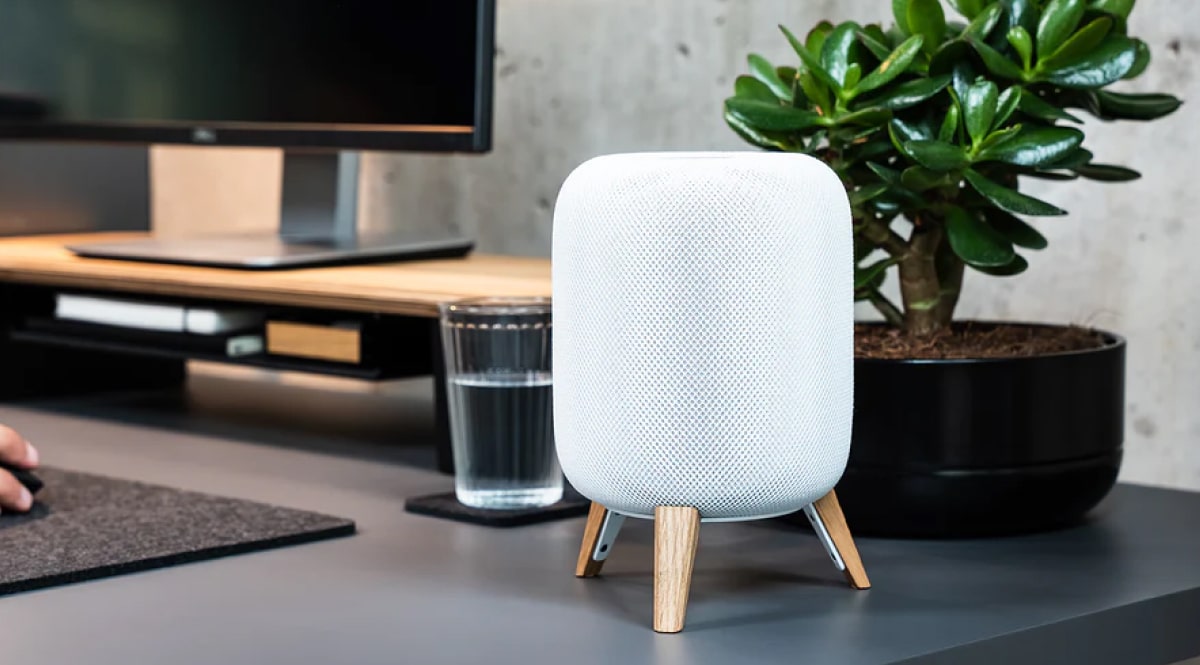
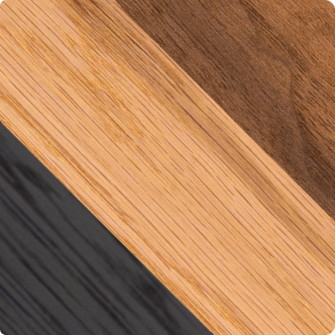
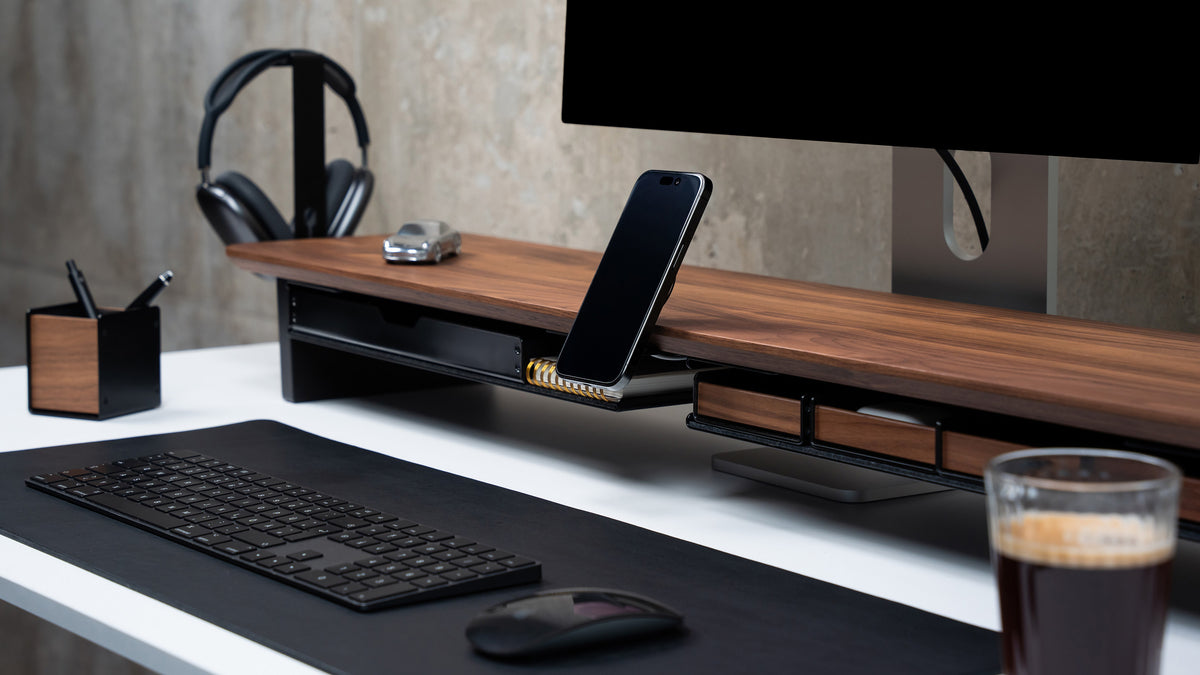
The best material combinations for a workspace balance warmth, structure and visual calm. Natural wood adds warmth and character, metal creates precision and contrast, while textiles, glass or ceramic can soften or refine the overall desk design.
The goal is not to use as many materials as possible. A well designed workspace usually feels more cohesive when a few materials are repeated intentionally across the desk.
And that matters. Because a workspace is more than a collection of devices and desk accessories. It is an environment you look at, touch and use for hours every day.
So how do you combine materials without making your desk setup feel busy?
Why Materials Matter in Workspace Design
Color often gets most of the attention when planning a workspace. But material has just as much influence on how a setup feels.
Compare a black plastic surface with black powder coated metal. The color may be almost identical, but the impression is completely different. One can feel lightweight and technical, while the other adds visual weight and a more architectural character.
The same applies to wood. Natural grain introduces variation and warmth that a flat surface cannot replicate in quite the same way.
This is why strong workspace design is not only about choosing matching colors. It is about considering three characteristics at the same time: color, texture and finish.
A useful rule of thumb is to choose one dominant material, one contrasting structural material and one subtle accent material. This keeps a modern workspace setup interesting without creating unnecessary visual noise.
Wood and Metal: A Natural Combination for Modern Workspaces
Few combinations work as naturally in a modern desk setup as wood and metal.
Wood brings warmth, texture and organic variation. Metal adds clean edges, precision and structure. Together, they create a balance between natural and technical elements.
This makes the combination particularly suitable for workspaces filled with monitors, laptops, keyboards and other technology. The wood prevents the setup from feeling overly technical, while metal keeps it from becoming too soft or traditional.
At BALOLO, we use this contrast throughout our workspace products. Natural wood and powder coated metal combine tactile warmth with precise, minimalist forms. The result fits naturally into a modern desk setup while remaining functional enough for everyday work.

Walnut and Black Metal
American walnut combined with black metal creates a darker, more expressive workspace.
The deeper brown tones of walnut provide warmth, while matte black elements create clear contrast. It works especially well with dark monitors, keyboards and other electronics because the devices become part of the overall visual language rather than separate objects placed on the desk.
This combination is ideal for an aesthetic desk setup that should feel sophisticated, calm and slightly more dramatic.
To prevent the workspace from becoming too dark, lighter walls, neutral textiles or soft lighting can create balance.
Oak and Black Metal
Oak and black metal create stronger contrast.
The lighter tone of oak makes a workspace feel open and natural, while black details add definition. Monitor frames, desk legs, lamps and modern desk accessories can repeat the darker tone throughout the setup.
The result works particularly well for a minimal desk setup because relatively few materials are needed to create visual depth.
Oak and Light Neutrals
For a brighter workspace, combine oak with white, beige, light grey or other neutral surfaces.
Instead of relying on strong contrast, this approach uses subtle tonal differences. It can make smaller home offices feel visually calmer and less crowded.
The key is texture. When most colors are light, differences between wood grain, fabric, matte metal and smooth technology become more important.
If you are still weighing a darker or a lighter direction for your whole setup, our guide on Dark vs Light Desk Setup compares both styles in more detail.
The Best Material Combinations at a Glance
| Material combination | Visual effect | Works well for | Keep in mind |
| Walnut + black metal | Warm, strong, refined | Dark and modern desk setups | Add lighter elements if the room feels too dark |
| Oak + black metal | Natural with clear contrast | Minimalist and modern workspaces | Repeat black details for consistency |
| Oak + white or beige | Bright and calm | Scandinavian inspired home offices | Use texture to avoid a flat appearance |
| Wood + textile | Soft and tactile | Comfortable home workspaces | Keep textile colors restrained |
| Wood + ceramic or stone | Natural and premium | Desk decor and small accents | Use sparingly |
| Metal + glass | Technical and light | Contemporary workspace design | Too many hard surfaces can feel cold |
| All Black + natural accents | Graphic and focused | Tech heavy setups | Add warmth through lighting or texture |

Combine Warm and Cool Materials
One of the easiest ways to create a balanced workspace is to combine materials with different visual temperatures.
Wood, leather and certain textiles generally appear warmer. Metal, glass and many electronics tend to appear cooler.
A workspace made entirely from cool materials can look precise but sometimes impersonal. A desk filled exclusively with warm natural materials can look comfortable but may not integrate modern technology as seamlessly.
Combining the two creates tension in a good way.
A wooden monitor stand beneath an aluminium monitor is a simple example. A metal desk lamp beside a wooden surface works for the same reason. Each material makes the characteristics of the other more visible.
Instead of trying to make every object match, look for controlled contrast.
Repeat Materials Instead of Introducing New Ones
A common desk styling mistake is choosing every accessory individually.
One item is aluminium. Another is glossy plastic. The next is bamboo. Then comes chrome, felt, glass and several different wood tones.
Each product may look good on its own, but together the setup can lose coherence.
A cleaner approach is repetition.
If you already use walnut as a dominant material, repeat that tone in one or two additional elements rather than adding another type of wood. If your monitor, lamp and desk frame are black, choosing black metal desk accessories can connect those objects visually.
Repetition creates relationships between separate objects.
And those relationships are what make a collection of products feel like a designed workspace.
Let Texture Create Interest in a Minimal Workspace
Minimalism does not require every surface to look identical.
In fact, texture becomes more important when the number of colors and objects is reduced.
Imagine a setup built almost entirely around black, brown and grey. It can still have considerable depth because natural wood grain, matte metal, woven fabric and smooth glass reflect light differently.
This allows you to create an interesting minimalist workspace without adding decorative objects purely for visual effect.
The materials themselves become part of the desk decor. This is especially valuable when you want to maintain a clean desk setup. Instead of filling empty space with decoration, the objects you actually use provide the visual character.
Wood and Textiles: Add Softness to the Setup
Workspaces contain many hard surfaces. Desks, monitors, keyboards, lamps and stands are usually made from wood, plastic, aluminium, steel or glass.
Textiles offer an easy counterbalance.
A desk mat, chair upholstery, curtain or small fabric accessory introduces a softer texture without changing the fundamental design of the workspace.
Neutral shades tend to be easiest to integrate because they allow the natural materials to remain dominant.
For example, walnut combined with charcoal fabric creates a darker and warmer atmosphere. Oak with beige or light grey textiles feels brighter and softer.
The important part is restraint. Textiles should support the workspace rather than turn the desk into a collection of decorative layers.

How to Integrate Technology Into the Material Concept
Technology is often the most visually dominant part of a workspace.
Monitors create large black rectangles. Laptops introduce aluminium or dark finishes. Chargers, keyboards, mice and cables add even more materials.
Rather than ignoring these devices when planning your desk design, treat them as part of the material palette from the beginning.
If most of your technology is black, black metal becomes an easy material to repeat elsewhere. Pairing those technical elements with wood adds warmth. If you use silver aluminium devices, lighter woods and neutral finishes can create a softer transition.
Cable management matters here too. Even a carefully selected material palette loses some of its effect when cables visually cut across every surface. Keeping technical infrastructure organized allows the intentional materials to remain the focus.
Create a Material System, Not Just a Style
This is where workspace design and organization begin to overlap.
Materials should not only look coherent. They should also support the way the desk works.
At BALOLO, this thinking is central to the Setup Cockpit. We use the wooden monitor stand as the visual foundation of a modular system, while accessories can be positioned underneath the platform to organize devices and everyday essentials.
The Setup Cockpit is available in American walnut, oak and All Black, making it possible to build the surrounding material palette around the character of the workspace.
The bigger idea is simple: functional elements do not have to interrupt good design.
When monitor elevation, storage, device placement and cable organization share the same visual system, the workspace can become cleaner without feeling purely utilitarian.

How Many Materials Should You Use?
There is no fixed number that works for every workspace.
But if your setup feels visually restless, reducing the material palette is often more effective than removing color alone.
For many modern workspaces, three material families are enough to create variation: a dominant surface, a structural contrast and a softer or decorative accent.
For example, wood can be the foundation, black metal the structural contrast and grey textile the soft accent. Other objects do not have to be made from exactly those materials. They simply need to fit naturally into the same visual language.
The Best Material Combination Is the One That Feels Intentional
A well designed workspace does not need many materials. It needs the right relationships between them.
Wood can provide warmth. Metal can introduce precision. Textiles can soften the environment. Glass, stone and ceramic can add smaller moments of contrast.
What matters most is consistency.
Choose a limited palette, repeat key materials and allow function to guide your decisions. The result is a workspace that feels calmer, more considered and easier to adapt over time.
At BALOLO, this balance between natural materials, precise construction and functional organization is exactly what we look for when designing workspace products. Because the best desk setup should not force you to choose between aesthetics and function. It should bring both together.
FAQ: Material Combinations in Workspace Design
What materials work best together in a modern workspace?
Wood and metal are one of the most versatile combinations for a modern workspace. Wood adds natural warmth and texture, while metal provides clean lines and visual structure. Textiles, ceramic or glass can be added as secondary accents.
What materials work well for a minimalist desk setup?
A minimalist desk setup benefits from a limited material palette. Wood with black or neutral metal is a strong foundation. A subtle textile element can add texture without making the workspace feel cluttered.
Can I mix different types of wood in one workspace?
Yes, but similar undertones usually create a calmer result. If two wood tones compete visually, it can be easier to make one wood the dominant material and use neutral metal, textiles or other materials for the remaining accessories.
Is walnut or oak better for a desk setup?
Neither is universally better. Walnut creates a darker, warmer and more expressive workspace, while oak generally produces a lighter and more understated appearance. The right choice depends on your room, technology and preferred desk aesthetic.
How can I make my desk setup look more cohesive?
Limit the number of dominant materials and repeat the same finishes across different objects. Connect larger elements first, then choose desk accessories that support the existing palette. Good cable management also helps the materials and forms of the setup remain visually clear.
How do I make a workspace feel premium without adding more decor?
Focus on material quality, texture and consistency instead of adding more objects. A small number of well coordinated wood, metal and textile surfaces can create more visual depth than a desk filled with unrelated decorative accessories.