








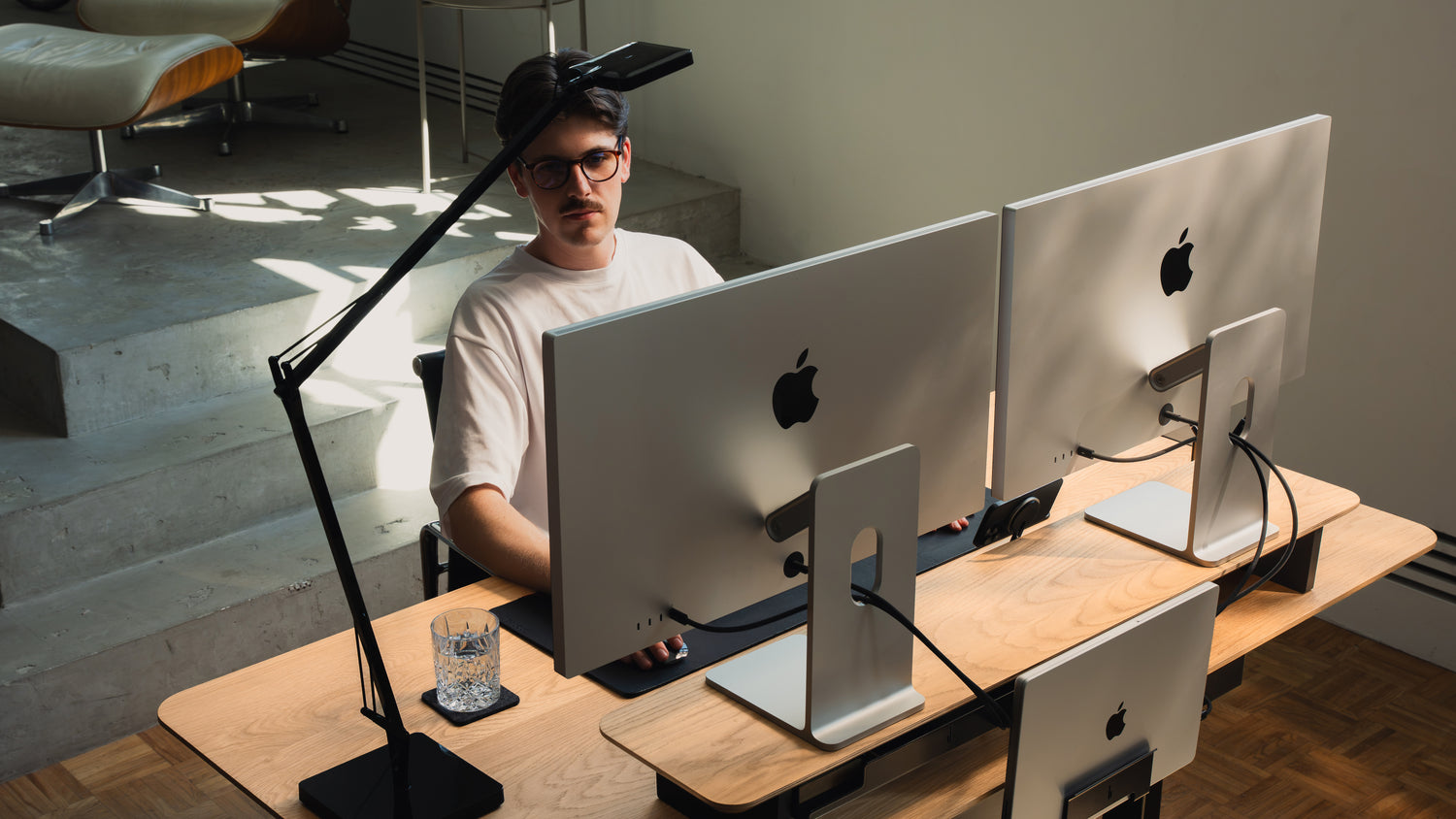
A minimalist workspace improves productivity by reducing visual distractions, making essential tools easier to access and creating a calmer environment for focused work. When your desk supports clarity instead of chaos, it becomes easier to concentrate, make decisions faster and stay in flow longer.
That is the simple reason minimalist desk setups have become so popular. They do not just look better. They often work better too.
And no, a minimalist workspace does not mean an empty desk with no personality. It means being intentional — keeping what helps, removing what does not, and designing your environment so that your attention goes to your work, not to clutter.
Why Your Workspace Affects How You Work
Your desk is not just a surface. It is part of your workflow.
Every object in your field of view competes for a little bit of attention. Loose cables, stacked notebooks, unused accessories, random chargers and visual noise all create friction. Not always in a dramatic way — usually in small ways that add up over a full day.
A clean and minimalist workspace changes that. Instead of forcing your brain to filter out unnecessary input, it supports a more focused rhythm. You sit down, you know where everything is, and you start faster and stay on task longer.
That is why a minimalist workspace is not only an aesthetic choice. It is a productivity choice.

The Link Between Minimalism and Productivity
Minimalism helps productivity because it removes friction from the way you work. When your desk setup is simplified, several things happen at once: you spend less time searching for tools, you reduce visual distractions, you make your next action clearer, you create more physical space to think and work, and you maintain your setup more easily over time.
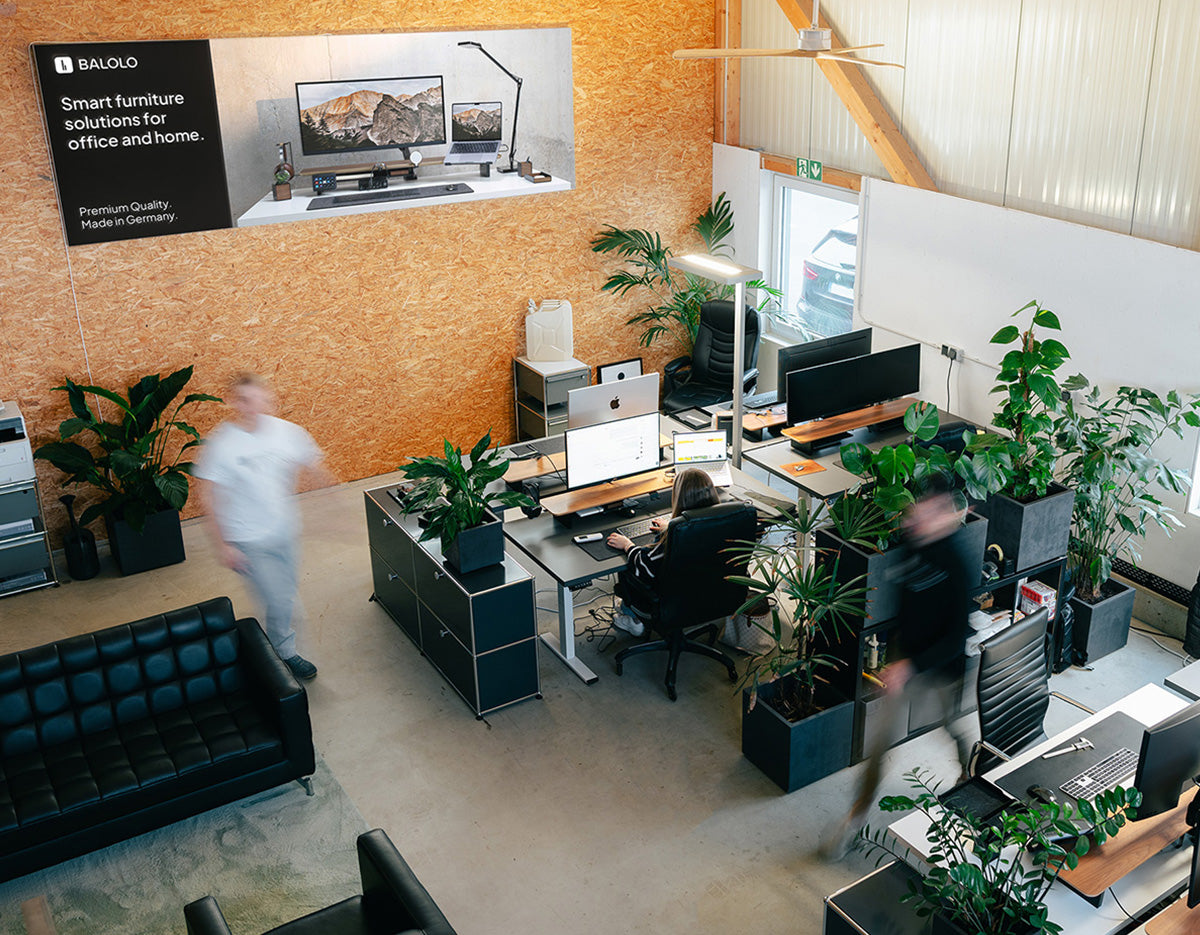
This matters whether you work from a home office, a creative studio or a shared room. A better environment supports better output.
For many people, productivity problems do not start with motivation. They start with friction — too many items on the desk, poor cable management, no fixed place for essentials, a workspace that looks cluttered before the day even begins. Following a practical guide to productive desk setups can help you work through these friction points one by one.
1. Less Visual Clutter Means Better Focus
The biggest productivity benefit of a minimalist workspace is focus.
When your desk is crowded, your eyes keep landing on things that are unrelated to the task in front of you. Maybe it is a pile of papers, or a mix of devices, accessories and cables. Even when you are not actively using them, they stay present in your peripheral vision.
A minimalist desk setup reduces that background noise. Instead of ten things asking for attention, you see the few items that matter right now:
- your monitor
- your keyboard and mouse
- your notebook
- your current task
That kind of visual clarity makes deep work easier. It also makes your desk feel less stressful at the start of the day. In practice, this does not mean removing every object — it means removing every unnecessary object.
2. A Minimalist Desk Setup Helps You Start Faster
One of the most underrated productivity benefits of a clean desk is speed.
When your workspace is organized, there is less resistance between sitting down and starting. You do not need to clear a corner, untangle a cable, or move three objects to find one adapter. Everything has a place. Everything is ready.
That is where desk organization becomes more than a visual improvement — it becomes operational. A productive workspace should make the first five minutes of work easy, because once you begin smoothly, it is much easier to stay in motion.
3. Better Organization Reduces Decision Fatigue
Clutter creates tiny decisions all day long: where should this go, do I need to keep this here, which cable belongs to what, should I move this now or later. Each one feels small. Together, they chip away at focus.
A minimalist workspace removes many of those decisions by creating clear rules:
- only essential items stay on the desk
- everything else gets stored, mounted, or removed
- each tool has a permanent place
- surfaces stay as open as possible
This is why minimalism feels calming. It reduces the number of decisions your brain has to process in the background — and when you protect that mental energy, you can use more of it for meaningful work.
4. More Desk Space Makes Work Feel Easier
Physical space changes how work feels. An overcrowded desk can make even simple tasks feel compressed. Writing, sketching, reviewing notes or switching between devices becomes more awkward when there is no room to move.
A minimalist workspace gives you room to work naturally. That extra space matters more than many people expect. It supports:
- better posture
- more comfortable movement
- easier note-taking
- cleaner transitions between tasks
- a calmer overall desk setup
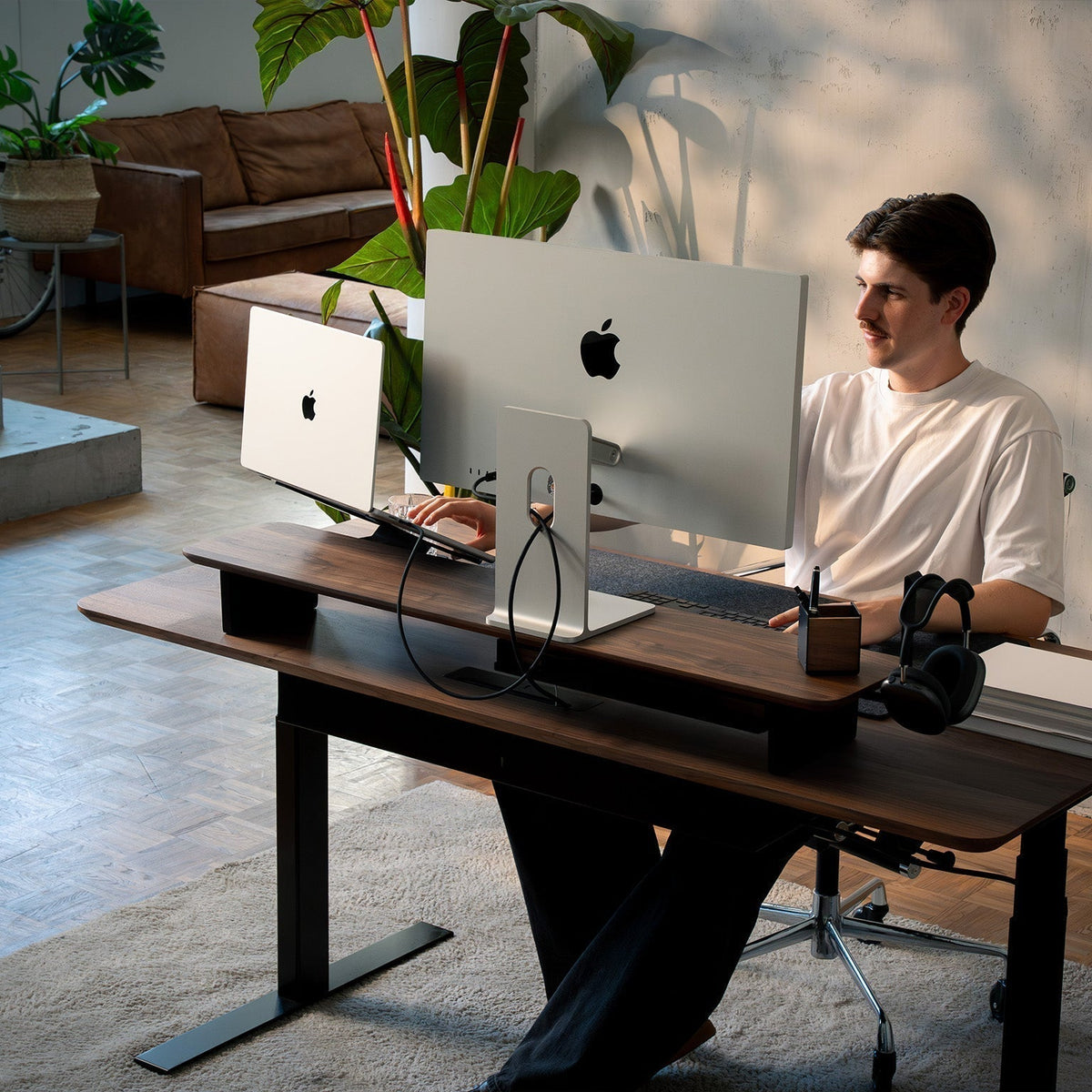
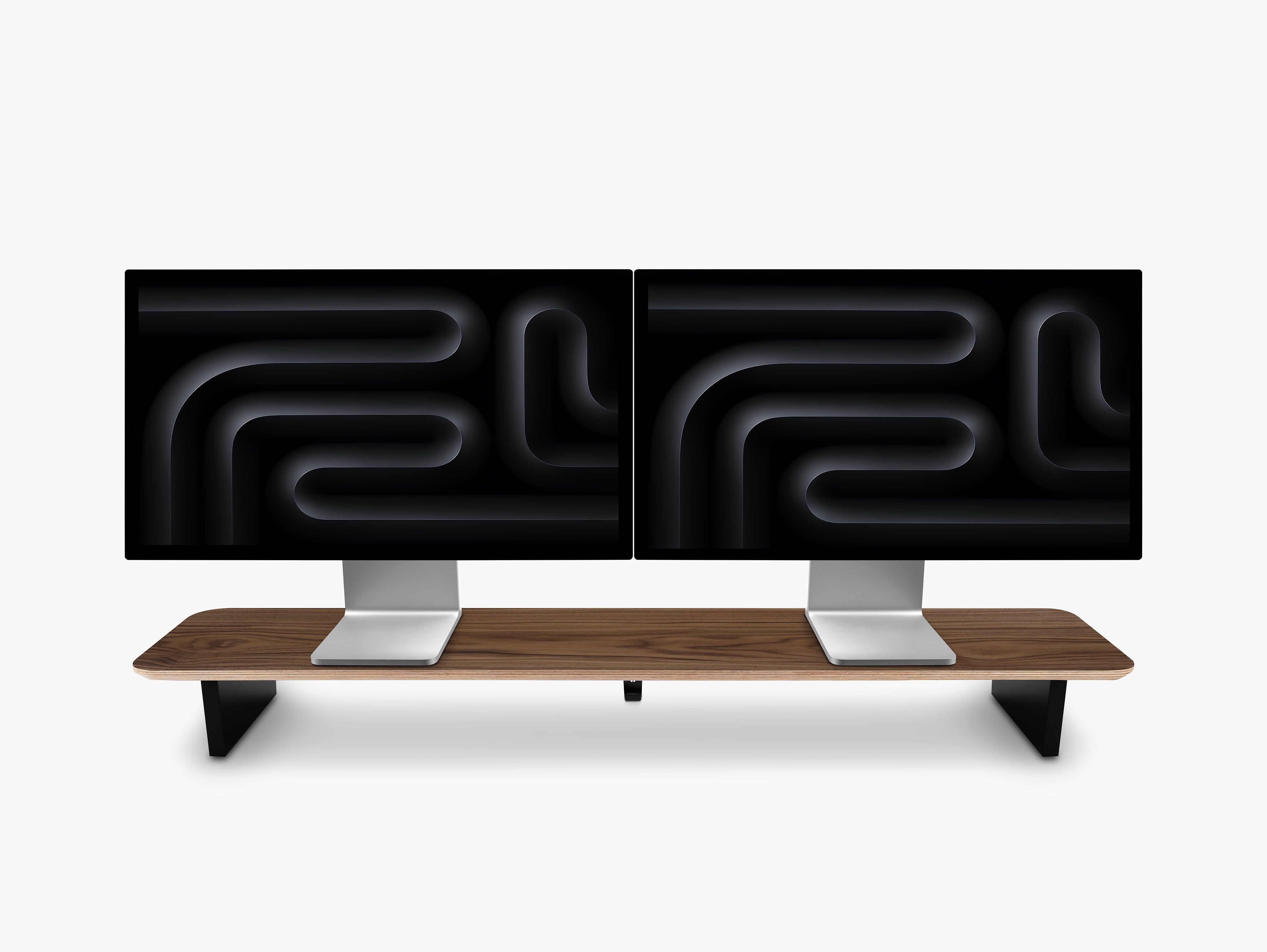
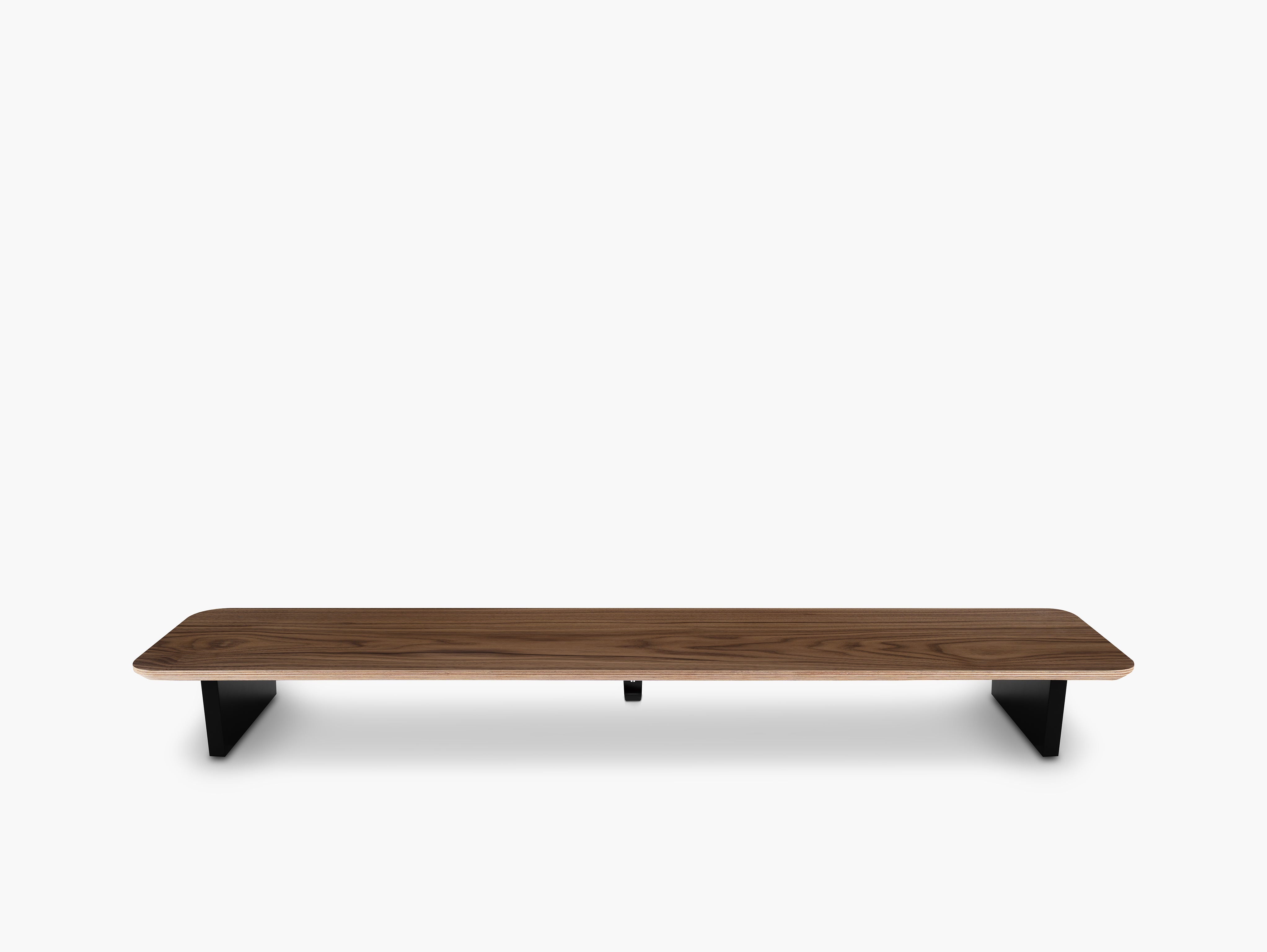
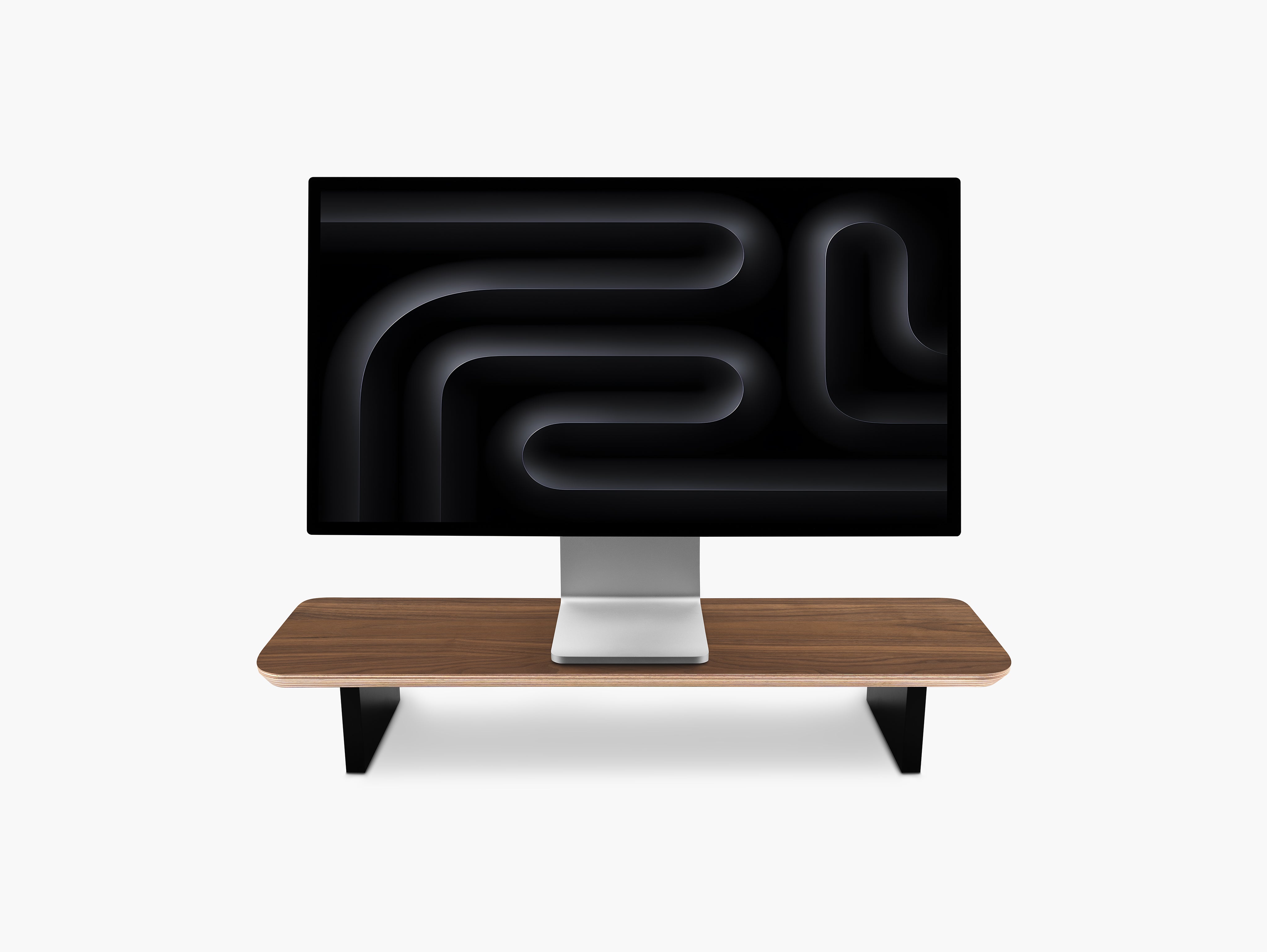
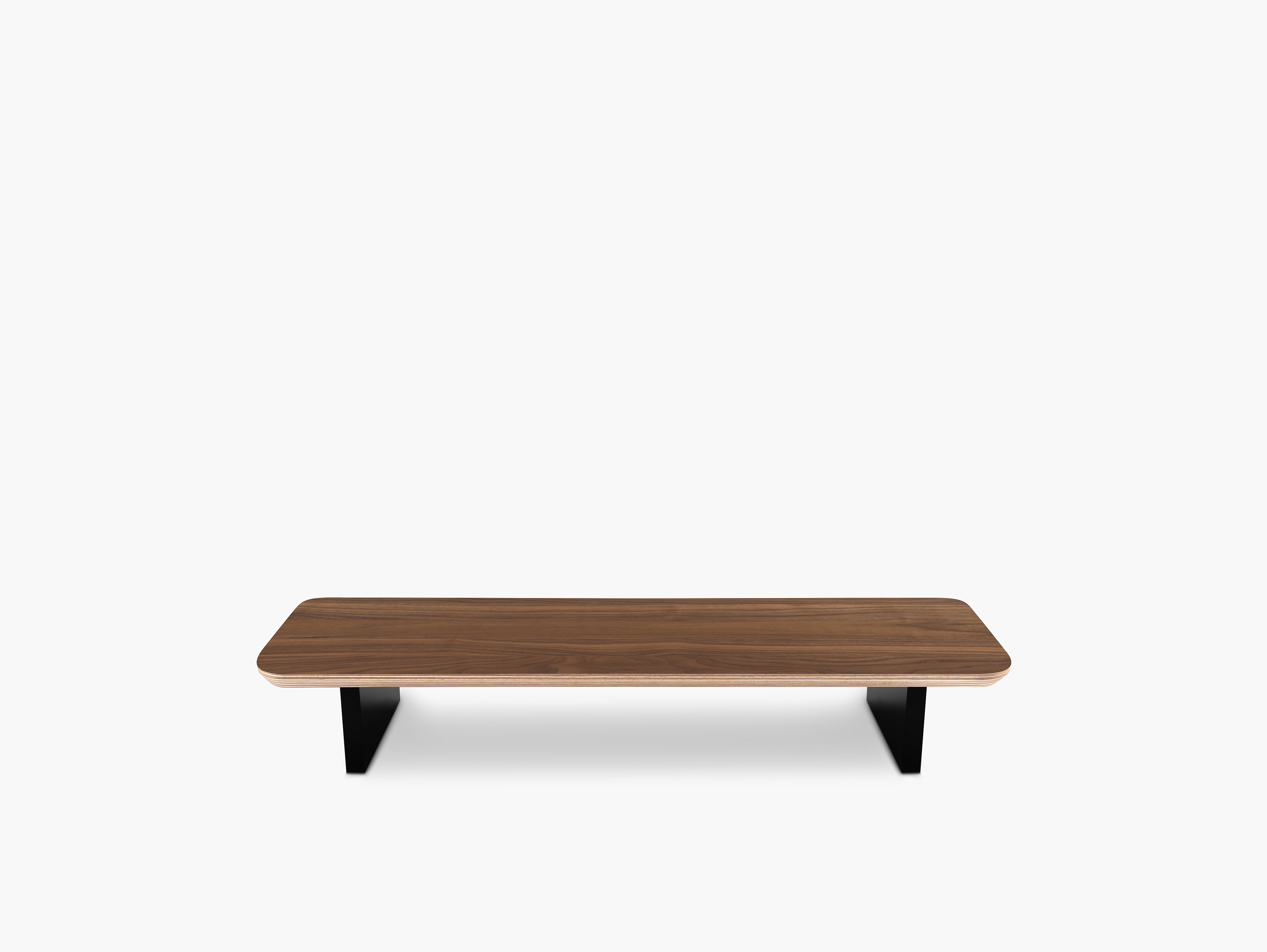
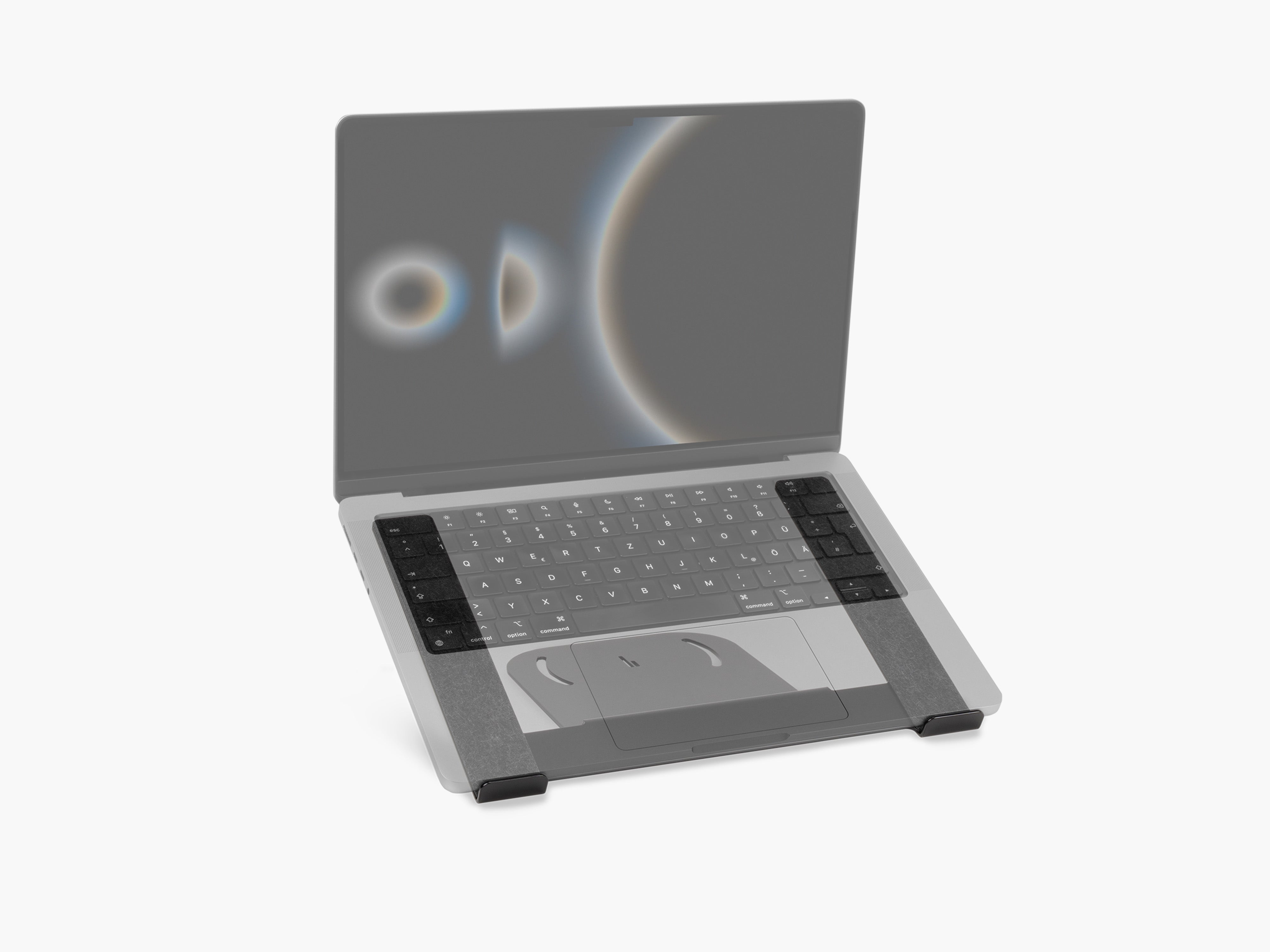
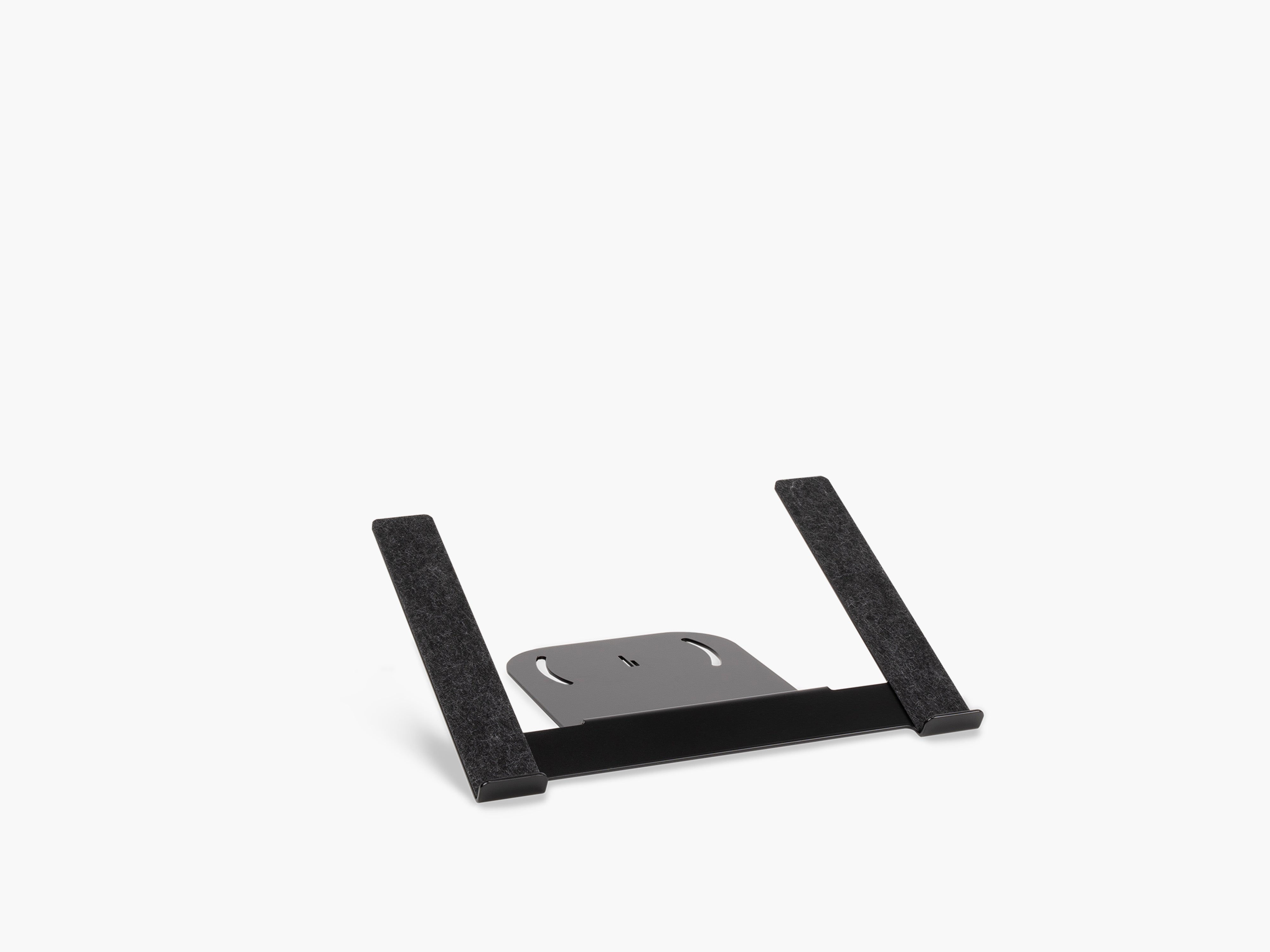
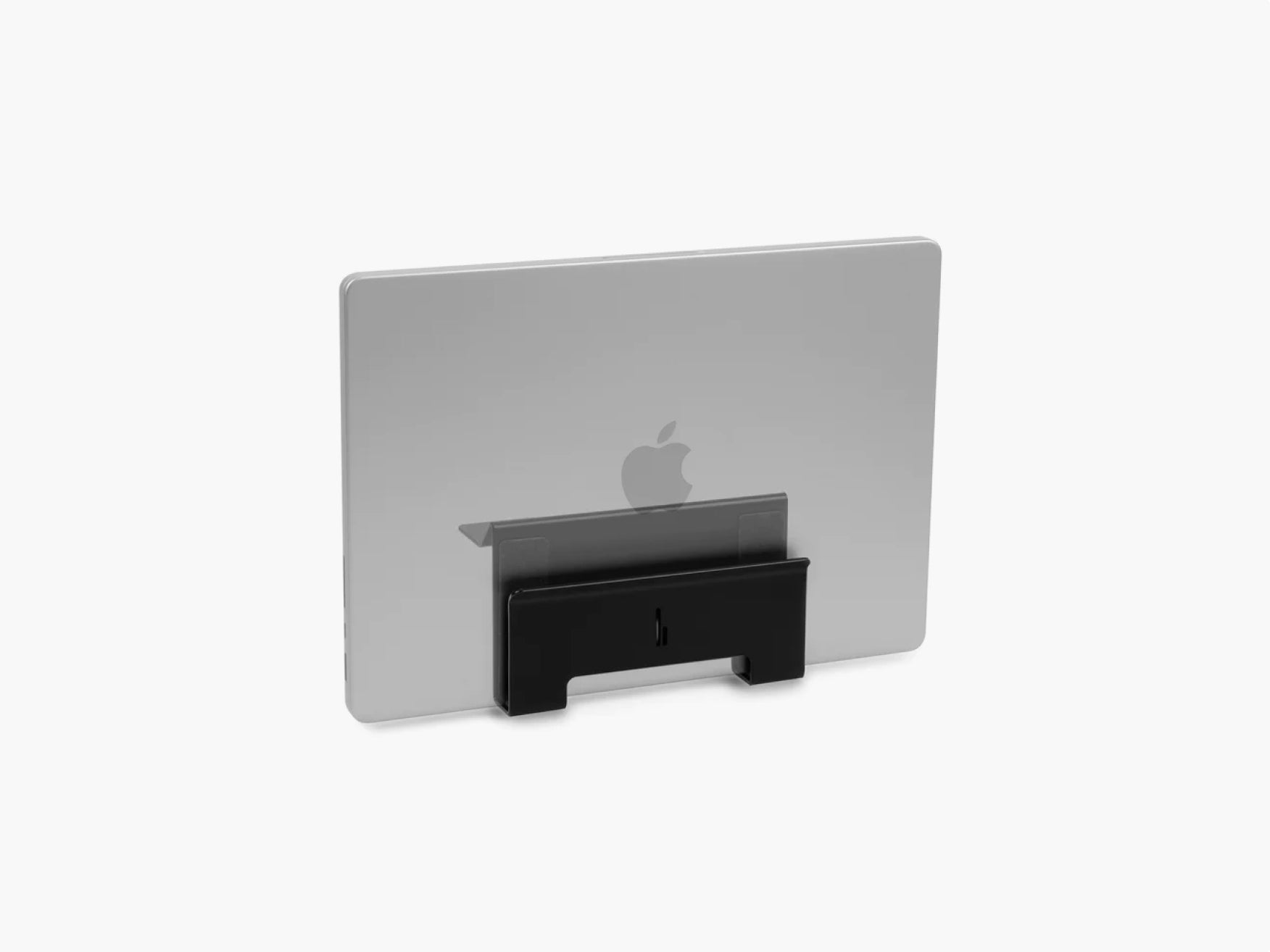
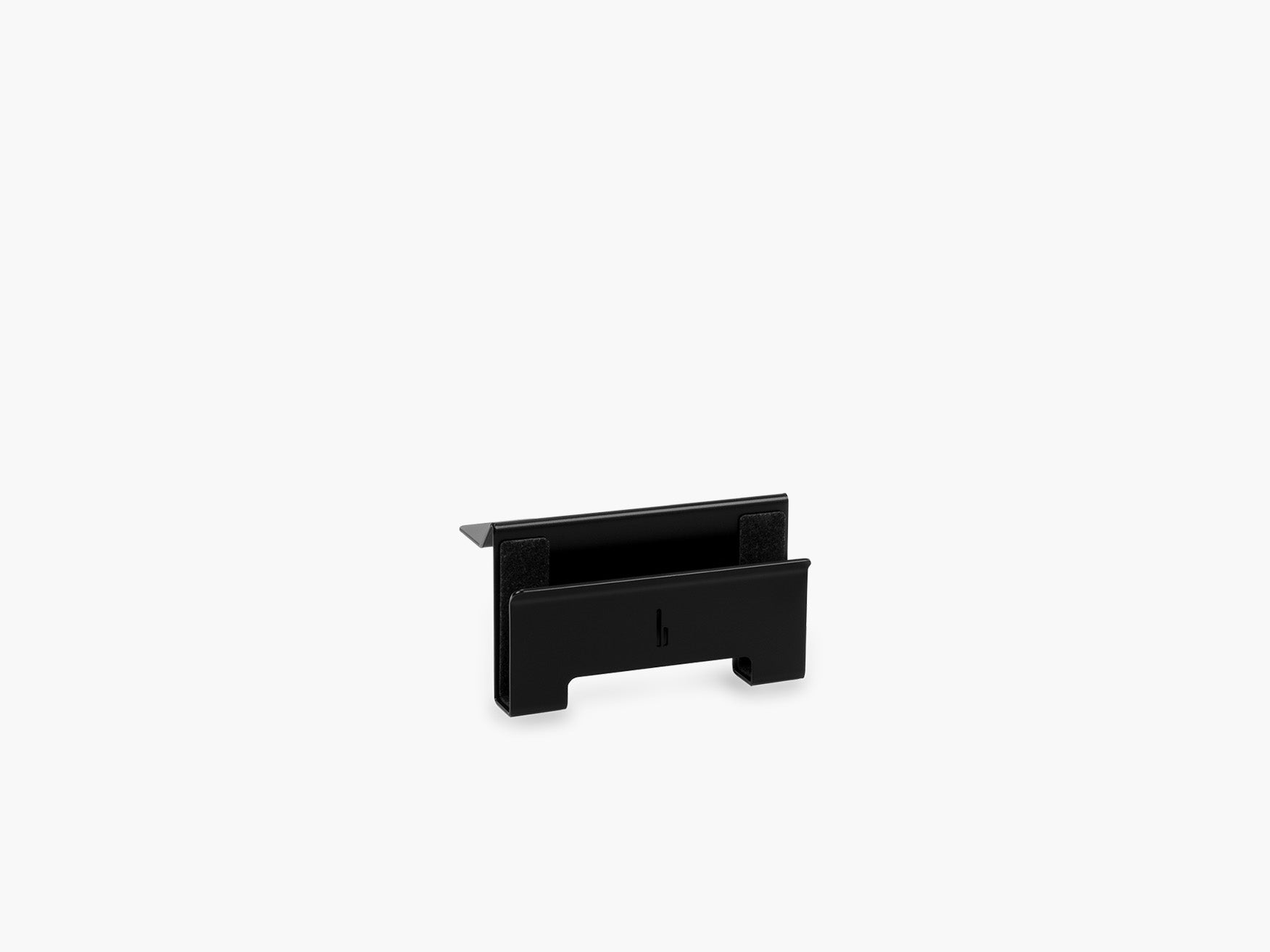
This is one reason monitor stands and vertical organization solutions are so effective — a modular desk shelf in particular tends to outperform a fixed monitor riser because it adapts to how you actually work. They free up the desk surface without reducing functionality.
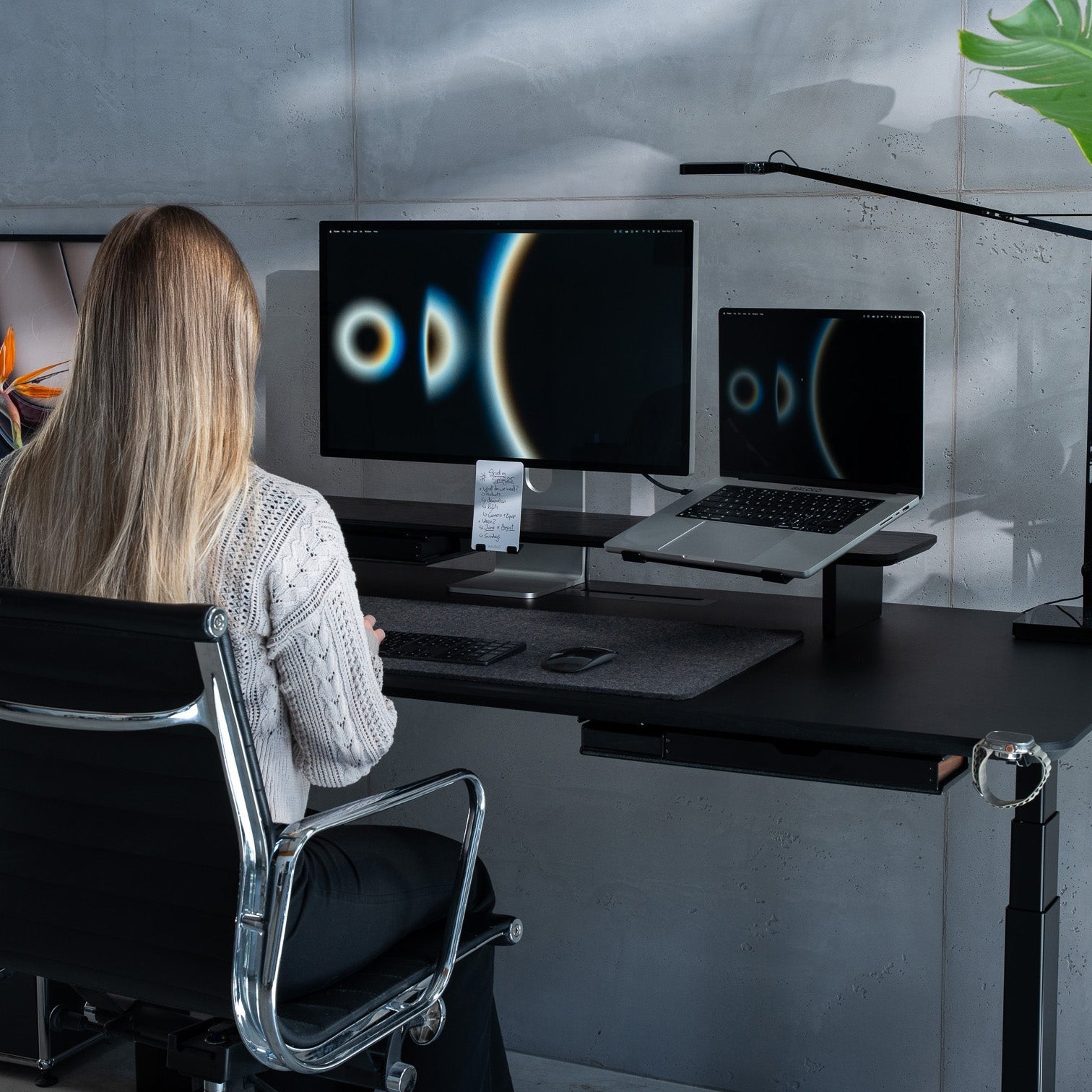
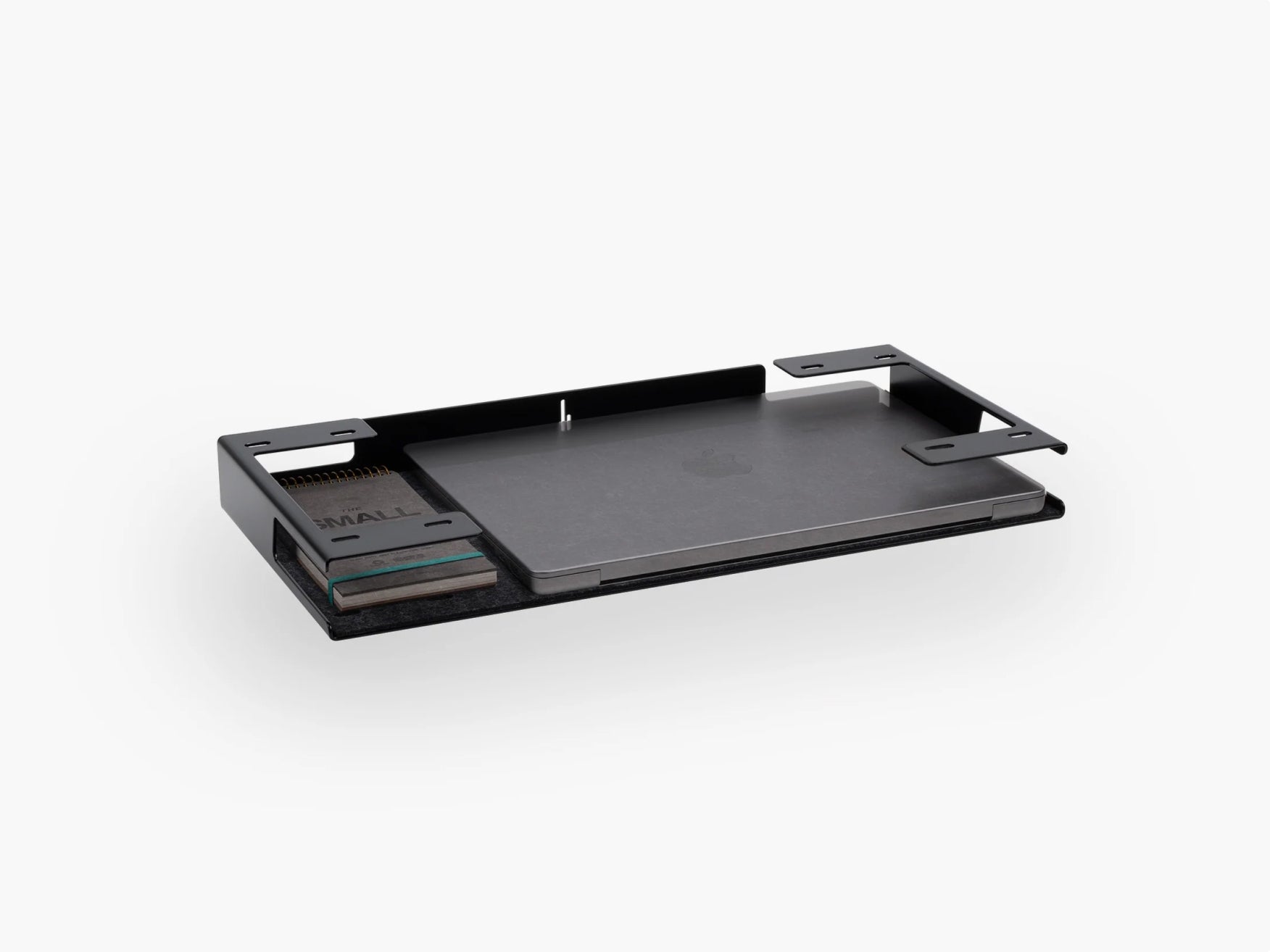
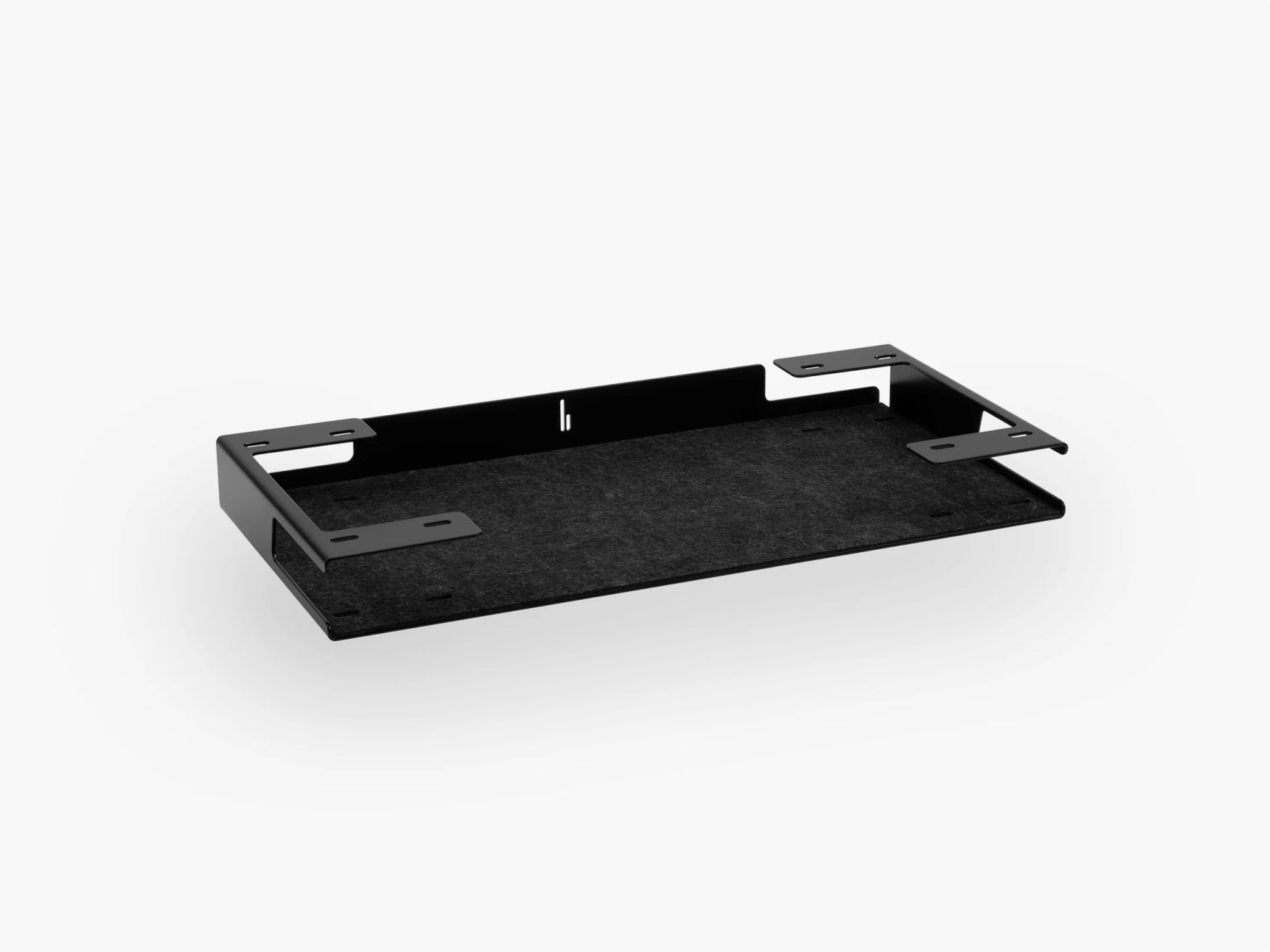
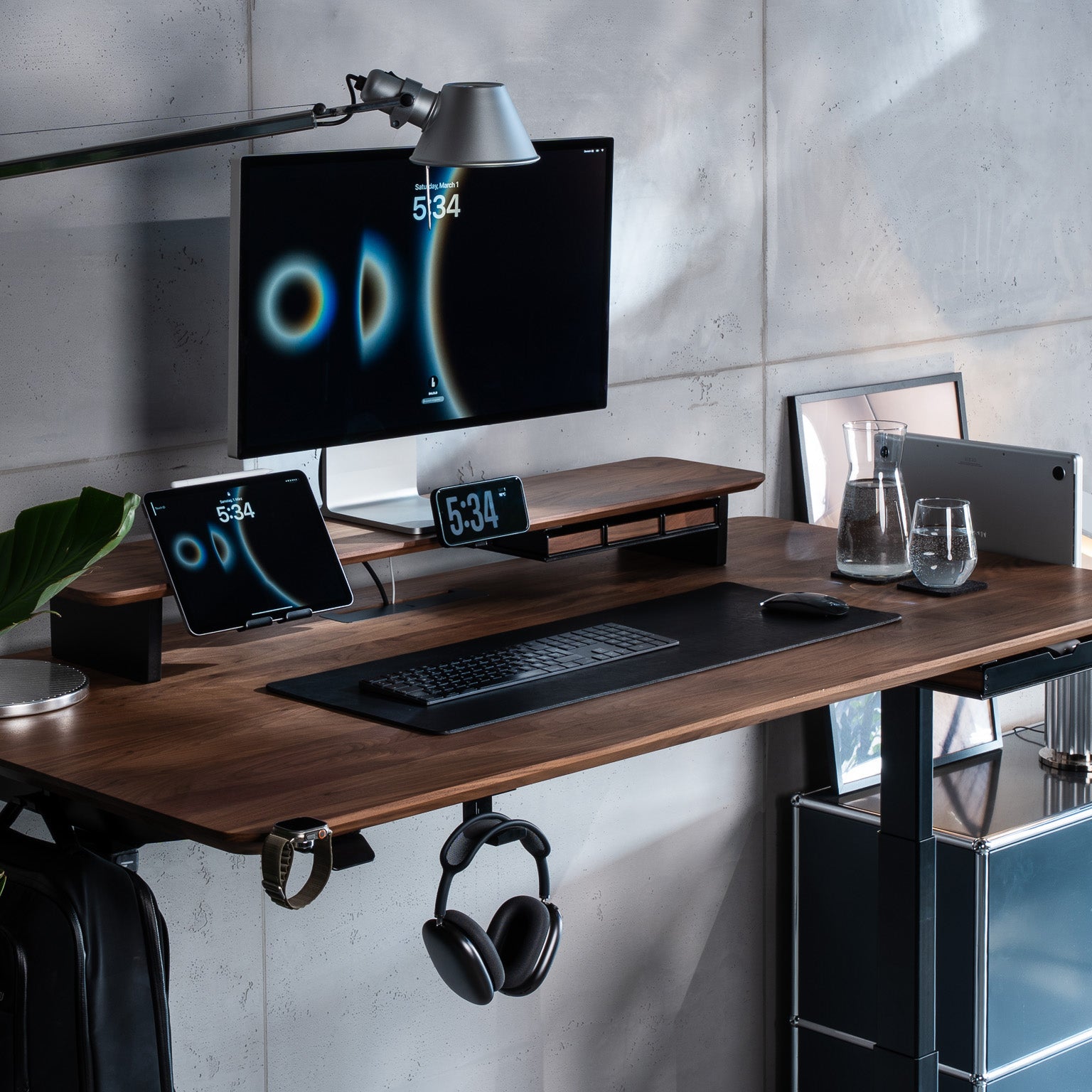
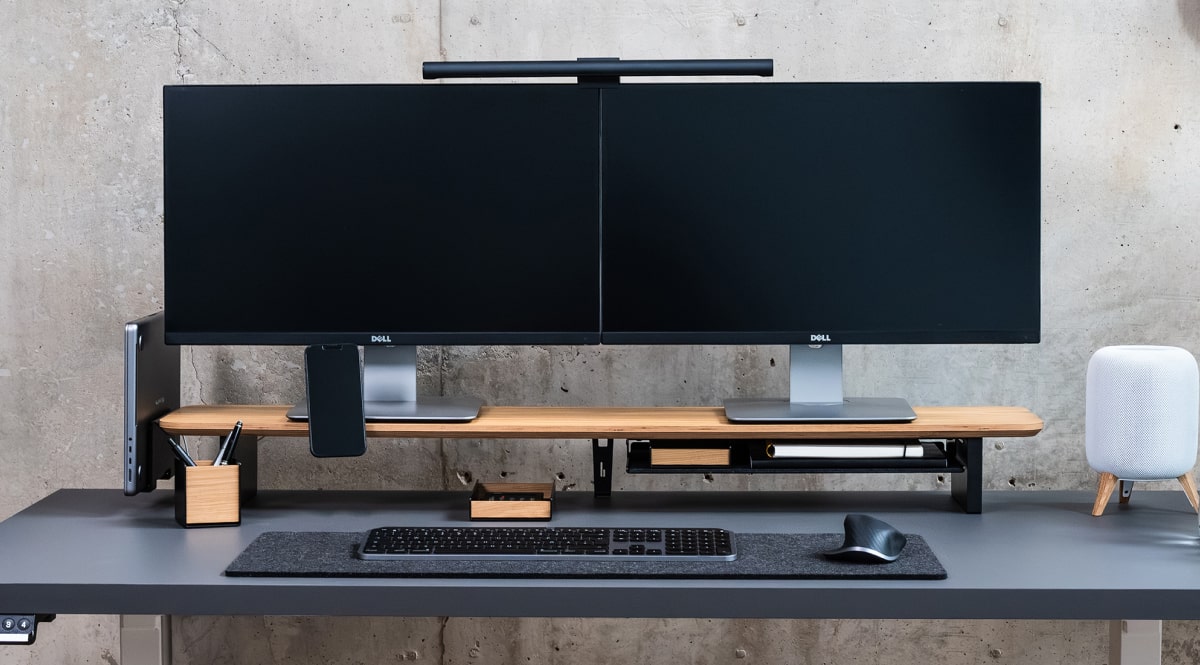
At BALOLO, we approach this through a modular workspace system built around the Setup Cockpit, a monitor stand designed to create structure, open up usable desk space, and move functionality into a cleaner layer below the main surface. The BALOLO Setup Cockpit is a modular desk shelf and premium monitor stand system for organized, minimalist workspaces.

5. Minimalism Makes Maintenance Easier
A productive workspace is not just easy to set up. It is easy to maintain.
That is one of the strongest advantages of a minimalist desk setup. It is much easier to keep clean because there is less on it. You can reset your desk in two minutes because there are fewer loose items, cables are managed properly, accessories are stored intentionally, and your layout is simple and repeatable.
This matters because even the best setup becomes unproductive if it slowly turns into a storage zone. Minimalism prevents that drift — it gives your workspace a default state you can return to every day.
6. Cable Management Has a Bigger Impact Than Most People Think
When people picture a minimalist workspace, they often think about colors, furniture or decor. But one of the biggest differences usually comes from cable management.
Visible cables instantly make a desk feel busier. They interrupt clean lines, create visual noise and make your setup harder to clean and adjust. A clean workspace almost always starts with cleaner cables.
A few simple ways to improve desk cable management
Use fewer visible charging cables: keep only the ones you use daily within reach.
Mount or route cables underneath the desk: this keeps the desktop visually clear.
Group cables by function: for example, separate monitor, power and charging cables.
Use integrated storage where possible: a setup that hides accessories and routing points naturally stays cleaner.
For BALOLO, this hidden-functionality approach is central to our product system. The Setup Cockpit's protected mounting grid allows accessories and organization elements to be attached underneath, helping create a cleaner and more organized desk setup. If cable clutter is your biggest problem, our desk cable management guide walks through which solution fits your setup best.

7. A Minimalist Workspace Supports Better Routines
Good productivity does not come only from tools. It comes from routines.
A minimalist workspace supports strong habits because it creates consistency. When your desk looks and functions the same way every day, it becomes easier to build repeatable work patterns:
- starting work at the same time
- reviewing priorities before opening messages
- keeping one notebook for active tasks
- ending the day with a quick reset
The environment reinforces the behavior. That is why a minimalist workspace is especially useful in a home office setup. At home, distractions multiply fast, and your desk needs to create a stronger boundary between focused work and everything else around you. A clean, organized workspace does exactly that.
8. Minimalism Improves Clarity, Not Just Aesthetics
There is a common misunderstanding that minimalism is mostly about visual taste. It is not.
A good minimalist workspace is practical first. The aesthetic benefit comes from functionality done well. The goal is not to make your desk look empty — the goal is to make it obvious how the desk should work. That includes:
- clear zones for devices and tools
- smart vertical storage
- accessible essentials
- hidden clutter
- fewer but better accessories
This is also why premium desk accessories can make sense in a minimalist setup. When each object earns its place, quality matters more than quantity. At BALOLO, our workspace philosophy is built around exactly that balance.
How to Create a Minimalist Workspace That Actually Improves Productivity
Minimalism works best when it is practical. Here is a simple process.
Step 1: Remove everything that is not essential
Start with a full reset if possible. Then bring back only what you use regularly:
- monitor
- keyboard
- mouse
- lamp
- notebook
- one or two daily tools
Everything else should be reconsidered.
Step 2: Define your daily workflow
Ask yourself: what do I use every day, what do I use once a week, what can be stored off the desk, and what creates friction right now. This helps you design around actual work, not just appearance.
Step 3: Prioritize desk organization
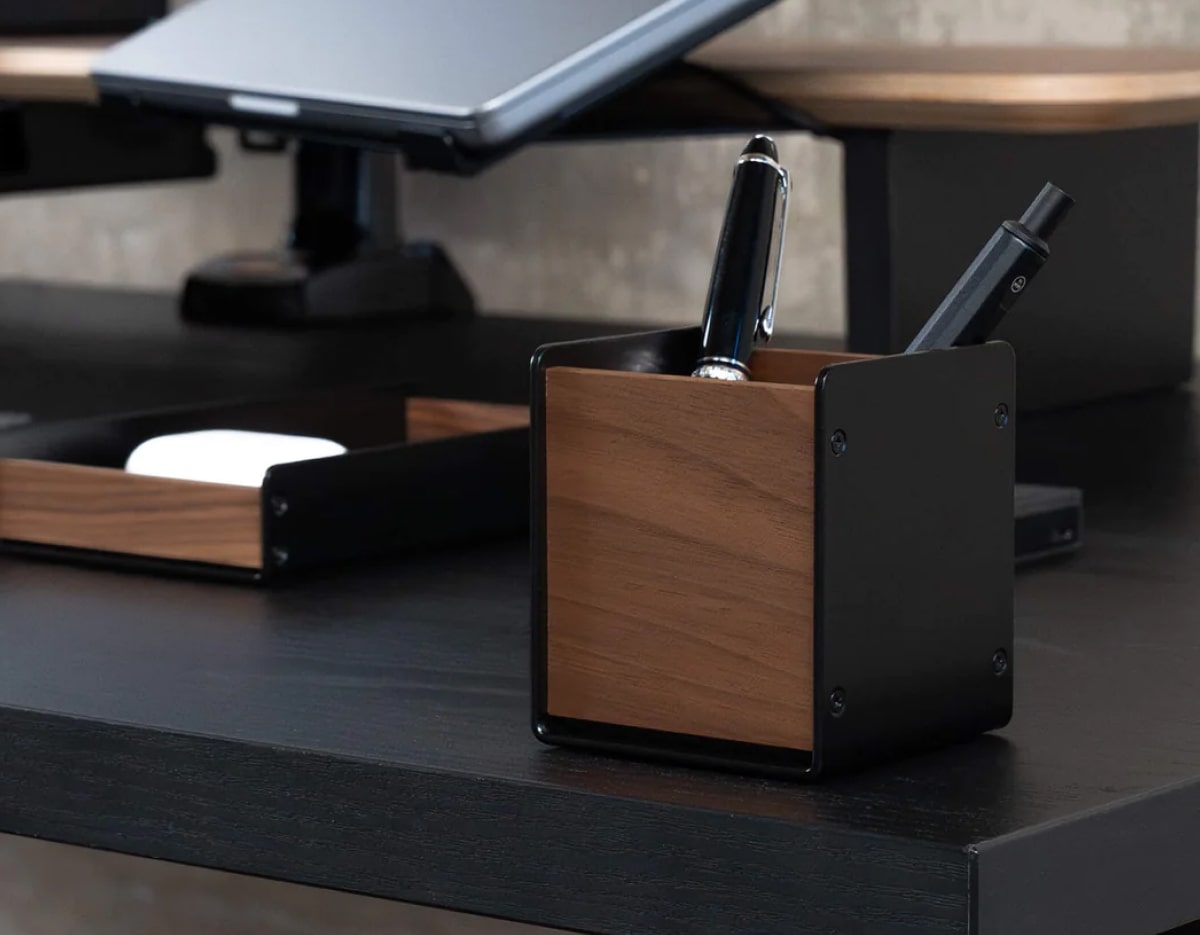
A minimalist workspace still needs storage and structure. Use trays, docks, holders or under-desk solutions to keep essentials accessible without crowding the surface. Monitor stands are especially useful because they create vertical layers — more usable space without making the desk feel heavier.
Step 4: Fix cable management early
Do not leave cable management for later. Messy cables can undermine even the best-looking desk setup. Clean routing should be part of the foundation, not a finishing touch.
Step 5: Keep decor intentional
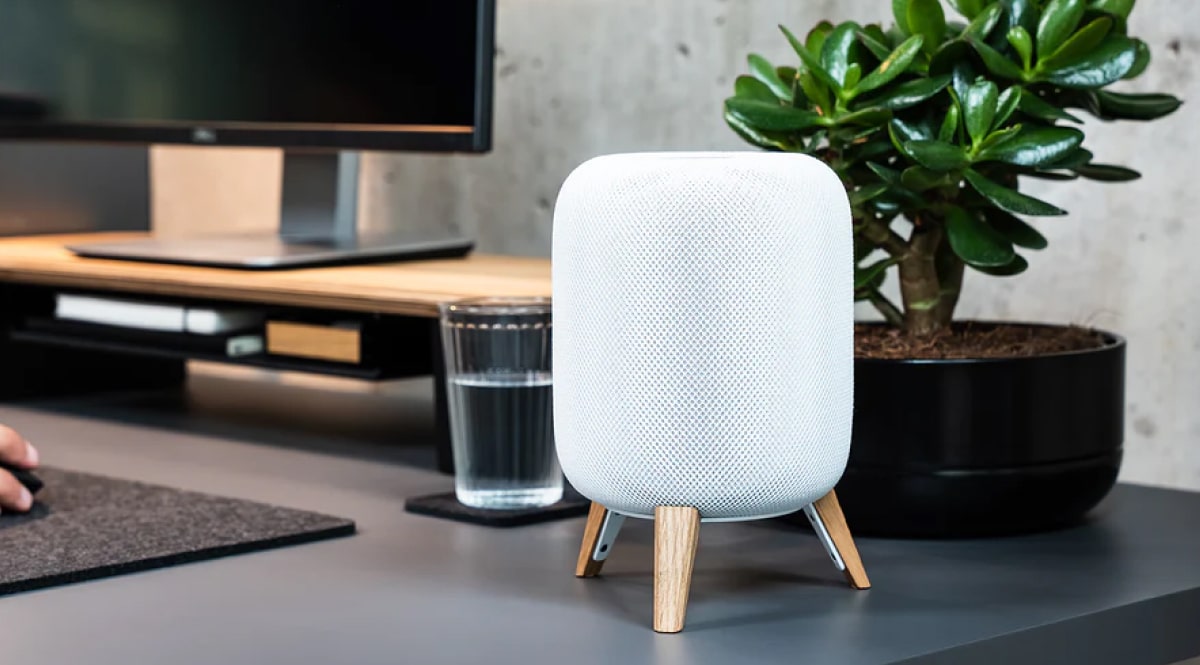
A minimalist workspace does not need to feel sterile. Add warmth through one or two carefully chosen elements:
- a plant
- a desk pad
- a small lamp
- one colour accent
- one object you genuinely enjoy seeing every day
The key is restraint.

Common Mistakes People Make With Minimalist Desk Setups
Minimalism works best when it stays useful. These are the most common mistakes.
Removing function in the name of simplicity: a productive workspace still needs the right tools. Minimal does not mean inconvenient.
Keeping clutter hidden but not solved: a drawer full of tangled accessories is still clutter. Good organization matters.
Ignoring ergonomics: a beautiful desk setup should also support comfort, posture and daily use.
Choosing too many "minimal" accessories: ironically, minimalist setups can become cluttered with too many aesthetic purchases. Buy less. Choose better.
Copying someone else's setup exactly: your workspace should reflect how you work, not just how a setup photo looks online.
Who Benefits Most From a Minimalist Workspace
A minimalist workspace is especially useful for:
- remote workers
- creatives
- designers
- developers
- students
- anyone working in a small home office
- anyone who feels mentally drained by clutter
If your work depends on concentration, clarity and repeatable routines, a minimalist desk setup can make a meaningful difference.
A minimalist workspace improves productivity because it makes work feel clearer, lighter, and easier to begin. It helps you focus, reduces friction, and gives your desk a structure that supports how you actually work.
And that is the real value of minimalism — not less for the sake of less, but less noise, less clutter, and less resistance, so there is more room for attention, flow and meaningful work.
FAQ
Does a minimalist workspace really improve productivity?
Yes. A minimalist workspace can improve productivity by reducing distractions, making tools easier to access and creating a calmer environment for focused work.
What should be on a minimalist desk?
Only essential daily items should stay visible, such as your monitor, keyboard, mouse, notebook and one or two frequently used tools.
Is a minimalist desk setup good for a home office?
Yes. In a home office, a minimalist desk setup helps create a clearer boundary between work and home life, which can improve focus and routine.
How do I make my workspace more minimal without losing functionality?
Start by identifying what you use every day, then organize those essentials better. Use vertical storage, monitor stands and cable management to reduce clutter without removing useful tools.